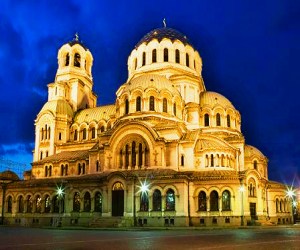
Bulgaria is the country of roses — the Rose Valley south of the Balkan Mountains produces over 70% of the world’s rose oil, an industry that has defined the region’s economy and culture for over 300 years and is celebrated each June with the Rose Festival in Kazanlak, one of the most colourful and joyful festivals in the Balkans. But Bulgaria’s gifts to the traveller extend far beyond flowers. This is one of the most affordable and underrated destinations in Europe — a country of magnificent Orthodox monasteries (Rila, the largest, is a masterpiece of Bulgarian National Revival architecture nestled in mountains that rival the Alps for grandeur), long sandy Black Sea beaches, dramatic mountain ranges (the Balkan, the Rhodope, the Pirin, and the Rila — home to Musala, the highest peak in the Balkans at 2,925 metres), and a history that stretches from the Thracian gold treasures (the oldest worked gold in the world, 6,000 years old, was discovered here) through the First and Second Bulgarian Empires, Ottoman rule, and communist dictatorship to today’s EU member state. And everywhere, the food — shopska salad with its snowfall of grated sirene cheese, hearty bean soups, grilled meats, the famed Bulgarian yoghurt that is the bacterial basis of most commercial yoghurt worldwide, and rakia, the fierce fruit brandy that accompanies every welcome — is simple, excellent, and absurdly inexpensive.
Quick Facts: Bulgaria Travel Guide
- Best time to visit Bulgaria: June–September for beach weather on the Black Sea coast; May–June and September for hiking in the mountains (the Pirin and Rila ranges); July–August is peak season on the coast (Sunny Beach and Golden Sands are package-holiday resorts — expect crowds) and the mountains are warm and accessible; January–March for skiing (Bansko, Borovets, and Pamporovo are the main resorts — excellent value compared to the Alps); June for the Rose Festival in Kazanlak
- Top attractions in Bulgaria: The Rila Monastery — one of the most beautiful Orthodox monasteries in the world, hidden in a dramatic mountain valley; the medieval capital of Veliko Tărnovo — the fortress of Tsarevets and the traditional houses clinging to the Yantra River gorge (read our Veliko Tărnovo guide →); the ancient theatre of Plovdiv — a beautifully preserved Roman theatre in Bulgaria’s second city (one of the oldest continuously inhabited cities in Europe); the Seven Rila Lakes — one of the most beautiful alpine landscapes in the Balkans (accessible by chairlift); the Thracian tomb of Kazanlak (UNESCO); the Black Sea town of Nesebar — a UNESCO-listed peninsula of medieval churches and wooden houses (read our Nesebar guide →); and the Pirin National Park (UNESCO) — one of Europe’s most beautiful mountain ranges
- How to get to Bulgaria: Sofia Airport (SOF) is the main hub; Varna (VAR) and Burgas (BOJ) serve the Black Sea coast in summer; Sofia is connected by train to Bucharest (~10h), Thessaloniki (~6h), and Istanbul (~12h)
- Currency: Bulgarian Lev (BGN) — pegged to the euro (€1 = ~1.96 BGN); Bulgaria is not in the Eurozone but is one of the most affordable countries in the EU (a good restaurant meal with wine: ~€8–12 per person; a beer: ~€1.50)
- Language: Bulgarian — a Slavic language written in the Cyrillic alphabet (Bulgaria is the birthplace of Cyrillic, developed by Saints Cyril and Methodius’s disciples in the 9th century); English is increasingly spoken in tourist areas and by younger Bulgarians; learning to read Cyrillic (it takes about an hour) will transform your experience
- Best for: Budget-conscious travellers, hikers and skiers, history and monastery enthusiasts, and anyone seeking one of Europe’s last genuinely inexpensive travel destinations
Bulgaria is situated in the heart of the Balkan peninsula. The border with Romania in the north is formed by Danube river, and on the south it borders with Greece and Turkey. The eastern banks of Bulgaria are washed by the Black Sea. Bulgaria is the destination suitable both for the summer or winter holidays and vacations. The real attraction is the beautiful nature, warm sea and numerous mineral springs.
Although the history of Bulgaria is closely connected with Turkish influence, cultural roots date back to the days of the Roman Empire. At that time, today’s territory of Bulgaria became a Roman province. Bulgaria was founded in the 7th century. Part of the residents were Slavic, and part came from Asia.
In the 11th century Bulgaria was conquered by Byzantium, and from the late 14th century it belonged to Turks throughout five centuries. Perhaps due to this fact, Bulgaria didn’t build any castles during the Middle Ages, just like in Central Europe. The resistance against Turkish domination culminated in the early 20th century, when Bulgaria became independent. However they didn’t enjoy the independence for a long time and before 1 World War II it was merged with neighboring countries against Turkey. After inappropriate policy Bulgaria has lost part of its territory in a dispute with its allies. After World War I and later after World War II, Bulgaria again had to give up other parts of its territory. The inclusion of Bulgaria into Eastern Bloc meant to stop economic development. Just the revolutionary period in the late of 20th century enabled the reforms and reorientation. Today Bulgaria is one of the leading tourist destination countries.
Further information:
Official name: Republic of Bulgaria
Capital city: Sofia
Area: 110.910 km2
Number of residents: 7.537.929
Density: 74 people per km2
Time zone: GMT + 2 h (+ 3 h in summer)
Currency: lev (Lv)
Official language: Bulgarian
Water area: 360 km2
Land area: 110550 km2
Board lengths: 1808 km
Coast lengths: 354 km
Neighbours: Romania, Serbia, Republic of Macedonia, Greece, Turkey
Average age of man: 70
Average age of woman: 76
Ethnic group: Roma
Religion: Orthodox 30%, Muslim 7%, Atheists 60%
GDP per person: 1510 $
The highest mountain: Musala – 2.925m above the sea level
The lowest point: Black sea
The longest river: Marica (526 km)
Biggest city: Sofia (1.125.000 people)
Ports: Burgas, Lom, Nesebur, Ruse, Varna, Vidin
Why visit Bulgaria?
– Bulgaria is an interesting country that has everything: sea, sandy beaches, quaint historic towns, cultural and architectural attractions, old monasteries, modern resorts, high mountain… In Bulgaria, everyone can find something interesting, whether you like to relax by the sea, discover the historical treasures, walk through the picturesque streets of coastal towns or mountain hiking.
– Bulgaria is cheaper than Croatia, France, Italy, Spain and other traditional tourist destinations.
– In Bulgaria you can taste various dishes typical for Bulgaria (Shopska salad, kaškaval, Moussaka and many others)
View Bulgaria – country of roses in a larger map
Have you visited the Rila Monastery, hiked the Seven Rila Lakes, or discovered Bulgaria’s mountain and coastal treasures? Share your Bulgarian adventures in the comments! 🇧🇬
Explore all our Bulgaria travel guides — from the Rose Valley to the Black Sea.
