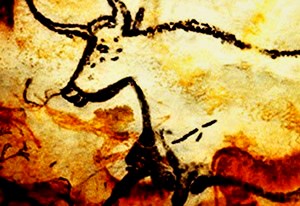
The Lascaux Caves in the Dordogne region of southwestern France contain one of the most extraordinary artistic achievements in human history — a gallery of over 600 Paleolithic wall paintings and 1,500 engravings dating back approximately 17,000 years, depicting horses, bison, deer, aurochs, and mysterious abstract symbols with a sophistication that fundamentally changed our understanding of prehistoric human intelligence and creativity when they were discovered by four teenagers in 1940. The original cave has been closed to the public since 1963 to protect the paintings from carbon dioxide and fungal damage, but the magnificent Lascaux IV — a complete, scientifically precise replica opened in 2016 — offers an experience so accurate and immersive that visitors routinely forget they are not inside the real cave.
Quick Facts: Lascaux Caves, France
- Best time to visit: Year-round; book tickets for Lascaux IV well in advance, especially in summer — the visitor centre limits daily numbers
- Top attraction: Lascaux IV (Centre International de l’Art Pariétal) — the complete replica cave experience in Montignac, opened 2016, widely considered the most advanced archaeological facsimile in the world
- How to get there: ~2 hours from Bordeaux by car; ~2.5 hours from Toulouse; the nearest towns are Montignac and Sarlat-la-Canéda (one of France’s most beautiful medieval towns)
- Entry fee: ~€18 (adult) for Lascaux IV; book online — same-day tickets frequently sell out
- Combine with: The medieval village of Sarlat, the prehistoric sites of the Vézère Valley (Les Eyzies, Font-de-Gaume cave), and the Dordogne River canoe routes
- Note: The original Lascaux cave is permanently closed. All visitor experiences are at the replica site Lascaux IV in Montignac
The Sistine Chapel of Prehistory
The Hall of the Bulls — the most famous chamber — features four enormous aurochs (extinct wild cattle) measuring up to 5 metres in length, painted with a sophistication of technique (perspective, shading, the use of the cave wall’s natural contours) that astonished the art world when the cave was discovered. The paintings were executed using mineral pigments — iron oxides for reds and yellows, manganese for black — blown through hollow bird bones or applied with brushes of animal hair. The artists of Lascaux are part of the Magdalenian culture, and their work represents the zenith of Paleolithic cave art.
In Lascaux there is a complex of caves, which is famous for its prehistoric paintings. You can find the caves near the village Montignac in an imaginary triangle between Périgueux, Limoges and Tulle. If you take a trip to Brive la Gaillarde, you’ll be just a few steps away. Inside the Lascaux caves you see the cave paintings dating back to the Stone Age, to the younger Palaeolithic. In almost 2,000 figures these are mostly paintings of animals – horses, but sometimes people as well.
The story of the accidental discovery of the cave is taught in school. It’s the old story of how four children who were playing on the field accidentally fell into a cave and discovered a valuable relic. This cave was discovered in 1940, and was opened to the public several years after the war. However, in 1955 it was found that breathing of thousands of visitors decreases the clarity of color paintings. Therefore, the cave was closed to the public and now you can visit only its replica, called Lascaux II, serving visitors since 1983.
View Lascaux caves in France – famous for its Paleolithic cave paintings in a larger map
Have you experienced Lascaux IV or explored the prehistoric Dordogne? Share your impressions of this extraordinary gallery of Ice Age art in the comments! 🎨
Explore more France travel guides and historic European destinations.
