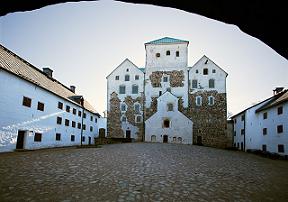
Turku is Finland’s oldest city and former capital — a lively cultural hub on the southwest coast at the mouth of the Aura River where a magnificent medieval castle, a striking 13th-century cathedral, and a vibrant food and festival scene combine to create Finland’s most historically rich and arguably most charming urban destination. Founded in the late 13th century and serving as Finland’s capital under Swedish rule until 1812 (when the Russians moved it to Helsinki), Turku was named a European Capital of Culture in 2011 — an honour that catalysed a cultural renaissance that continues to make it one of the most dynamic medium-sized cities in the Nordic region.
Quick Facts: Turku, Finland
- Best time to visit: June–August for the best weather, long daylight hours, and the Turku Medieval Market (July — the city’s biggest annual event); December for the Declaration of Christmas Peace (a tradition since the 13th century, broadcast live from Turku’s Old Great Square on Christmas Eve)
- How to get there: ~2 hours from Helsinki by train or car; Turku Airport has flights to Stockholm and Helsinki; ~11 hours overnight by ferry from Stockholm (a classic Nordic experience)
- Top attractions: Turku Castle (the largest surviving medieval building in Finland — a 13th-century fortress with a museum covering 700 years of history), Turku Cathedral (Finland’s national shrine, consecrated 1300), and the Luostarinmäki Handicrafts Museum (the only district of wooden houses to survive the Great Fire of 1827)
Turku is a port city located in the southwestern corner of Finland. It is situated on the River Aurajoki at the Baltic Sea. The city’s history dates back to the 13th century, when it was established. By 1812 it was the capital of Finland. Then Tsar Alexander I moved the capital to Helsinki. In 1827 the city was most affected by fire. Between 1960 – 1970 Turku is experiencing rapid development. In 2011, Turku becomes European Capital of Culture together with Tallinn, the capital city of Estonia.
The main local attraction is the Turku Castle built in the 18th century, where you can visit a historical museum since 1881. Other important buildings are Turku Cathedral or Tuomiokirkko from the 13th century, open-air museum Luostarinmäki, located in Mount Vartiovuori – it is a part of the city which has survived from the 18th century.
There is also Orthodox Church, Brinkhall Manor, Kakskerta church, an old mill in Samppalinna, Church of Archangel Michael from 1905, Martin church from 1921, Turku Art Museum, Museum of pharmacy and museum Ett hem or home to a typical Finnish houses from the 18th century. In Turku, there are several festivals – the most famous is music festival Turku and Ruisrock Festival. There are 176,000 inhabitants living in Turku.
View Turku – European Capital of Culture in 2011 Finland in a larger map
Have you explored Turku Castle or discovered Finland’s former capital? Share your Turku experiences in the comments! 🏰
Explore more Finland travel guides and historic European cities.
