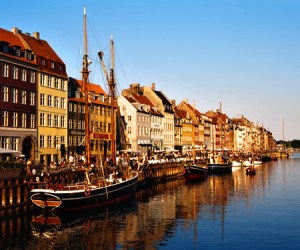
Denmark is the Scandinavian kingdom of design, hygge, and boundless wind energy, a country where Viking history meets cutting-edge modern architecture, where every city is built around a bicycle lane, and where the coastline is never more than 52 kilometres away. Consistently ranked among the world’s happiest nations, Denmark offers travellers a unique blend of cosmopolitan culture, fairy-tale castles, world-class gastronomy, and a deep connection to the sea that has defined Danish identity for over a thousand years.
Quick Facts: Denmark Travel Guide
- Best time to visit Denmark: June–August for long daylight hours (18+ hours of daylight) and outdoor festivals; December for Christmas markets and hygge; shoulder seasons (May and September) for fewer crowds and pleasant weather
- Top attractions in Denmark: Copenhagen’s Nyhavn and Tivoli Gardens, Kronborg Castle (Hamlet’s Elsinore), Legoland Billund, Møns Klint, and the Louisiana Museum of Modern Art
- Getting to Denmark: Copenhagen Airport (CPH) is the main international gateway; excellent rail connections from Germany and Sweden via the Øresund Bridge; extensive ferry network from Norway, Sweden, and Germany
- Currency: Danish krone (DKK), Denmark is in Europe but does not use the euro
- Getting around: Denmark is one of Europe’s most bike-friendly countries with dedicated cycle lanes everywhere; the national rail network (DSB) connects all major cities efficiently
Why Visit Denmark in 2026?
Denmark punches far above its weight as a travel destination. Copenhagen alone offers enough for a week, from the colourful 17th-century waterfront of Nyhavn and the world’s second-oldest amusement park Tivoli Gardens, to the alternative freetown of Christiania, the Michelin-starred restaurants of the New Nordic food revolution (including Noma), and the architectural daring of the Copenhagen Opera House and the Black Diamond library.
Denmark’s Must-Visit Destinations
- Copenhagen: The capital city is a design lover’s dream, with world-class museums, cutting-edge architecture, and a food scene that put Nordic cuisine on the global map. Don’t miss the Little Mermaid statue, Strøget (Europe’s longest pedestrian shopping street), and the trendy meatpacking district Kødbyen. Read our full Copenhagen guides →
- Aarhus: Denmark’s second city was European Capital of Culture in 2017. The ARoS Art Museum with its rainbow panorama walkway and the open-air Den Gamle By (The Old Town) museum are essential visits.
- North Zealand’s castles: Kronborg (the setting of Shakespeare’s Hamlet) and Frederiksborg Palace, two of Europe’s finest Renaissance castles, are within day-trip distance of Copenhagen.
- Bornholm: This Baltic island is Denmark’s sunniest spot, famous for its round churches, smoked herring, and dramatic rocky coastline, a completely different landscape from the rest of Denmark.
- Skagen: The northernmost tip of Denmark where the Baltic and North Seas collide. A historic artists’ colony with a unique golden light that has inspired generations of painters.
- Møns Klint: The breathtaking white chalk cliffs on the island of Møn. Read our guide →
Danish Design and Sustainability
Denmark is a global leader in sustainable design and green energy. Wind turbines supply over 50% of the country’s electricity, and Copenhagen aims to become the world’s first carbon-neutral capital by 2025. The Danish concept of hygge, roughly translated as cosiness and contentment, permeates everyday life: think candlelit cafés, warm blankets on outdoor terraces, and the simple pleasure of a pastry and coffee with friends. For visitors, embracing hygge is the best way to experience Denmark like a local.
Denmark is a Scandinavian country in Northern Europe and the senior member of the Kingdom of Denmark. It is the southernmost of the Nordic countries, southwest of Sweden and south of Norway, and bordered to the south by Germany. Denmark borders both the Baltic and the North Sea. The country consists of a large peninsula, Jutland (Jylland) and many islands, most notably Zealand, Funen (Fyn), Vendsyssel-Thy, Lolland, Falster and Bornholm, as well as hundreds of minor islands often referred to as the Danish Archipelago. Denmark has long controlled the approach to the Baltic Sea; before the digging of the Kiel Canal water passage to the Baltic was possible only through the three channels known as the “Danish straits”.
Are you planning a trip to Denmark or have you experienced Danish hygge firsthand? Share your favourite Danish destinations, design discoveries, and cycling adventures in the comments! 🇩🇰
Explore all our Denmark travel guides and European travel tips.
Explore More
If you enjoyed this article, you might also like:
- What to see in Copenhagen (København) – Capital of Denmark – Denmark
- Belgium – head of Europe – All Countries
- Romania – country of Dracula – All Countries
