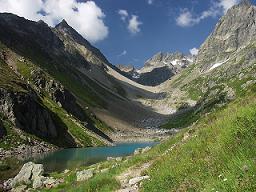
Hohe Tauern National Park is the largest national park in Austria and the biggest protected area in the Alps, a colossal 1,856 km² wilderness spanning the states of Salzburg, Carinthia, and Tyrol that encompasses Austria’s highest peak (Grossglockner, 3,798m), over 300 mountains above 3,000 metres, 342 glaciers, and the spectacular Grossglockner High Alpine Road, one of the most dramatic driving experiences in Europe. At the heart of the park lies the Grossglockner massif, Austria’s most iconic mountain landscape, accessible to visitors via the 48-kilometre Grossglockner High Alpine Road, a breathtaking ribbon of 36 hairpin turns that climbs to 2,504 metres at the Edelweißspitze and delivers views that have drawn travellers to this corner of the Eastern Alps since its construction in 1935.
In This Article
The Grossglockner High Alpine Road Experience
Driving the Grossglockner High Alpine Road is an experience that ranks among Europe’s most memorable mountain journeys. The road winds through 36 switchbacks, each turn revealing a new vista of glaciers, rocky peaks, and alpine meadows blanketed with wildflowers in summer. Several lookout points along the route offer parking areas where drivers can stop to take photographs and absorb the scale of the surrounding landscape. The Kaiser-Franz-Josefs-Höhe, at 2,369 metres, is the road’s most famous viewpoint, offering an up-close perspective of the Pasterze Glacier, Austria’s largest glacier, which stretches 8 kilometres from the summit of Grossglockner. On-site museums tell the story of the road’s construction between 1930 and 1935, a project that provided employment during the Great Depression while creating a tourist route that would become one of Austria’s most beloved attractions. The toll is approximately 40 euros per car for a day pass, but the experience justifies the cost for most visitors. For those who prefer not to drive, guided bus tours depart regularly from both the northern and southern entrances, allowing passengers to focus entirely on the scenery. The road typically opens in May and closes in October, though exact dates depend on snowfall, and the highest sections may remain closed well into June in heavy snow years.
Hiking, Glaciers and Alpine Wildlife
Beyond the famous road, Hohe Tauern offers hundreds of kilometres of hiking trails that range from gentle valley walks to demanding high-alpine routes requiring mountaineering experience. The park’s 342 glaciers are a defining feature, and guided glacier hikes are available for those seeking to explore the ice fields up close. The Schlatenkees and the Kitzsteinhorn Glacier offer more accessible glacier experiences, with cable cars reducing the approach time significantly. Wildlife viewing is exceptional within the park. Ibex and chamois are commonly seen on rocky slopes, while marmots whistle warnings from their burrows as hikers pass. The park is also home to golden eagles, and the bearded vulture has been successfully reintroduced after being hunted to extinction in the Alps in the early 20th century. The Alpine marmot, with its distinctive whistle, is one of the most frequently encountered animals and a delight for children and adults alike. The park’s ranger-led wildlife walks provide excellent opportunities to learn about the Alpine ecosystem and spot animals with the help of experienced guides. The diverse habitats within the park, from valley floor meadows to glacier-carved peaks, support an extraordinary range of plant and animal life.
The Krimml Waterfalls and Park Highlights
The Krimml Waterfalls, Austria’s highest waterfalls with a total drop of 380 metres across three cascading stages, are among the park’s most popular natural attractions. The falls are easily accessible via a well-maintained walking path that climbs alongside the cascades through lush forest, with spray-cooled viewpoints at each level. Beyond Krimml, the park contains numerous other highlights including the Kaprun Valley with its hydroelectric reservoirs and the Stubachtal valley, known for its remote hiking trails and wild alpine scenery. The park’s three visitor centres in Mallnitz, Matrei, and Mittersill provide excellent introductions to the park’s geology, ecology, and cultural history. Winter transforms the landscape into a paradise for ski touring and snowshoeing, though the high road and many facilities close from October to May. The park’s commitment to sustainable tourism ensures that this Alpine wilderness will remain protected for generations to come. The Mallnitz visitor centre, accessible via the Tauern Tunnel car shuttle train, is particularly well designed and offers interactive exhibits that bring the park’s natural and human history to life for visitors of all ages.
Quick Facts: Hohe Tauern National Park
- Best time to visit: June–September for hiking and the Grossglockner High Alpine Road (the road is open approximately May–October, depending on snow conditions); July–August for the best alpine flower displays; the park is a winter destination for ski touring and snowshoeing but the high road and many facilities are closed
- How to get there: The northern entrance (Fusch an der Großglocknerstraße) is ~1.5 hours from Salzburg; the southern entrance (Heiligenblut) is ~2 hours from Klagenfurt
- Grossglockner High Alpine Road toll: ~€40 per car (day pass) – expensive but worth it; multi-day passes available
- Wildlife: Ibex, chamois, golden eagle, bearded vulture (successfully reintroduced), marmots, the classic Alpine cast is all present here
View National Park Hohe Tauern – the biggest national park of Austria in a larger map
Have you driven the Grossglockner road or hiked in Austria’s highest national park? Share your Hohe Tauern experiences in the comments! 🏔️
Explore all our Austria travel guides, from Vienna coffeehouses to Alpine peaks.
Explore More
If you enjoyed this article, you might also like: