Krakow is the second largest city in Poland, as well as being one of the oldest in this country’s history. This city can be found on the list of World heritage Sites, mostly because it is such a unique and historically-significant place.
Bordering on the Wesla River in the Lesser region of Poland, this city’s history can be traced all the way back to the 7th century. One of the more important economic centers in Poland, Krakow is also known for being a city of academics, artists, and a very unique culture that is all its own.
Krakow, Poland by Corinne Cavallo
This city was the capital of Poland from 1038 to 1596 as well as the capital of Grand Duchy of Krakow from 1846 to 1918. Currently Krakow is the capital of the Lesser Poland Voivodeship. Krakow became the capital Germany’s central government shortly after the Nazi invasion which took place in 1939. Following the invasion, Jewish citizens of this area were sent to an area that was known as the Krakow Ghetto before being transferred to extermination camps in the area.
In This Article
The historic Old Town and Royal Route
People from all around the world come to visit Krakow because of its historical significance and sheer beauty. There are a number of attractions which are hot spots for tourists, including the City Walls, Planty Garden Ring, Collegium Maius, Town Hall Tower, and many other places. Situated on the Vistula River, the history of human settlement in this area dates back to the Stone Age.
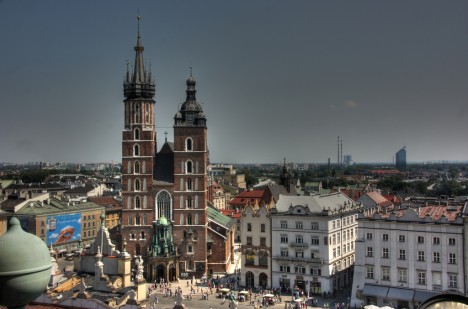
Main Market Square in Krakow, Poland by Klearchos Kapoutsis
The heart of Krakow’s Old Town is Rynek Glowny, the largest medieval market square in Europe. At its centre stands the Cloth Hall, a Renaissance trading hall that has been a hub of commerce for centuries. Beneath the square lies an underground archaeological museum that reveals the medieval streets and trading stalls that once occupied the space. To one side rises St. Mary’s basilica, whose twin towers are an unmistakable symbol of the city. Every hour, a bugle call is played from the taller tower, stopping abruptly mid-note to commemorate the 13th-century trumpeter who was shot while warning the city of an invasion. The Royal Route, which begins at St. Florian’s Church and passes through the Barbican and the Florianska Gate, leads visitors along the same path that Polish kings once followed to Wawel Castle.
Wawel Hill and Jewish heritage
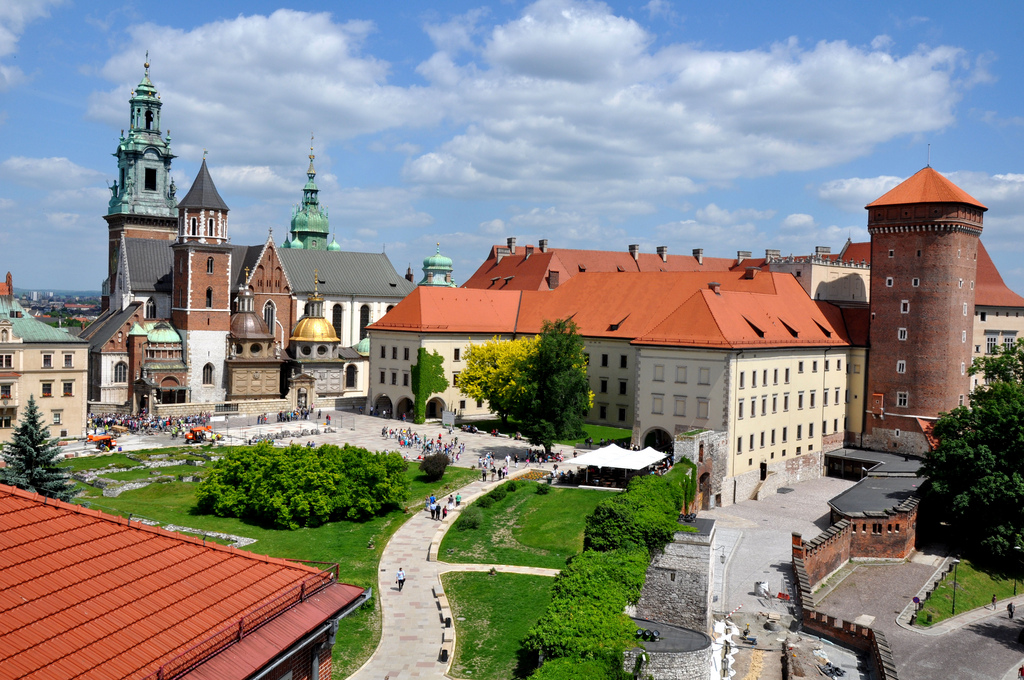
Wawel Hill is the spiritual and historical heart of Poland. The Wawel Cathedral has been the coronation site of Polish monarchs for centuries, and its eclectic architecture combines Gothic, Renaissance, and Baroque elements. Within the cathedral walls rest the tombs of kings, national heroes, and the renowned poet Adam Mickiewicz. The adjacent Wawel Castle, a UNESCO World heritage site, houses an impressive collection of Renaissance art, tapestries, and armaments. The grounds also contain the legendary Wawel Dragon’s den, a cave at the foot of the hill where according to myth a fearsome dragon was slain by the clever shoemaker Skuba.
Just across the river lies Kazimierz, the historic Jewish quarter of Krakow. Once a separate city, Kazimierz was home to one of the most important Jewish communities in Europe. The area is filled with synagogues, including the Old Synagogue and the Remuh Synagogue, the latter still active and surrounded by a historic cemetery. Today, Kazimierz has undergone a cultural renaissance, with trendy cafes, art galleries, and restaurants serving traditional Jewish and Polish cuisine. The district’s cobblestone streets and atmospheric courtyards offer a poignant reminder of the vibrant community that flourished here before the Second World War. Nearby, the Schindler’s Factory museum documents the experiences of Krakow’s citizens during the Nazi occupation and tells the powerful story of Oskar Schindler, who saved over a thousand Jewish lives.
Krakow’s Cultural Life and Modern Appeal
Krakow is a city of festivals and intellectual energy. As home to the Jagiellonian University, one of the oldest universities in Europe, founded in 1364, the city has long been a centre of learning and debate. The university’s Collegium Maius, the oldest building on campus, houses a museum where you can see Copernicus’s astrolabe and other scientific instruments. The city’s cultural calendar is packed with events throughout the year, including the Krakow Film Festival, the Jewish Culture Festival, and the stunning Christmas market in the main square. Art lovers will find excellent collections at the National Museum and the Museum of contemporary Art in MOCAK. For a taste of local life, head to the Podgorze district, where the Sunday market at Plac Nowy serves up the famous Krakow zapiekanka, an open-faced baguette pizza that has become a beloved street food tradition.
There is a legend in this area which attributes the founding of the city to Krakus, a mythical ruler who built what is now known as Krakow above a cave where a dragon lived. There is certainly a lot of history associated with this Polish city, and it continues to be a very popular place for tourists as well as those who are drawn in by its beauty and mystery.
Explore all our Poland travel guides, from Kraków square to the Tatra Mountains.
Explore More
If you enjoyed this article, you might also like:
