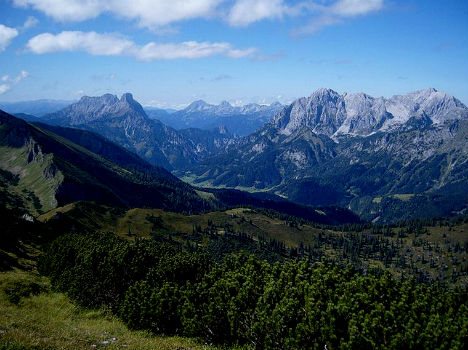
The morning mist lifts slowly from the Enns River valley, revealing a landscape of sheer limestone cliffs, dense spruce forests, and the sound of water rushing through narrow gorges. The Gesäuse National Park, established in 2002, protects one of the last truly wild river landscapes in the Alps, where the Enns has carved a dramatic path through the limestone massif over millions of years. This is a place where you can walk for hours without encountering another soul, where the only interruptions to the silence are the call of a golden eagle circling overhead or the distant crash of a rockfall from the cliffs above.
\n\n
In This Article
The Dramatic Landscapes of the Gesäuse
\n
The park covers approximately 110 square kilometres of the Ennstal Alps in northern Styria, with the Enns River running through its heart. The name Gesäuse means roaring, a reference to the sound of the river as it forces its way through the narrow gorges between the towering limestone walls. The highest peak in the park is the Hochtor at 2,369 metres, a challenging climb that rewards experienced hikers with panoramic views across the Styrian and upper Austrian Alps. The limestone geology has created a landscape of deep gorges, vertical cliffs, and spectacular rock formations, including the Stadelfelsen and the Rosseln, both popular with climbers. The park is also known for its numerous caves, carved over millennia by water seeping through the fractured limestone.
\n\n
Hiking Trails and Wildlife
\n
The park offers over 200 kilometres of marked hiking trails, ranging from gentle riverside walks to demanding multi-day alpine routes. The Enns Trail follows the course of the river through the heart of the park, offering spectacular views of the cliff faces on either side. The trail to the Hartelsgraben waterfall is one of the most popular shorter routes, taking about two hours round trip through a forested gorge. Wildlife in the park includes chamois, ibex, marmots, and golden eagles, with the occasional sighting of lynx and brown bears that have begun to recolonise the area from neighbouring Slovenia. The park’s remote location and protected status have allowed these species to thrive, making it one of the best places in Austria for wildlife watching.
\n\n
Practical Information
\n
The park is accessible from the town of Admont, which is also home to the famous Admont Abbey library, the largest monastic library in the world. The park information centre in Admont provides maps, trail conditions, and advice on guided tours. The best months for hiking are May through October, with July and August offering the warmest temperatures. Winter brings snowshoeing and cross-country skiing opportunities, though many of the higher trails are closed. There is no entrance fee for the park, but donations to the conservation fund are welcome. Accommodation ranges from alpine huts and mountain inns within the park to hotels and guesthouses in Admont and the surrounding villages. The nearest major city is Graz, approximately 90 minutes to the south.
\n\n
Have you ever walked through the Gesäuse and felt the power of the Enns River cutting through that ancient limestone? What was your most memorable moment in the Austrian Alps?
\n\n\n\n
\n \n
The National Park Gesäuse was founded in 2002 and is the most recent national park in Austria and is known for its steep mountains with sharp edges and rough gores. It includes parts of the Styrian communities of Admont, Johansbach, Weng, Hieflau, Landl and St Gallen. This region is well-known for its centuries old culture and many market towns of the area have historical centres.
\n

\nPhoto licensed under the Creative Commons, created by Brikarus
\n
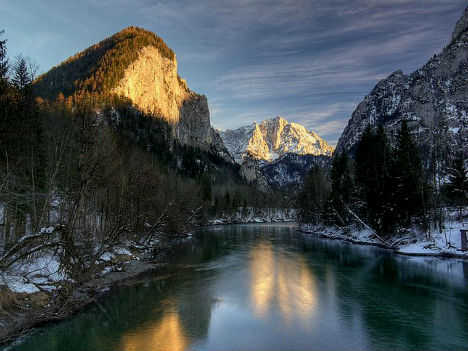
Gesäuse National Park currently covers an area of 110 km2. It is a great opportunity for hiking along the river Enns, especially in late summer or autumn.
\n
National park includes Buchstein massif with its peak Großer Buchstein (2224 metres above sea level) and wild romantic mountain massif Gesäuse with the highest peak Hochtor (2370 metres above sea level). Those peaks are separated from each other by the wild river Enns, which created a really romantic valley – a monumental breakthrough between cities Admont and Hieflau.
\n
Over 80% of the national park is a part of the Johnsbach and Weng areas, the remaining 20% stretch around cities of Admont, Hieflau, Landl and St. Gallen.
\n
\nPhoto licensed under the Creative Commons, created by Hardo Müller
\n
The centre of Gesäuse National Park is among alpinists very popular Hesshütte cottage, romantically situated at an altitude of 1699 metres in the saddle Ennseck, below the Hochtor summit. For tourists who want to achieve it smoothly there is a marked trail No. 601 leading from the Johns-bach – the southern Gesaeuse Massif, and running through steep woods. The cottage can such be reached in 2,5 – 3 hours.
\n
It is possible to get to Hesshütte cottage also from the northern side of the massif. There are two very nice ascent routes leading from the Enns River valley. The first one, marked as No. 665, leads through Hartelsgraben gorge to Sulzkaralm plain and continues along the No. 601 over the saddle at Rotofen. By following this route you reach the cottage in 5-6 hours. This route is recommended in the opposite direction for easy descent of this mountain massif to the Enns Valley.
\n
It is also worth to visit an oldest mountaineers’ cemetery in Austria, located in Johnsbach.
\n
For lovers of extreme kinds of sports there are available outdoor centres on the rivers Enns and Salza, offering adventure kayaking or rafting, and parks with rope obstacles. Very popular is also a water park Wasserspielpark St. Gallen and archery in Palfau.
\n
\nPhoto licensed under the Creative Commons, created by Alex Barth
\n
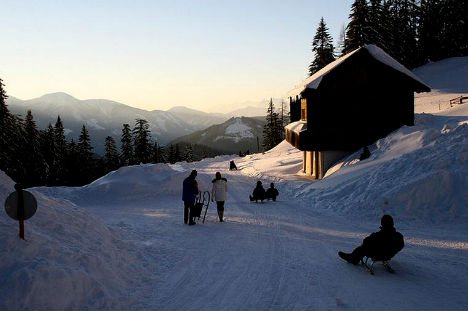
Winter lovers can go to a small, but beautiful ski area Kaiserau. For ski runners is recommended Hall, which is one of 15 centers ranked by Styrian seal of quality. Other activities include dog sledding, igloo building, tours on skis or snowshoes.
\n
Even a trip to the monastery in Admont with the largest monastic library in the world should not miss when visiting this area.
\n
View National Park Gesäuse in Styria, Austria in a larger map
\n
\n
Have you explored the natural wonders and historic treasures described here? Share your favourite European travel memory in the comments below!
\n\n
Explore all our Austria travel guides, from Vienna coffeehouses to Alpine peaks.
Explore More
If you enjoyed this article, you might also like:
