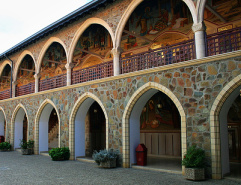
The Monastery of Kykkos is the wealthiest, most famous, and most visited monastery in Cyprus, a dazzling complex of golden mosaics, Byzantine treasures, and sweeping mountain vistas hidden in the Troodos Mountains. Founded in the 11th century, Kykkos is home to one of only three surviving icons attributed to the Apostle Luke, making it a pilgrimage destination of immense spiritual significance.
In This Article
Quick Facts
- Best time to visit: Spring (March-May) or autumn (September-November) for pleasant mountain temperatures
- Top attraction: The gold-covered icon of the Virgin Mary (Panagia Kykkotissa), attributed to St. Luke
- How to get there: ~1.5 hours from Paphos or Nicosia by car; winding mountain roads, allow extra time
- Entry fee: Free (donations welcome)
- Dress code: Modest attire required, knees and shoulders must be covered
The History and Architecture of Kykkos
Founded around 1100 AD by the Byzantine Emperor Alexios I Komnenos, the Monastery of Kykkos has a history marked by both devotion and disaster. The original wooden structures were destroyed by fires several times over the centuries, most devastatingly in 1365 and again in 1541. Each time, the monastery was rebuilt, growing more elaborate with each reconstruction. The current complex dates largely from the 19th and 20th centuries and is a magnificent blend of Byzantine and modern Orthodox architectural styles. The exterior is adorned with glittering mosaics depicting Christ, the Virgin Mary, and various saints, a project that took over 30 years to complete and was consecrated in the 1990s. The bell tower rises majestically above the complex, while the inner courtyard features beautiful arched cloisters decorated with frescoes illustrating scenes from the Old and New Testaments. The monastery sits at an elevation of 1,300 metres in the Troodos Mountains, offering cool mountain air and spectacular views over the forested slopes. The name Kykkos is said to derive from a local legend involving a bird that sang a prophecy about the monastery’s founding.
The Miraculous Icon and the Monastery Museum
At the heart of the monastery’s spiritual significance lies the icon of Panagia Kykkotissa, an icon of the Virgin Mary believed to have been painted by the Apostle Luke himself. This is one of only three surviving icons attributed to the evangelist, making it a relic of extraordinary importance. The icon is covered almost entirely in gold and silver, with only the face of the Virgin visible, and is kept in a special shrine within the main church. According to tradition, the icon has never been shown to the public since its arrival at Kykkos, and it remains veiled at all times. The monastery’s museum houses an extensive collection of Byzantine icons, illuminated manuscripts, religious vestments, and ecclesiastical artefacts, ranking among the finest ecclesiastical museums in the Eastern Mediterranean. The intricately carved wooden iconostasis in the main church is a masterpiece of craftsmanship, its gilded surface adorned with rows of icons depicting Christ, the Virgin, and the saints. Additional icons in the collection come from Russian Orthodox churches.
Visiting the Monastery and Surrounding Area
The Monastery of Kykkos is located in a remote and beautiful setting in the western Troodos Mountains, approximately 90 minutes by car from both Paphos and Nicosia. The winding mountain roads require careful driving but offer stunning scenery along the way, passing through pine forests and traditional Cypriot villages. The monastery is free to enter, though donations are welcome, and visitors are asked to dress modestly with knees and shoulders covered. The best times to visit are spring and autumn, when the mountain temperatures are pleasantly cool and the surrounding forests are at their greenest. Summer can be hot, though the elevation provides some relief from the coastal heat. The monastery’s gift shop sells local products including honey, wine, and olive oil produced by the monks, as well as religious items and souvenirs. The monastery includes a large surrounding land and is built in classic Byzantine style. Combine your visit with a trip to the nearby village of Milikouri or a hike in the surrounding Troodos forests for a full day of mountain exploration in this beautiful part of Cyprus.
Have you visited Monastery of Kykkos – one of the wealthiest and best-known monasteries in Cyprus? I’d love to hear about your experience and any travel tips in the comments below!
Discover more destinations in our sitemap or explore by destination.
Explore all our Cyprus travel guides, from Aphrodite birthplace to the divided capital.
Explore More
If you enjoyed this article, you might also like:
