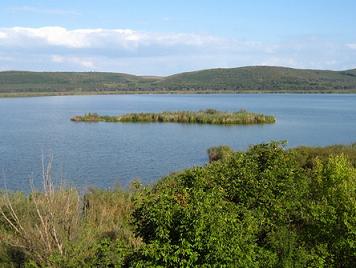
The Srebarna Nature Reserve is one of Europe’s most important wetland bird sanctuaries, a UNESCO World heritage freshwater lake on the Bulgarian Danube plain that provides critical breeding and migratory habitat for over 200 bird species, including the globally endangered Dalmatian pelican. Located near the Danube River in northeastern Bulgaria, Srebarna offers some of the finest birdwatching in southeastern Europe, particularly during spring and autumn migrations when thousands of waterbirds converge on this Ramsar-listed wetland.
In This Article
Exploring the Srebarna Lake Ecosystem
The lake covers approximately 638 hectares and is fed by the Danube River through a connecting channel, creating a unique freshwater ecosystem that supports an extraordinary diversity of bird, fish, and plant species. The lake is surrounded by a dense belt of reeds and rushes that extends up to 1.5 kilometres inland, providing essential nesting habitat for species such as the great crested grebe, the purple heron, the little bittern, and the rare white-tailed eagle. Beneath the water surface, the lake supports rich fish populations including European catfish and common carp, which in turn sustain the bird populations that make Srebarna famous worldwide.
The reserve is divided into several distinct habitat zones, including open water, reed beds, flooded willow forests, and surrounding agricultural land, each attracting different bird species throughout the year. Over 230 bird species have been recorded here, with approximately 80 species nesting regularly within the reserve boundaries. The observation tower near the visitor centre offers panoramic views across the entire lake and is the best spot for watching the birds without disturbing them. Early morning is the most rewarding time to visit, when bird activity peaks and mist rising from the water creates a magical atmosphere. A pair of binoculars and a field guide are essential companions for any visit to Srebarna.
Seasonal Wildlife Highlights
The best time to visit Srebarna is between April and June, when the reserve is at its most active during the breeding season. During this period, the Dalmatian pelicans nest on artificial platforms that have been built specifically to support the recovery of this globally endangered species. The air is filled with the calls of glossy ibises, spoonbills, pygmy cormorants, and ferruginous ducks, making it a paradise for birdwatchers and nature photographers alike. The autumn migration from September to October brings another wave of activity, with large flocks of white storks, lesser spotted eagles, and various wader species passing through on their journey south along the European-African flyway.
Among the many species that can be seen throughout the year, some of the most notable include the Dalmatian pelican, which is one of the largest freshwater birds in the world, the pygmy cormorant with its distinctive glossy black plumage, and the elegant glossy ibis with its iridescent feathers. The white-tailed eagle, one of Europe’s largest raptors, can occasionally be seen soaring over the lake in search of fish. The reserve has been recognised as a UNESCO World heritage site since 1983 and is also a UNESCO Biosphere Reserve and a Ramsar Wetland of International Importance, reflecting its critical role in supporting migratory waterbird populations.
Practical Information for Visitors
The reserve is located about 2.5 hours from Bucharest and 3.5 hours from Sofia by car, with the nearest town being Silistra, just 18 kilometres away. The entry fee is minimal, usually a few leva, and guided nature walks are available for those who want to learn more about the reserve’s ecology from experienced local guides. The small visitor centre at the entrance provides detailed information about the reserve’s history, the conservation work being carried out to protect this important wetland, and the various species you can expect to see during your visit.
In the 1990s, Srebarna faced serious ecological challenges when the connecting channel to the Danube was blocked, causing the lake to shrink and water quality to deteriorate. However, a major restoration project in the early 2000s successfully reconnected the lake to the Danube, and the ecosystem has been recovering steadily ever since, with bird populations showing encouraging signs of increase. The surrounding area is also home to several rare plant species, making this location a true paradise for nature lovers and ornithologists from around the world.
View Srebarna Nature Reserve – home to hundreds of species of birds Bulgaria in a larger map
Have you visited Srebarna or explored Bulgaria’s Danube wetlands? Share your birdwatching highlights in the comments! 🦒
Explore all our Bulgaria travel guides, from the Black Sea to the Rila Mountains.
Explore More
If you enjoyed this article, you might also like:
What a wonderful article. Srebarna Nature Reserve has been on my wish list for ages and this just moved it right to the top. The photos are stunning. How many days would you recommend for a first-time visitor?