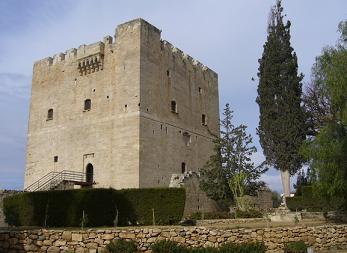
Kolossi Castle is one of the most significant medieval monuments in Cyprus, a imposing 15th-century Crusader tower house near Limassol, surrounded by flowering bougainvillea and citrus groves, that served as the Grand Commandery of the Knights Hospitaller (Knights of St. John) and was the centre of the island’s sugar and wine production during the Lusignan period. The castle is directly connected to the world’s oldest named wine: Commandaria, the sweet amber dessert wine produced in the surrounding foothills of the Troodos Mountains, was named after the “Grande Commanderie” at Kolossi and has been continuously produced in this region for over 800 years.
In This Article
Quick Facts: Kolossi Castle
- Best time to visit: Year-round; the castle is best visited in the morning before the midday Cyprus heat; combine with a Commandaria wine tasting at a nearby winery
- How to get there: ~15 minutes from Limassol by car; the castle is in the village of Kolossi, just off the Limassol, Paphos highway
- Entry fee: ~€2.50 (adult)
- Combine with: Kourion archaeological site, the Commandaria wine route, and Limassol Old Town
Kolossi Castle is a medieval fortress from the 13th century, which is located near one of the most important tourist resorts of the island of Cyprus, Limassol town. Here you can taste one of the most famous wines in the world.
Kolossi Castle was probably built already in 1210 by the King Hugh I of Cyprus, also known as the Knight Hospitaller who built the main residence here.
Later the castle became the center of the order of the Knights Hospitaller and Templar Knights. In the years of 1425-1426 the castle was damaged after a large invasion of Mameluke raids. In 1454 was at the place of original castle built a new castle. It was built by Louis de Magnac whose coat of arms can be still seen on the eastern walls of the castle.
In 1933 the castle was reconstructed. The castle is now open all year round and is accessible by a small drawbridge. Following the stone staircase it is possible to get to the roof of the castle, where you can enjoy a beautiful view of the surroundings.
Already in the days of knights the castle was a place of production of a delicious sweet wine known as Vins de la Commanderie, one of the traditional Cypriot brands.
Architecture and Defensive Features
Kolossi Castle, despite its modest size, is a textbook example of Crusader military architecture adapted to the Cypriot environment. The main structure is a three-storey tower keep measuring approximately 15 by 12 metres, with walls that are over 1.5 metres thick at the base. The original entrance was on the first floor, accessible only by a drawbridge and ladder, a defensive feature that ensured the lower floor could be sealed off if attackers breached the outer walls. The ground floor was used for storage, including the pressing and storage of wine and olive oil, while the first floor housed the great hall and living quarters. The second floor provided additional accommodation and access to the roof, where defenders could observe the surrounding countryside and repel attackers. The castle’s most distinctive feature is its sugar mills, visible in the ruins of the outer bailey. Cyprus was a major sugar producer during the medieval period, and the Knights Hospitaller operated sophisticated sugar processing facilities at Kolossi that were among the most advanced in the Mediterranean.
The Commandaria Wine Legacy
No visit to Kolossi Castle is complete without understanding its connection to Commandaria, the world’s oldest named wine still in production. The wine’s name derives directly from the Grande Commanderie, the administrative headquarters of the Knights Hospitaller’s Cypriot estates, which was based at Kolossi Castle. The knights were enthusiastic winemakers who recognised the exceptional quality of the grapes grown in the sun-drenched foothills of the Troodos Mountains. Commandaria is a sweet dessert wine made from sun-dried Xynisteri and Mavro grapes, aged for at least two years in oak barrels before release. The result is a rich, amber-coloured wine with notes of dried fruit, honey, and spices that has been praised by visitors to Cyprus since the days of Richard the Lionheart. At the Crusader wedding of King Richard to Berengaria of Navarre in 1191, Commandaria was served as the wedding wine. Today, the wine route that winds through the villages around Kolossi offers visitors the chance to taste Commandaria at family-run wineries and learn about traditional Cypriot winemaking methods that have changed little in 800 years.
Visiting Kolossi and Combining with Other Sights
The castle is in the village of Kolossi, about 15 minutes by car from Limassol, easily reached via the Limassol-to-Paphos highway. It is open daily year-round with a modest entrance fee of around 2.50 euros. Visitors can explore the interior rooms, climb to the roof for views over citrus groves, and examine the sugar mill ruins. The flowering gardens with the Troodos Mountains as a backdrop offer excellent photo opportunities. Combining a visit with the archaeological site of Kourion, 20 minutes to the west, makes for an excellent half-day excursion. Kourion’s Greco-Roman amphitheatre and mosaic floors are among the most impressive ancient remains on the island. Several nearby wineries offer tastings that connect Cyprus’s medieval, ancient, and culinary heritage.
View Kolossi Castle, medieval fortress in Cyprus in a larger map
Have you visited Kolossi Castle or tasted the legendary Commandaria wine of Cyprus? Share your Cypriot Crusader discoveries in the comments! 🍷
Explore all our Cyprus travel guides, from Aphrodite birthplace to the divided capital.
Explore More
If you enjoyed this article, you might also like:
