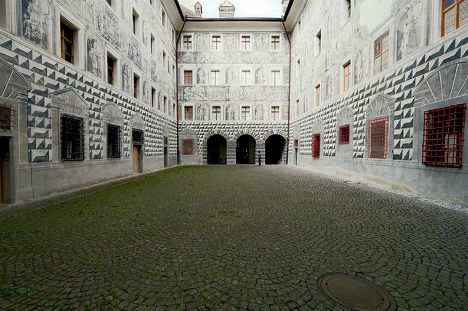
Perched on a hill overlooking the city of Innsbruck, Ambras Castle is one of the most significant Renaissance castles in Austria, a treasure house of art, armour, and curiosities assembled by Archduke Ferdinand II of Tyrol in the 16th century. Unlike many European castles that were built for defence, Ambras was conceived as a pleasure palace, a residence designed to reflect the sophistication and wealth of its owner. Ferdinand II, a passionate collector and patron of the arts, transformed a medieval fortress into one of the finest Renaissance castles north of the Alps, filling it with collections that would later form the foundation of the Kunsthistorisches Museum in Vienna.
In This Article
The Spanish Hall
The architectural highlight of Ambras Castle is the Spanish Hall, one of the most beautiful banqueting halls of the Renaissance. The hall, built between 1570 and 1573, is 43 metres long and features a magnificent coffered wooden ceiling carved with scenes from mythology. The walls are decorated with full-length portraits of the rulers of Tyrol, creating a royal gallery that encircles the entire room. The hall’s extraordinary acoustics make it a popular venue for concerts, particularly during the annual Ambras Castle Concerts held each summer. The Florentine gates at either end of the hall, crafted from marble and decorated with gilded bronze, are masterpieces of Mannerist art. Walking into the Spanish Hall is to step into the world of Renaissance courtly life at its most refined and theatrical.
The Collections of Archduke Ferdinand II
The castle houses three remarkable collections that reflect Ferdinand II’s wide-ranging interests. The Armoury, one of the largest in Europe, contains over 3,000 pieces, including ceremonial armour of Ferdinand II himself, tournament armour, and armour designed for both humans and horses. The Chamber of Art and Curiosities, or Kunstkammer, is a cabinet of wonders containing over 1,000 objects, including scientific instruments, mechanical automata, carved ivories, and rare natural specimens. The highlight of the collection is the Ambras Syringe, a 17th-century Persian bronze cannon used for medical injections. The Portrait Gallery, housed in the lower castle, contains over 200 portraits of the Habsburg family and their contemporaries, including works by Titian, Veronese, and Velázquez.
Practical Information
Ambras Castle is located in the south-eastern suburbs of Innsbruck, easily reached by bus from the city centre in about 20 minutes. The castle is open daily from 10 am to 5 pm, with extended hours during the summer months. Admission costs approximately 16 euros for adults and includes access to all the collections and the Spanish Hall. The castle gardens, laid out in the Italian Renaissance style with terraces, fountains, and a statue of the goddess Diana, are free to enter and offer views across Innsbruck and the surrounding mountains. The best time to visit is during the summer, when the gardens are in bloom and the concert series is in full swing. Allow at least two hours to explore the castle and its collections thoroughly.
Have you walked through the Spanish Hall of Ambras Castle and admired the Renaissance artistry of Archduke Ferdinand II’s pleasure palace? What piece from the Kunstkammer fascinated you most?
>
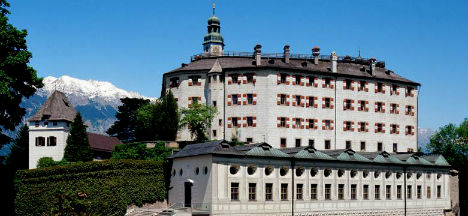
Photo by khm.at
A Renaissance Pearl of Tyrol
Ambras Castle, located on a hill just southeast of Innsbruck, is one of the most significant Renaissance castles in Austria. Its origins date back to the 12th century, but it was transformed between 1564 and 1595 under Archduke Ferdinand II of Tyrol into a magnificent Renaissance residence. Ferdinand, a passionate collector and patron of the arts, created a cultural centre that attracted scholars, artists, and diplomats from across Europe, making Ambras a hub of intellectual and artistic activity during the late Renaissance.
The castle is actually two separate structures: the Lower Castle, which houses the famous collections, and the upper Castle, the residential quarters. The two are connected by a courtyard and a Spanish Hall, one of the most beautiful free-standing Renaissance halls in the world, which still hosts concerts and cultural events today.
Explore all our Austria travel guides, from Vienna coffeehouses to Alpine peaks.
Explore More
If you enjoyed this article, you might also like:
