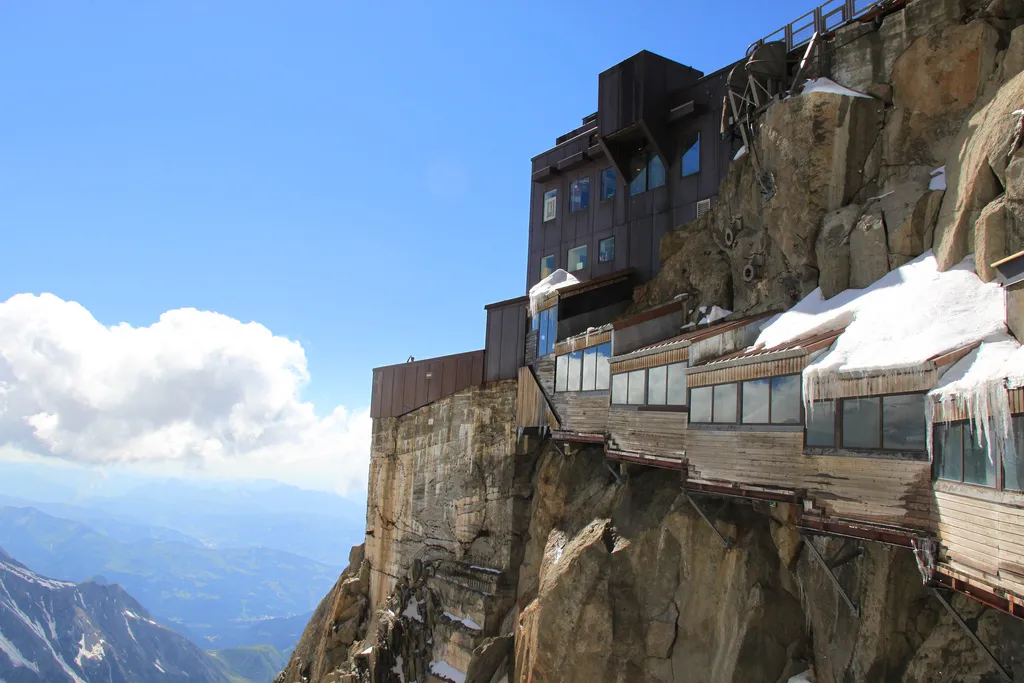
The path forks at a cairn of flat stones stacked by a thousand hands before yours, a waymarker that has been added to, stone by stone, for decades, and you stop. Left: the valley, a green corridor of beech trees and the distant silver of a river. Right: the ridge, bare and wind-scoured, the cloud shadow racing across the slopes below. You are on the Tour du Mont Blanc, midway through a 170 km circuit of Europe’s highest peak, and the choice is between beautiful and spectacular. Walking in Europe means having this conversation with yourself several times a day.
Europe on Foot: A Continent Sized for Walking
Europe has the densest network of waymarked long-distance trails in the world, 12 E-paths alone cover over 70,000 km from the North Cape to Crete and from the Atlantic to the Black Sea. Europe’s Natura 2000 network protects 27,000 sites across 27 countries; many are accessible only on foot. Walking in Europe is not an activity. It is the way the continent was designed to be experienced, before the motorways and the budget airlines convinced us that the destination mattered more than the journey.
Six Walks That Define the European Walking Experience
1. Tour du Mont Blanc (France, Italy, Switzerland, 170 km, 10-12 days): The classic circuit of western Europe’s highest peak crosses three borders, climbs 10,000 metres of cumulative ascent, and passes through seven valleys. The infrastructure, refuges (mountain huts, book 3-6 months ahead for July-August), well-marked trails, and luggage transfer services, is the best in Europe. Each day delivers a new valley, a new cuisine (tartiflette in France, polenta in Italy, rösti in Switzerland), and a new view of the massif. The Col de Balme section (France into Switzerland) at sunrise, Mont Blanc turning pink, the silence of the high pass, the awareness that you are walking in the footsteps of the guides and shepherds and smugglers who have crossed these passes for centuries, is worth the entire trip.
2. The West Highland Way (Scotland, 154 km, 6-8 days): Scotland’s first and most famous long-distance trail runs from the outskirts of Glasgow (Milngavie) to Fort William at the foot of Ben Nevis. The landscape transitions, from the gentle farmland of the Lowlands, along the bonnie banks of Loch Lomond (the largest freshwater lake in Britain by surface area), across the desolate beauty of Rannoch Moor (50 square kilometres of peat bog and lochan, utterly uninhabited), into the drama of Glen Coe (the site of the 1692 massacre, the mountains rising sheer on either side like a geological accusation), is perfectly judged. The Devil’s Staircase (a relentless climb of 260 metres in less than a kilometre) is not as bad as the name suggests. The view from the top, the full sweep of Glen Coe, Ben Nevis crowning the horizon, is better than any photograph can capture.
3. The Cinque Terre Coastal Trail (Italy, 12 km, 4-5 hours): The Sentiero Azzurro (Blue Trail) links the five villages of the Cinque Terre, Monterosso, Vernazza, Corniglia, Manarola, Riomaggiore, along a clifftop path that was, until the railway arrived in 1874, the only land connection between them. The trail is spectacular and, in summer, spectacularly crowded, the section between Riomaggiore and Manarola (the Via dell’Amore) is closed for restoration until at least 2026. The alternative: walk the high trail (Sentiero Rosso, 35 km, 12 hours total), which climbs above the villages and offers the same views with one-tenth of the crowds. The path between Volastra and Corniglia, through terraced vineyards that have been cultivated since the 11th century, the dry-stone walls crumbling gently into the Mediterranean below, is the highlight. Buy the Cinque Terre Card (€7.50/day, includes trail access and local train travel between the villages).
4. The Camino de Santiago (Spain, multiple routes, 100-800 km): The Camino Francés (the most popular route, 780 km from St-Jean-Pied-de-Port to Santiago de Compostela) attracts over 300,000 pilgrims annually. The infrastructure, albergues (pilgrim hostels, €6-12 per night), waymarkers (yellow arrows, painted on walls, trees, and roads), and a pilgrim culture that strips the walk down to its essentials (walk, eat, sleep, repeat), is the model for every long-distance walking route in the world. The Camino is not a wilderness walk. It passes through cities, industrial estates, and suburban sprawl. The magic is in the rhythm, the same routine every day, the same conversation with strangers who become friends in the space of an afternoon, the same approach to Santiago that has not changed since the 9th century, and the moment in the Plaza del Obradoiro, the cathedral in front of you, the walk behind you, that makes you cry even if you were absolutely certain you would not.
5. The Dolomites Alta Via 1 (Italy, 120 km, 8-10 days): The Dolomites, jagged limestone spires, pink at sunset, unlike anything in the Alps proper, are a UNESCO World heritage site (inscribed 2009) and the Alta Via 1 is the classic traverse. The route runs from Lago di Braies (the turquoise lake that dominates Instagram, the colour entirely natural, the result of glacial flour suspended in the water) to Belluno, crossing lunar plateaus, passing First World War tunnels carved into the rock (the Dolomites were the front line between Italy and Austria-Hungary; the via ferrata, iron cables fixed to the rock, allowing relatively inexperienced climbers to traverse exposed terrain, were originally military routes), and delivering views that make you stop every twenty minutes. The rifugi (mountain huts) serve three-course dinners and excellent wine; the contrast between the day’s exertion and the evening’s comfort is perfectly judged. Book rifugi 4-6 months ahead for July-August.
6. The Rota Vicentina (Portugal, 224 km, 12-14 days): The Fisherman’s Trail runs along the Alentejo and Vicentina coast, from Porto Covo to Cabo de São Vicente (the southwesternmost point of mainland Europe). The path clings to the cliff edge, the Atlantic pounding the rocks below, the air thick with salt and the cries of nesting storks (the Alentejo coast has one of the highest densities of white stork nests in Europe, on the cliffs rather than on rooftops, a rare and spectacular behaviour). The trail is well-marked, the temperatures are mild (spring and autumn are ideal; summer is hot but manageable with an early start), and the accommodation, small guesthouses in fishing villages, is inexpensive (€30-50 per night). The stretch from Almograve to Zambujeira do Mar, 22 km of uninterrupted cliff path, the sea a constant companion, the scent of wild thyme and rosemary underfoot, is as beautiful a day’s walking as exists anywhere in Europe. The lighthouse at Cabo de São Vicente, the end of the trail, is the last thing Portuguese sailors saw before heading into the unknown. Standing there, with the Atlantic stretching to the horizon and the knowledge that 12 days of walking have brought you to this point, is a profoundly satisfying feeling.
7 Of The Best French Ski Resorts For 2013
France is the most popular tourist destinations in the world. According to the UNWTO, 79.5 million tourists arrived in France in 2011. From Paris and Versailles to the French Riviera and the Alps, France abounds in tourist attractions. For Britishers, France has been the traditional destination for skiing holidays. Each year, millions of British tourists […]
