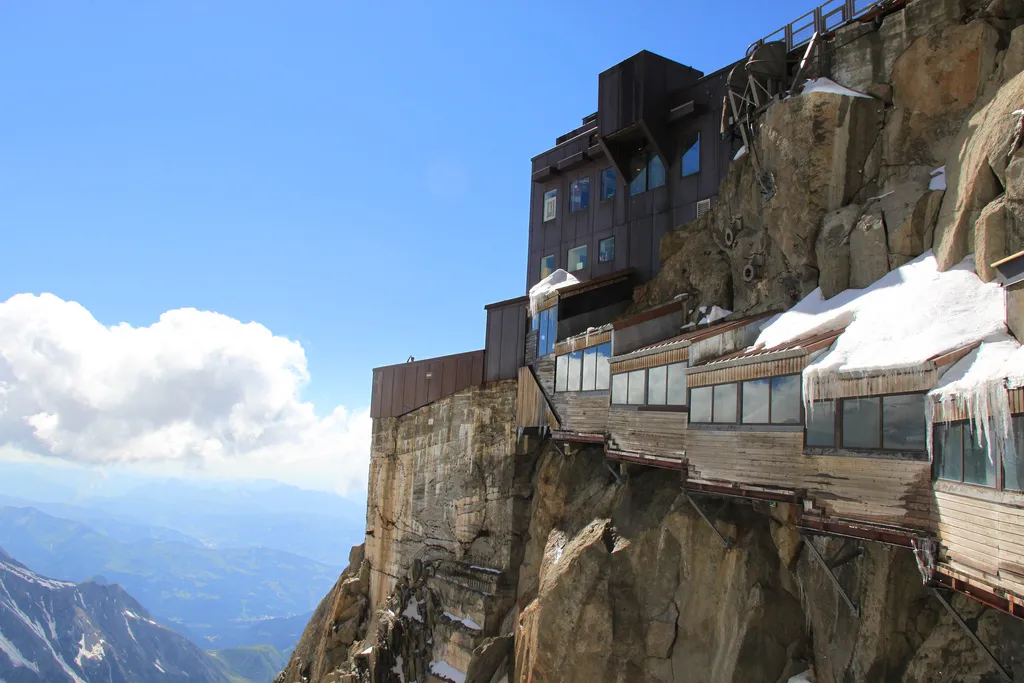
France has 180,000 km of marked hiking trails, enough to circle the Earth four and a half times, crossing every landscape the country has to offer: the high passes of the Alps, the volcanic peaks of the Massif Central, the limestone gorges of the Cévennes, the granite coast of Brittany, the lavender fields of Provence. The French take their hiking seriously (the Grande Randonnée, the GR, network of long-distance footpaths was created in 1947 and is the model for long-distance trail networks around the world), and the infrastructure, the red-and-white waymarks, the gîtes d’étape (the hikers’ hostels), the villages whose economies are built around the passing walker, makes France one of the best hiking destinations in the world. Here are four of the best trails.
In This Article
1. GR20, Corsica, The Toughest and Most Beautiful
GR20, Corsica, the toughest and most beautiful: 180 km diagonally across the spine of Corsica, from Calenzana in the north to Conca in the south, the GR20 is widely considered the toughest long-distance trail in Europe and one of the most beautiful. The statistics: 15 days (the standard itinerary, 12 for the fit and determined), 14,000 metres of total ascent (nearly twice the height of Everest), and terrain that alternates between granite slabs you scramble up on your hands and feet, knife-edge ridges with drops of hundreds of metres on either side, and the high-altitude lakes and meadows of the “cirques”, the glacial basins that are the most beautiful landscapes on the island. The reality: the GR20 is physically demanding (the northern section, from Calenzana to Vizzavona, is the hardest, relentless ascents and descents, the path often little more than a scramble over boulders) and logistically complex (you need to carry your own food or arrange for the refuges to provide meals, book at least a month ahead for the refuges in July and August, the only months the trail is reliably snow-free). The reward: the sense of achievement, the camaraderie of the trail (the GR20 has a cult following, you will meet the same hikers at the refuges every evening), and the views of the Mediterranean on both sides of the island from the high passes that are among the most beautiful in Europe. When: June–September. Best hut: Refuge de l’Onda, the highest on the trail, the sunset over the mountains from the terrace.
2. Tour du Mont Blanc (TMB), Alps, The Classic
Tour du Mont Blanc (TMB), Alps, the classic: 170 km around the highest mountain in Western Europe, crossing three countries (France, Italy, and Switzerland), 10,000 metres of total ascent, and some of the most famous views in the Alps. The TMB is the most popular long-distance trail in Europe, 10,000 hikers complete the full circuit every year, and the infrastructure (the refuges, the mountain huts serving three-course dinners and cold beer at 2,500 metres, are among the best in the world) makes it the most comfortable and accessible of the great Alpine walks. 11 days is the standard itinerary. The essential sections: the balcony path from the Col de la Seigne into Italy (the view of Mont Blanc across the valley, the mountain filling the sky, is the most beautiful moment on the circuit), the climb to the Fenêtre d’Arpette (the hard alternative, a steep, rocky pass, the highest point on the TMB, and the most dramatic view of the Mont Blanc massif), and the descent into Champex-Lac (the Swiss lakeside village, the most beautiful stop on the circuit, a swim in the lake, a cold beer on the terrace of the Auberge Gîte Bon Abri, and the sense that life is very good). When: July–September. Book the refuges 6 months ahead for July and August, the TMB is extraordinarily popular, and the huts fill up quickly.
3. GR34, Brittany, The Coastal Path
GR34, Brittany, the coastal path: The Sentier des Douaniers, the Customs Officers’ Path, 2,000 km around the coast of Brittany, from Mont-Saint-Michel to Saint-Nazaire, following the route of the 18th-century customs officers who patrolled the coast to prevent smuggling. The GR34 is not a single trail so much as a network of coastal paths, you can walk a section of a few days or the entire coast in 100–120 days. The essential sections: the Côte de Granit Rose (the Pink Granite Coast, Perros-Guirec to Trégastel, 15 km, the most beautiful day walk on the GR34: the granite boulders, some the size of houses, shaped by the wind and the sea into forms that look like something by Henry Moore, the colour of the stone a deep, rosy pink that glows at sunset. Allow a full day). The Pointe du Raz (the westernmost point of mainland France, the cliffs, the lighthouse, and the Atlantic crashing into the rocks, the sea stretching uninterrupted to America. The walk from the Pointe du Van to the Pointe du Raz, 8 km, 3 hours, is the most dramatic coastal walk in Brittany). The GR34 is easier, more accessible, and more varied than the mountain routes, the villages of the Breton coast (the crêperies, the cider, the seafood), the islands accessible at low tide (the Île Callot, the Île de Bréhat), and the ever-changing light of the Atlantic coast.
4. Stevenson Trail (GR70), Cévennes, The Literary Walk
Stevenson Trail (GR70), Cévennes, the literary walk: In 1878, a 28-year-old Robert Louis Stevenson, not yet the author of Treasure Island (1883) or The Strange Case of Dr Jekyll and Mr Hyde (1886), but a struggling young writer recovering from a broken heart, set out from Le Monastier-sur-Gazeille in the Haute-Loire with a donkey named Modestine. He walked 220 km south through the Cévennes to Saint-Jean-du-Gard in 12 days, and the book he wrote about the journey, Travels with a Donkey in the Cévennes (1879), is one of the founding texts of outdoor literature. The Stevenson Trail (the GR70) follows his route. The landscape, the volcanic uplands of the Velay, the chestnut forests and the deep valleys of the Cévennes, the villages that have not changed substantially in 150 years, is beautiful, quiet, and far less visited than the Alpine trails. The trail is moderate (12 days, well-marked, with good accommodation, gîtes and small hotels in the villages, no refuges). The essential experience: read the book before you go (the Modestine’s recalcitrance, the nights in the open air under a sky of “an inconceivable purity of darkness,” the monk of Our Lady of the Snows, Stevenson’s prose is as beautiful as the landscape), and walk the trail as close to the original route as possible. You can still hire a donkey for the trail, the Modestine experience, minus the kicking and the stubborn refusals to move.
7 Of The Best French Ski Resorts For 2013
France is the most popular tourist destinations in the world. According to the UNWTO, 79.5 million tourists arrived in France in 2011. From Paris and Versailles to the French Riviera and the Alps, France abounds in tourist attractions. For Britishers, France has been the traditional destination for skiing holidays. Each year, millions of British tourists […]
