The first tourists to Chamonix were the English aristocracy of the 1740s, who travelled for weeks by carriage, by horse, and on foot to stand at the foot of the Mer de Glace, the Sea of Ice, the glacier that descended from Mont Blanc into the valley, and to experience the sublime: the terror and the pleasure of standing before a landscape too vast, too wild, and too beautiful to comprehend. The glacier has retreated 700 metres since those first tourists arrived (the warming of the Alps is proceeding at twice the global average, and the Mer de Glace now ends far above the valley floor, accessible only by the Montenvers cog railway and a long staircase down the rock), but the sublime, Mont Blanc, 4,809 metres, the highest mountain in western Europe, the glaciers, the aiguilles (the needles of rock that pierce the skyline), and the sense of the mountains that have drawn the mountaineers, the skiers, and the tourists for 280 years, is undiminished. Chamonix is the mountaineering capital of the world: the first ascent of Mont Blanc in 1786 (the physician Michel-Gabriel Paccard and the crystal hunter Jacques Balmat, the 14-hour climb, and the birth of modern mountaineering), the winter Olympic Games of 1924 (the first Winter Olympics, the bobsleigh, the skating, and the ice hockey, the games that defined the winter sports), and the modern town, the 10,000 permanent residents, the 100,000 tourists in the summer, the 60,000 in the winter, and the lifts that carry them up the mountain. Here is your guide.
Discover Chamonix Mont-Blanc
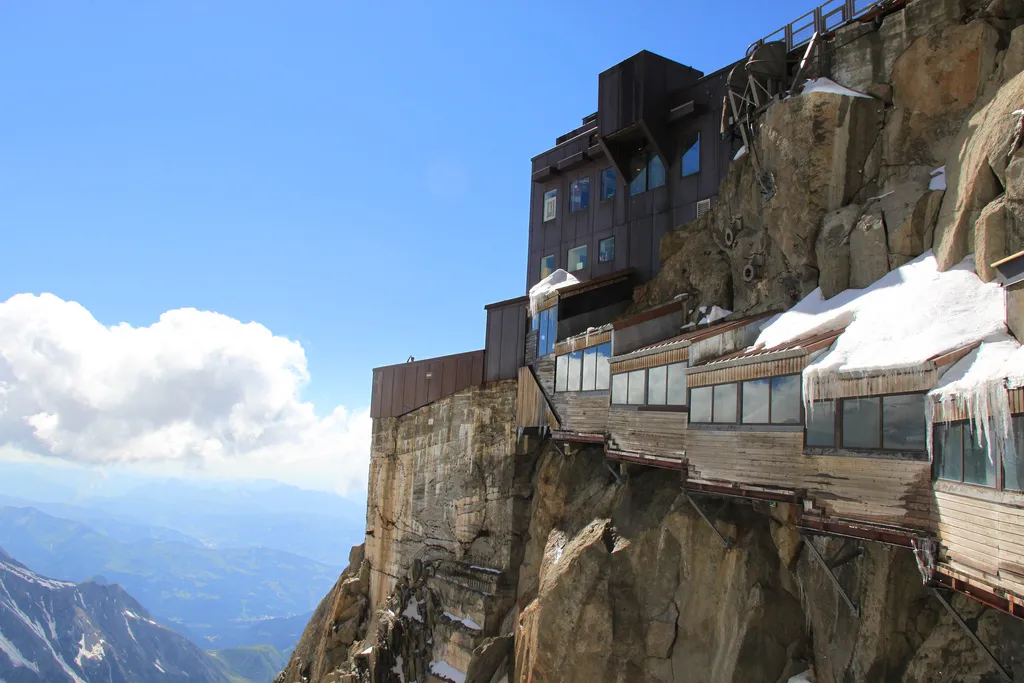
- The Aiguille du Midi, the top of the world: The Aiguille du Midi cable car is the highest vertical ascent cable car in the world: the 2,807 metres of ascent from the valley to the 3,842-metre summit in 20 minutes, the two-stage journey (the Plan de l’Aiguille, the mid-station, the view of Mont Blanc, the hiking, and the sense of having reached the high mountains without the effort), and the arrival at the top, the terrace, the 360-degree view of the Alps (the Matterhorn, the Grandes Jorasses, the Mont Rose, and Mont Blanc itself, the most beautiful view in the Alps), and the “Step Into the Void” (the glass cage suspended over a 1,000-metre drop, the most terrifying and most photographed attraction in Chamonix. Free with the cable car ticket, and the queue is the busiest on the summit). The ticket: ~€67 return (expensive, and worth it). Book online, the time slots sell out in the summer. The essential strategy: book the 8am slot, the first cable car of the day, and the summit, the silence, the light, and the view, is almost yours alone. The essential experience: the Vallée Blanche (the off-piste ski descent from the Aiguille du Midi, the 20 km of glacier skiing, the guide is essential, and the experience is the most famous ski run in the world. ~€350 for a guide for the day). For the non-skiers: the Panoramic Mont-Blanc gondola from the Aiguille du Midi to the Pointe Helbronner on the Italian side (the 5 km, the 30-minute journey over the glaciers, the view of the Géant Icefall and the Vallée Blanche, and the best lunch in Italy at the Rifugio Torino, the pasta, the wine, and the view. The return ticket to Helbronner is ~€30 extra on the Aiguille du Midi ticket). More France →
- The Mer de Glace and the Montenvers Railway: The Montenvers cog railway (the red train, the 20-minute journey from Chamonix to the Mer de Glace at 1,913 metres, the most popular excursion in the valley. ~€35 return, and the view of the glacier, the largest in France, 7 km long, 200 metres deep, and the white-blue ice of the river that is flowing at 90 metres a year, is the essential Chamonix experience). The glacier has retreated dramatically, and the ice cave, the grotto carved into the glacier each year, the sculptures, the blue light, and the sense of being inside the ice, is accessible by a gondola and a long staircase (the 580 steps, the climb back up is the price of the visit, and the view of the retreat of the glacier from the steps is the most visible illustration of climate change in the Alps). The alternative: the hike from the Plan de l’Aiguille to the Montenvers (the Grand Balcon Nord, the 7 km, 2–3 hours, the contour of the north face of Mont Blanc, the glaciers, the views, and the best day hike in the valley. The train back from Montenvers is included in the return ticket from Chamonix)
- The hiking, the valley that never ends: Chamonix is a hiking paradise, and the trails, the Petit Balcon (the lower path, the valley views, and the easy walking suitable for all ages), the Grand Balcon (the higher path, the glaciers, and the best views in the valley), and the Lac Blanc (the most famous hike in Chamonix, the lake, the reflection of Mont Blanc, and the most beautiful photograph in the Alps. The hike from the La Flégère lift, 2 hours each way, the lift ~€17, is the essential day hike). The essential walk: the Tour du Mont Blanc (the TMB, the 170 km circuit of Mont Blanc, the 11 days through France, Italy, and Switzerland, the refuges, the meals, and the sense of walking around the most famous mountain in the Alps. The hike is the essential long-distance European trek, and the Chamonix section, the starting point and the ending point, is the most beautiful)
7 Of The Best French Ski Resorts For 2013
France is the most popular tourist destinations in the world. According to the UNWTO, 79.5 million tourists arrived in France in 2011. From Paris and Versailles to the French Riviera and the Alps, France abounds in tourist attractions. For Britishers, France has been the traditional destination for skiing holidays. Each year, millions of British tourists […]
