Stepping into Troodos National Forest Park feels like entering a different Cyprus entirely. Gone are the sun-baked beaches and coastal tavernas. Here, pine-scented air fills the lungs as cool streams tumble over moss-covered rocks. Byzantine churches hide among the cedar groves, their faded frescoes whispering stories of centuries past. Walking trails weave through valleys carpeted in wild cyclamen and lavender. The summit of Mount Olympus rises ahead, offering views that stretch to the shimmering Mediterranean on clear days. Village stone houses cluster in the folds of the hills, their wooden balconies heavy with grapevines. This green refuge offers a quiet counterpoint to an island famous for its coastlines.
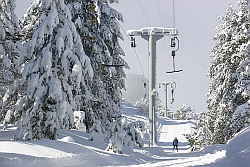
The highest mountains of the island is the Troodos Mountains in the western part of Cyprus. The highest peak Olympos reaches 1952 m above the sea level and you can see the northern and southern coasts from the peak. The highest peak of the island is fenced military area, taking photos is prohibited. At the slopes of the mountains there is a ski resort in winter. If you have a luck and find the good weather in February, you can ski in the morning and swim in the afternoon in the waves of the Mediterranean Sea.
In This Article
The Natural Beauty of the Troodos Range
In summer, the mountains are the only place of the island, where you’ll find rivers full of water, waterfalls and lush green trees. Below the highest peak you will find Troodos mountain resort – a place with shops, hotels and campsites. From the mountain resort, you can take the marked trails in the valley. Most of them lead along the streams, which even in the warmer months such as August or September have a lot of water. The Troodos range is covered with dense forests of Calabrian pine, golden oak, and cedar, creating a habitat rich in wildlife. Foxes, hares, and the rare Cypriot mouflon roam the slopes, while migratory birds stop in the valleys during their seasonal journeys. The park is also home to several endemic plant species found nowhere else on earth, including the Troodos iris and the Cyprus tulip. The cooler temperatures at altitude provide a welcome relief from the coastal heat, making the mountains a popular summer retreat for both locals and visitors.
The geological history of the Troodos range is equally remarkable. The mountains were formed by tectonic uplift of ancient oceanic crust, making the Troodos one of the world’s best places to study ophiolites. The mineral wealth of the mountains has been exploited since ancient times, with copper mines dating back to the Bronze Age giving Cyprus its name, derived from the Greek word for copper.
Hiking Trails of Troodos National Park
Pathways usually lead through the small mountain villages with typical Mediterranean architecture of narrow streets and Orthodox churches. The national park offers a network of well-marked trails that cater to all levels of fitness and experience. Each trail reveals a different aspect of the park’s character, from gentle riverside walks to challenging summit climbs.
- Atlanta Trail – 9 km long. A nice easy walk through dense pine forest with gentle gradients, suitable for families with children. The trail connects the Troodos square area with the Chionistra peak and offers occasional views through the trees toward the southern coast.
- Caledonia Trail – begins a short distance from the Presidential Cottage. 2 km long, ending in a place called Caledonia Falls. The trail runs along the river Kryos Potamou through a lush valley filled with plane trees and wildflowers. The waterfall at the end drops approximately 12 metres into a pool surrounded by ferns.
- Artemis Trail – to the top of the highest mountains. 7 km long. In addition to the pleasant scent of gigantic pines, educational descriptions of trees with beautiful views of the whole Cyprus. This circular trail starts and ends at the Troodos square and provides the most accessible summit experience for casual hikers.
- Persephone Trail – the easiest trail. It provides a view of the village of Pano Amiantos and a view of asbestos mines. This short 1.5 km loop is ideal for a quick introduction to the landscape and is accessible to wheelchair users with assistance.
Mountain Villages and Byzantine heritage
The villages scattered throughout the Troodos range preserve a way of life that has changed little over centuries. Platres, the largest of the mountain resorts, has welcomed visitors since the British colonial period. Its tree-lined streets are shaded by massive plane trees, and its traditional stone houses have been converted into hotels and tavernas serving local specialities such as souvla, halloumi, and Commandaria wine. The nearby village of Kakopetria retains its medieval character, with narrow alleys and houses whose upper storeys overhang the streets. The village of Omodos, with its cobbled square and Monastery of the Holy Cross, is one of the most photographed settlements in Cyprus.
The Troodos region is also renowned for its Byzantine churches and monasteries, ten of which are collectively designated a UNESCO World heritage Site. The Church of Agios Nikolaos tis Stegis in Kakopetria contains some of the finest frescoes in Cyprus, dating from the 11th to the 17th centuries. The Monastery of Kykkos, founded in the 11th century, is one of the richest and most famous in the Orthodox world, its interior covered in mosaics and icons. These religious sites offer a glimpse into the spiritual history of Cyprus and the enduring role of faith in Cypriot culture.
View Troodos National Forest Park in Cyprus in a larger map
Do you prefer mountain forests or coastal beaches for a holiday escape? 🌲
Explore all our Cyprus travel guides, from Aphrodite birthplace to the divided capital.
Explore More
If you enjoyed this article, you might also like:
