Stockholm – one of the most beautiful and interesting cities in Europe | Sweden
Updated June 10, 2026 by europeexplored
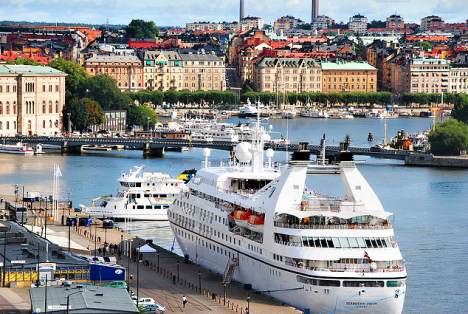
The city of Stockholm spreads across fourteen islands connected by over fifty bridges, where the Baltic Sea meets Lake Malaren in a network of sparkling waterways. Gamla Stan, the old town, centres on the Stortorget square with its colourful merchant houses and the massive Royal Palace. The Vasa Museum preserves a 17th-century warship, nearly intact after 333 years at the bottom of the sea. Stockholm balances urban sophistication with easy access to nature, where the archipelago stretches for kilometres of forested islands and rocky skerries.
The Swedish capital of Stockholm is one of the most beautiful and interesting cities in Europe, and visitors come back again and again for its cool, laid back charm.
One thing that makes Stockholm so unique is that the large city is actually comprised of 14 separate islands, connected by a network of bridges. There are currently 50 bridges keeping Stockholm’s different areas within easy reach of each other, and many of these are attractions in their own right.
Photo licensed under the Creative Commons, created by Mispahn
Despite the fact it is made up of islands, Stockholm has an enviably good public transport network, comprising trains, buses and underground subway trains. You can buy day passes that allow you to get around using any combination of these, as with most major European cities.
The climate in Stockholm is surprisingly mild for a Scandinavian country, though you will find that if you visit in December the days are incredibly short, with only 6 hours of daylight on the shortest day. By contrast, there are 18 hours of daylight at the mid point of summer.
There are so many things to see and do in Stockholm’s many thriving districts that there is certainly something for every traveller. You can check out the historical sights in the old town, or shop and socialise in the trendy districts of Norrmalm and Ostermalm. The nightlife is great, but be aware that drinks are very expensive in Sweden.
Stockholm is a truly great European destination for a city break, and with plenty of transport links and hotels it is easy to find a well priced deal for a trip there.
Gamla Stan and the Vasa Museum
Stockholm Gamla Stan dates from the 13th century, with the Royal Palace offering guided tours of the state apartments and the Treasury housing the Swedish crown jewels. The palace changing of the guard takes place daily at 12:15. Stortorget square, the oldest square in Stockholm, is surrounded by colourful 17th-century merchant houses including the Stock Exchange Building which now houses the Swedish Academy, the institution that awards the Nobel Prize in Literature. The narrow alley Marten Trotzigs Grand, at just 90 centimetres wide, leads downhill towards the water and is the city’s most photographed street. The Vasa Museum on Djurgarden island preserves the warship Vasa, which sank on its maiden voyage in 1628 and was raised in 1961, 98 percent intact. The museum cost 19 euros and requires at least two hours to explore thoroughly. The Djurgarden tram, line 7, connects the museum to the city centre, running every 15 minutes.
Djurgarden and the Archipelago
Djurgarden is Stockholm’s green heart, a 300-hectare island park that was once a royal hunting ground and now contains the city’s top museums. Beyond the Vasa Museum, the open-air Skansen museum displays 150 historic buildings relocated from across Sweden, with costumed interpreters demonstrating traditional crafts such as glassblowing, weaving, and baking flatbread. The ABBA Museum sits next door, an interactive tribute to Sweden’s most famous pop export, where visitors can sing on a virtual stage alongside holograms of the band. From Djurgarden’s eastern shore, archipelago boats depart daily from April to September, with tickets starting at 50 euros for a full-day pass. The Stockholm Archipelago contains over 30,000 islands and skerries stretching 80 kilometres into the Baltic Sea. The inner islands such as Vaxholm and Grinda are reachable in under an hour and have cafes, hiking trails, and swimming rocks. For a longer trip, Sandhamn at the outer edge of the archipelago takes two and a half hours each way but rewards you with sandy beaches and a village where traditional red wooden pilot cottages line the harbour. A day pass for the SL commuter system costs 43 euros and covers all city transport including the archipelago ferries.
Would you explore Stockholm’s old town or take a boat through the archipelago? 🚢
Explore all our Sweden travel guides, from Stockholm archipelago to northern Lapland.
Explore More
If you enjoyed this article, you might also like:
