Germany is the richest and most populous country in Europe, an economic powerhouse at the heart of the continent whose gifts to the world range from the printing press and the Protestant Reformation to the automobile, Bach and Beethoven, and the Christmas market, and whose landscapes are as varied as a country that stretches from the North Sea mudflats to the Bavarian Alps can possibly be. Germany’s cities are world-class cultural destinations, Berlin, the capital of cool, with its unparalleled museum island, its brutally honest history, and its legendary nightlife; Munich, the home of Oktoberfest and a gateway to the Alps whose beer gardens and Baroque architecture reveal a very different Germany; Hamburg, the maritime merchant city; Dresden, rebuilt from wartime ashes into one of Europe’s most beautiful Baroque cityscapes, and the country’s natural beauty, from the Black Forest to the Rhine Gorge to the chalk cliffs of Rügen, rewards exploration far beyond the cities. German efficiency is not a myth (the trains are fast, the infrastructure excellent, and things work), but neither is German warmth, which reveals itself in the conviviality of the Biergarten, the hospitality of the Gasthof, and the increasingly cosmopolitan food scene in every major city.
Quick Facts: Germany Travel Guide
- Best time to visit Germany: May–September for the best weather and outdoor activities; December for the magical Christmas markets (Weihnachtsmärkte), Nuremberg, Dresden, and Cologne are among the most beautiful; late September–early October for Oktoberfest in Munich (book accommodation 6–12 months in advance, the city fills up); March–April for spring blossoms and the Spargelzeit (white asparagus season, treated with near-religious reverence); winter is cold but the Christmas markets and skiing in the Bavarian Alps compensate
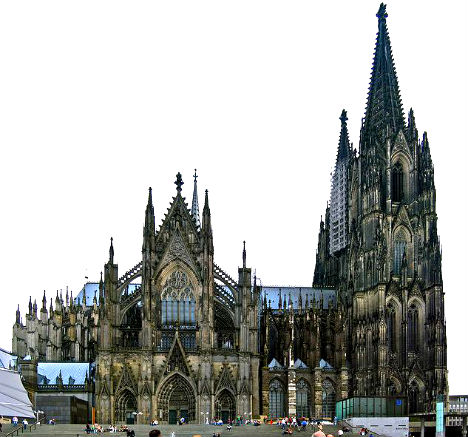
- Top attractions in Germany: Berlin’s Brandenburg Gate, Reichstag dome, and Museum Island; Neuschwanstein Castle (the fairy-tale castle that inspired Disney); the Cologne Cathedral (the most visited landmark in Germany); the Romantic Rhine (the castle-studded stretch between Bingen and Koblenz, best seen by boat); the Black Forest (cuckoo clocks, hiking, and the town of Triberg with Germany’s highest waterfall); Munich’s Marienplatz, English Garden, and the Deutsches Museum; Heidelberg (Germany’s oldest university town); Dresden’s restored Frauenkirche and Zwinger Palace; the Zugspitze (Germany’s highest peak); and the Wadden Sea National Park on the North Sea coast (UNESCO)
- How to get to Germany: Frankfurt (FRA) and Munich (MUC) are the main intercontinental hubs; Berlin (BER), Düsseldorf (DUS), Hamburg (HAM), and Cologne/Bonn (CGN) have extensive European connections; excellent rail network (Deutsche Bahn ICE high-speed trains connect all major cities); Germany is at the centre of Europe’s motorway network, the famous Autobahn, with its sections of no speed limit, is an experience in itself
- Currency: Euro (€)
- Language: German, English is widely spoken in cities and tourist areas, especially among younger Germans; in rural areas and smaller towns, a few phrases of German go a long way
- Best for: History and culture enthusiasts, beer and food lovers, hikers and outdoor adventurers, families (Germany is exceptionally family-friendly), and anyone interested in the crossroads of European history
Federal Republic of Germany is a federal state consisting of 16 states. We can find it in the centre of Europe, among Czech Republic, Austria, Switzerland, France, Luxembourg, Belgium, Netherlands and Denmark. It covers an area of 357,021 square kilometers, making it the second largest state in Europe. 82 million people means that Germany is the most populous state of Europe. The capital of Germany is Berlin with 3.8 million inhabitants.

Photo licensed under the Creative Commons, created by Jannis Andrija Schnitzer
Currently, Germany is trying to build a positive image in the world and attract such as many tourists to the country as possible. Most visitors are coming from Europe, USA and Asia. The most visited sites are North Rhine – Westphalia, Bavaria with the Alps, and Baden – Wuerttemberg. Beautiful vibrant cities, architectural treasures, nightlife, traditional customs and festivals. All of these (and much more) can be found in Germany.
In Germany you will find many restaurants offering from traditional dishes to international cuisine. It can be said that you can find restaurant where you get something good to eat, almost at every corner of Germany. You can have a dinner in a luxury restaurant, or in the modest Gasthof with a regular daily menu or just in the pub where you can taste a simple regional food together with the beer. If you are satisfied with service, it is customary to leave a tip of 5-10 percent of the price. Menus are usually visible at the entrance to the restaurant, so you can decide in advance to go there or not. Sometimes the restaurants have also an outdoor garden. Some restaurants serve lunch and dinner menus with several courses for one price. In German restaurants are separate rooms for smokers. If you just need something small to eat, you can go to bistros, pizzerias, cafes and fast foods.
The traditional German beverage is a beer. There is a plethora of brands and types of beer, but the most popular are Pilsner, wheat beer Weizenbier, Kölsch and Altbier. Germans sometimes mix the beer with lemonade and make it like the Alster or Radler. Berlin specialty is bright and light beer Berliner Weiße. Germany is also famous for its wine-growing areas along major rivers, which produces a unique Riesling or Silvaner. The popularity of wine in Germany is rising dramatically.
View Germany – rich and the most populous country of Europe in a larger map
What’s your Germany, Berlin’s edgy culture, Bavaria’s beer gardens and Alps, the Romantic Rhine, or the Black Forest trails? Share your German discoveries in the comments! 🇩🇪
Explore all our Germany travel guides, from the North Sea to the Zugspitze.
Explore More
If you enjoyed this article, you might also like:
- Latvia – a heart of the Baltic States – All Countries
- Mud Olympics and Wattstock Music Festival in Brunsbüttel, Germany – Amusement and Theme Parks
- Portugal – romance on west coast – All Countries
