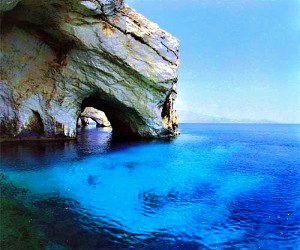
Greece is the cradle of Western civilisation, the land where democracy was born, where Socrates questioned and Plato wrote, where the columns of the Parthenon still stand against the Athenian sky after 2,500 years, and whose mythology, philosophy, theatre, and art form the foundation of European culture. But Greece is far more than its ancient past. It is also a country of more than 6,000 islands (227 inhabited), draped across the Aegean and Ionian Seas, whose whitewashed villages, blue-domed churches, and turquoise beaches are among the most beautiful landscapes on Earth. It is a country of extraordinary food, simple, sun-drenched, and life-affirming: grilled octopus by the harbour, creamy tzatziki, lamb slow-cooked for hours, and the world’s best olive oil. And it is a country of legendary hospitality (filoxenia, “friend to the stranger”, is a Greek concept that predates tourism by millennia) whose people, despite economic hardships, remain among the warmest and most welcoming in Europe.
Quick Facts: Greece Travel Guide
- Best time to visit Greece: April–June and September–October for warm weather, smaller crowds, and, critically, more manageable prices on the islands; July–August is peak season: the islands (especially Santorini, Mykonos, and Crete) are extremely busy, accommodation is at its most expensive, and temperatures on the mainland can exceed 35°C; May and late September offer the best balance of warm sea, good weather, and fewer people; the islands effectively close down from November to March (ferries are reduced, many hotels and restaurants close), but Athens and the mainland archaeological sites are delightful in winter, with crisp clear days and virtually no tourists
- Top attractions in the Greek islands and mainland: The Acropolis and the Parthenon in Athens (and the superb Acropolis Museum, visit the museum BEFORE the site), the archaeological site of Delphi (the most dramatically sited ancient sanctuary in Greece, on the slopes of Mount Parnassus), Santorini’s caldera and the sunset from Oia (read our Oia guide →), Meteora, the monasteries perched on impossibly tall rock pillars (one of the most extraordinary sights in Europe), Crete (the largest Greek island with a distinct culture, the Minoan palace of Knossos, and the spectacular Samaria Gorge), the medieval Old Town of Rhodes, the shipwreck beach of Navagio on Zakynthos (read our Porto Katsiki guide →), and the Peloponnese (Mycenae, Epidaurus, Nafplio, and the wild Mani Peninsula)
- How to get to Greece: Athens International Airport (ATH) is the main hub; direct flights to many islands (Santorini, Mykonos, Crete, Rhodes, Corfu) from European cities in summer; extensive ferry network across the Aegean and Ionian, book in advance for July–August
- Currency: Euro (€)
- Language: Greek, English is widely spoken in tourist areas (Greece has been receiving visitors for millennia), but learning a few Greek words (kalimera, efharisto, yamas) is deeply appreciated and will open doors
- Best for: History and archaeology enthusiasts, island-hoppers, beach lovers, foodies, hikers (the Greek mountains are a revelation, Mount Olympus, the Vikos Gorge, the Samaria Gorge), and anyone who believes that life is better lived slowly, on a terrace, with a glass of retsina and a view of the sea
Greece (or also Hellenic Republic) is a country situated in southern Europe on the south of Balkan Peninsula and on Corinth Peninsula. It has more than 11 million inhabitants in an area of 131,000 square kilometers. Population density is around 81 inhabitants/km2. The highest point of Greece is Mount Olympus, with its height of 2,919 m. The capital is Athens. Greece is a member of Eurozone and the currency is Euro.
Official language is Greek, which used Greek alphabet. It is the oldest still in use alphabet in Europe (since the 8th century BC). Majority of Greeks speak also English and German.
If you love nature and do not like excessive heat, the ideal time for you to visit Greece is June (or May, but the sea is still quite cold) or September and October. The water temperature is pleasant and it is also possible to plan your trips and hiking. However the main tourist season in Greece is July and August.
Greek cuisine
Greek cuisine is typically Mediterranean, and famous worldwide. The food must not miss olive oil, fresh vegetables, fragrant herbs and seafood. Greek Restaurants are called taverns.
Hors-d’oeuvre
Everyone will certainly be surprised by a number of appetizers, which mostly consists of various salads, spreads or light sauces. The most famous are the tzatziki appetizer, or roasted peppers. Tzatziki is a spread made of thick Greek yogurt, which is often from sheep’s milk, shredded cucumbers, garlic, olive oil and salt. Tzatziki spread is usually served chilled with Arab bread or as a flavoring for food. Greek salads of fresh vegetables are excellent. Another interesting appetizer is dolmades, which are young leaves of cabbage, filled by rice, pine nuts and minced meat.
Main Dishes
Very popular local delicacy is gyros. Another popular delicacy is grilled souvlaki. If you do not like gilled meat, be sure to taste musaka. Muska are slices of eggplant baked with minced lamb, onions, tomatoes which is covered with béchamel sauce. Among the most popular vegetarian dishes you can find saganaki, which is a fried slice of feta cheese coated in bread crumbs.
Desserts
After the meal it is definitely a good idea to taste some desserts such as baklava, galaktoboureko.
Alcohol
Greece offers a wide range of delicious wines. Greek favorite drink is Metaxa, which is a good cognac. The local traditional drinks include Ouzo.
Greek Islands
Greek Islands, which are more than 2000, will welcome you with their unique culture (pure white houses with blue shutters and roofs), its history and pure nature, remote from the industry.
The most famous islands of Greece include Corfu, Lefkada, Kefalonia, Zakynthos, Crete, Santorini, Mykonos, Rhodos, Samos, Kos, Lesbos.
Greek cities
Among the most important and best Greek cities you can find such as Athens, Thessaloniki, Kavala, Patras, Sparta, Heraklion and Corinth.
What’s your Greece, the Acropolis at sunrise, a whitewashed island village at sunset, the monasteries of Meteora, or the wild mountains of Crete? Share your Greek discoveries, islands, and hidden corners in the comments! 🇬🇷
Explore all our Greece travel guides, from ancient ruins to Aegean beaches.
Explore More
If you enjoyed this article, you might also like:
