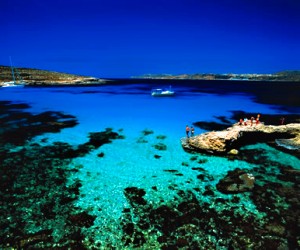
Malta is a diving and history paradise, a tiny archipelago of three inhabited islands (Malta, Gozo, and Comino) in the middle of the Mediterranean whose extraordinarily clear waters, spectacular underwater limestone formations, and a density of historical sites that borders on the absurd (Malta has three UNESCO World heritage sites in a country smaller than the Isle of Wight) make it one of the most intense and rewarding destinations in Europe. Malta has been ruled by the Phoenicians, Romans, Arabs, Normans, the Knights of St. John, the French, and the British, and every occupier left their mark. The result is a country where you can explore 5,000-year-old megalithic temples that predate the Pyramids in the morning, visit the magnificent Baroque co-cathedral of the Knights of St. John in Valletta at midday, swim in the impossibly turquoise Blue Lagoon at Comino in the afternoon, and walk the medieval silent city of Mdina at sunset, all within a 30-kilometre radius. The diving, particularly around the wrecks and caves of Gozo, is world-class; the food is a glorious fusion of Italian, North African, and British influences (pastizzi, flaky pastries filled with ricotta or mushy peas, are the national snack); and the Maltese people, fiercely proud of their tiny nation, are among the most welcoming in the Mediterranean.
Quick Facts: Malta Travel Guide
- Best time to visit Malta: April–June and September–October for the most pleasant weather (warm but not scorching, ideal for sightseeing and swimming); July–August is hot (30°C+), crowded, and at its most expensive; December–February is mild but can be wet, the carnival in February (held in Valletta and across the island) is one of the oldest in Europe; May for the Malta Fireworks Festival, a spectacular competition held over the Grand Harbour
- Top attractions in Malta: Valletta, the entire fortified city is a UNESCO World heritage site: St. John’s Co-Cathedral (Caravaggio’s The Beheading of Saint John the Baptist is the only painting he ever signed, and it hangs here), the Grand Master’s Palace, and the view of the Grand Harbour from the upper Barrakka Gardens; Mdina, the Silent City, a walled medieval town of honey-coloured limestone that is one of the most atmospheric places in the Mediterranean; the Ħal Saflieni Hypogeum, a 5,000-year-old underground necropolis (book months ahead, only 80 visitors per day are allowed); the Blue Lagoon at Comino, the most beautiful swimming spot in Malta (go very early or late in the day to avoid the crowds); the Azure Window site at Gozo, the famous arch collapsed in 2017 but the surrounding coastline, the Inland Sea, and the diving remain spectacular; and the megalithic temples of Ħaġar Qim and Mnajdra, some of the oldest free-standing stone structures on Earth
- How to get to Malta: Malta International Airport (MLA) has flights from across Europe; ferries connect Malta to Sicily (Pozzallo, ~1h45); the islands are small enough that nowhere is more than 45 minutes by car, renting a car gives you complete freedom, but be aware that driving is on the left (British legacy) and Maltese drivers are famously… spirited
- Currency: Euro (€)
- Language: Maltese and English are both official languages, English is spoken fluently everywhere, making Malta one of the easiest Mediterranean destinations for English-speaking visitors
- Best for: History and archaeology enthusiasts (Malta’s density of UNESCO sites is extraordinary), divers and snorkellers, sun-seekers, and anyone who wants to experience the Mediterranean condensed into a single, walkable archipelago
Malta is an island located in the Mediterranean sea, south of Sicily. This archipelago consists of islands of Malta, Gozo and Comino, which are inhabited. Then there can also be found uninhabited islets as Cominotto, Filfla Island or St. Paul’s Island. The capital and largest city is Valletta.
Malta, officially the Republic of Malta, is a Mediterranean nation, which for centuries was influenced by Roman, Arab and British culture. We can find a large minority of foreigners, most of which are represented by the British. Most inhabitants live on Malta‘s main island in the cities. Almost all the people belong to the Roman Catholic Church. On the island there are over 360 churches and at every step you can meet monks or nuns. Catholicism plays an important part of Maltese life.
The most important source of income in Malta is tourism, which also employs a third of the population. Malta and nearby islands to visit for over a million tourists a year. Tourism is therefore 35% of the gross domestic product. Malta has no own sources of raw materials, and is dependent on imports. Agriculture is concentrated on the island of Gozo, where we find more greenery and better conditions for growing wheat, barley, potatoes, legumes, vegetables, citrus fruit and grapes. In the summer season, vegetables need to be imported, because there is a very dry climate. Industrial production is focused on engineering products, electronics, shipbuilding and ship repair and textiles.
Malta is known for its numerous and well-preserved monuments from the times of megalithic culture. This leads to the assertion that this developed culture lived on the island already between 4000 to 2500 BC. Then the island had many different cultures: the Phoenicians, Carthage, Rome, Byzantium, Arabs, Normans, kings of Castile, Johannes and Napoleon. During the world wars, Malta became an important base for the British forces in the Mediterranean Sea. Malta gained independence from the United Kingdom in 1964, became a republic in 1974 and in 2004 became a member of Europe.
The Maltese archipelago acts on the map as the small grains in the Mediterranean Sea, and yet form an important bridge between Europe and Africa. The Maltese archipelago is essentially a remnant of the connection between Sicily and North Africa coast, which was aborted in the late Tertiary. Malta is only 90 km away from Sicily and 200 km from Tunisia.
The islands are almost without vegetation, but Malta is interesting anyway. Indeed, the mythical Odysseus reportedly stuck here for seven long years. It is a paradise for divers and water sports enthusiasts, history and art lovers and you can enjoy here good food, drink and social life as well.
View Malta – diving paradise in a larger map
Have you dived the wrecks of Malta, explored Valletta’s Baroque splendour, or swum in Comino’s Blue Lagoon? Share your Maltese discoveries in the comments! 🇲🇹
Explore all our Malta travel guides, from the megalithic temples to the Mediterranean’s clearest waters.
Explore More
If you enjoyed this article, you might also like:
- Czech republic – the best beer all over the world – All Countries
- Italy – the world of great sea, mountain and pizza – All Countries
- Austria – Country of a Thousand Faces – All Countries
