
Gran Paradiso National Park in Valle d’Aosta is Italy’s oldest national park, established in 1922 when King Victor Emmanuel III donated the Royal Hunting Reserve to the Italian state specifically to protect the Alpine ibex, a species that had been hunted to fewer than 60 individuals by the end of the 19th century and now numbers over 4,000 in the park alone, one of the most dramatic conservation success stories in Europe. The park covers 703 square kilometres of the Graian Alps, spanning the Valle d’Aosta and Piedmont regions, and is named after the Gran Paradiso mountain, which at 4,061 metres is the only peak entirely within Italian territory to exceed 4,000 metres. From its summit, the views extend to the Matterhorn on one side and Mont Blanc on the other, a panorama that encompasses some of the most iconic Alpine scenery on the continent.
In This Article
Quick Facts: Gran Paradiso National Park
- Best time to visit: June to September for hiking and wildlife watching. July and August are the busiest months but the park is large enough that trails beyond the main valleys remain quiet. The ibex descend to lower elevations in spring and autumn, making May-June and September-October the best times for sightings. Winter is for experienced mountaineers and ski tourers
- Getting there: The main access points are the Val di Cogne (from Aosta via the A5 motorway, approximately 1 hour), the Val di Rhêmes (from Aosta, 45 minutes), and the Val Savarenche. Public transport runs from Aosta to the valley villages, but a car offers significantly more flexibility. Turin is the nearest major city with an international airport, approximately 2 hours by car
- Key wildlife: The Alpine ibex is the park’s flagship species, easily spotted on the rocky slopes around the Rifugio Vittorio Emanuele II in Val Savarenche. Other species include chamois, Alpine marmots, ermines, golden eagles, bearded vultures, and the rare Alpine salamander. The park also protects over 100 species of nesting birds
- Hiking network: Over 500 kilometres of marked trails traverse the park, connecting nine mountain refuges (rifugi) that provide food and accommodation. The most famous route is the Gran Paradiso Alta Via, a multi-day trek circling the massif. Day hikes include the trail from Pont de Valsavarenche to the Vittorio Emanuele refuge (2 hours, moderate) and the ascent to the Gran Paradiso summit itself (a demanding but non-technical climb requiring a guide)
In the Graian Alps situated in the Valle D’Aosta you will find the Gran Paradiso National Park. The park is named for the mountain which is found within the borders of the park. While originally created to protect the Alpine ibex, today the Gran Paradiso National Park is also responsible for protecting many different species of flora and fauna.
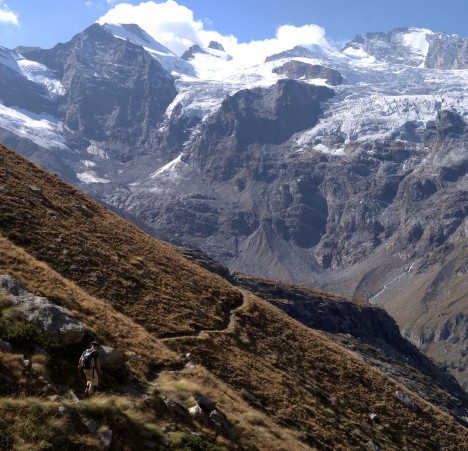
Gran Paradiso National Park, Italy by Lexe-I
The Alpine ibex was a popular animal to hunt throughout the 18th and 19th centuries. As a result of this hunting, only 60 of them were said to have been left. People hunted the ibex for sport as well as for their various body parts. There is a cross-shaped bone that can be found in the ibex which has been used as a means of protecting people from dying a violent kind of death.
It was Victor Emmanuel who would first make steps to prevent the further decline of the ibex population. Set to become the king of Italy, Victor designated the area as the Royal Hunting Reserve of the Gran Paradiso back in 1856. Then in 1920, King Victor Emmanuel III set out to make the area the first nation’s park. Today there are more than 4,000 ibex living in the Gran Paradiso National Park.
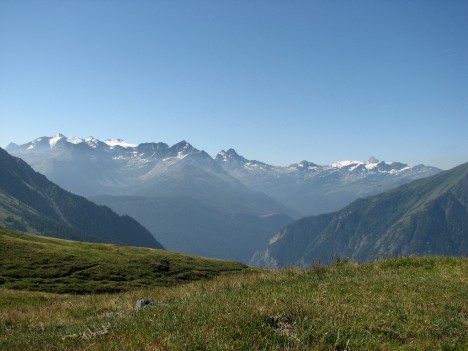
Gran Paradiso National Park, Italy by SNappa2006
There are 57 glaciers in the Gran Paradiso National Park as the area includes more than 703 square kilometers of land. Some of the park is used today for agricultural purposes and much of it is for leisure. The Gran Paradiso Mountain stands 4,000 meters above sea level which makes it one of the tallest mountains in Italy. From its peak, you can see both the Matterhorn as well as Mont Blanc. When combined with the Vanoise National Park just across the border in France, you have the Europe’s largest protection area. The French park is also dedicated to the Alpine ibex.
