The ferry cuts through the Tyrrhenian Sea toward a cluster of volcanic islands that rise from the water like black jewels. The Aeolian Islands smell of salt and sulphur and wild Mediterranean herbs. Each island has its own personality. Stromboli glows orange at night as lava tumbles down its slope. Lipari offers white pumice beaches and chic boutiques. Salina breathes green vineyards and caper bushes. Panarea whispers old money and quiet luxury. The ancient Greeks believed these islands were home to the god of the winds and you feel it in every gust that sweeps across the deck.
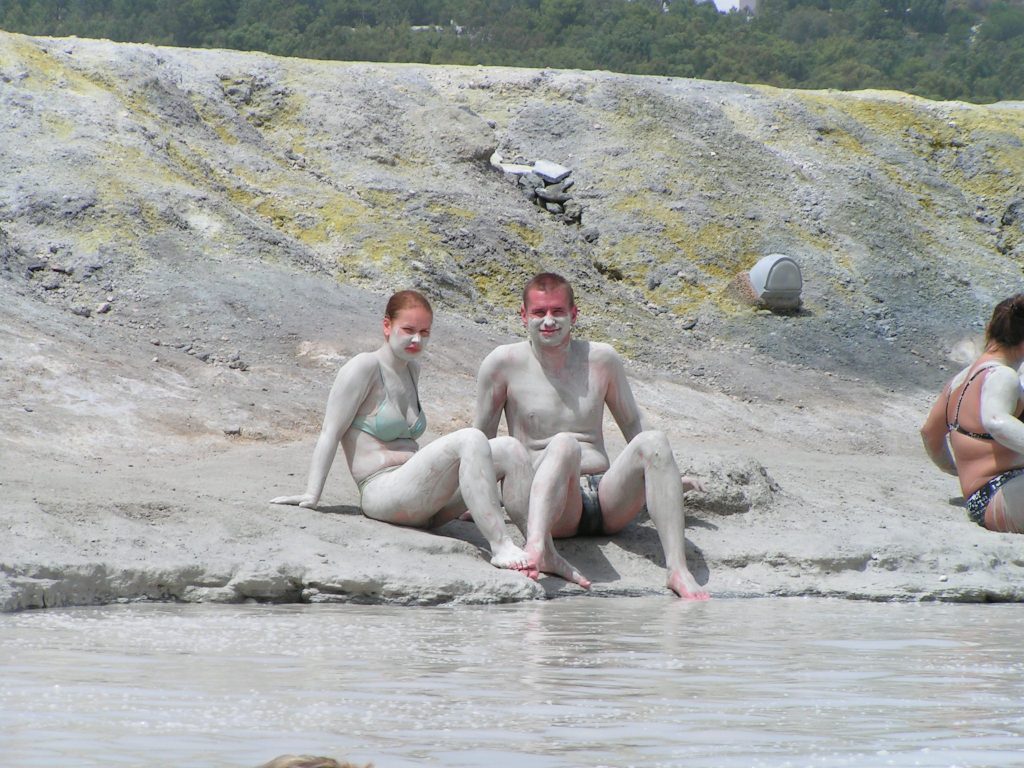
Aeolian Islands (sometimes called shortly “Lipari”) lies at the northern coast of Sicily. Lipari consist of seven islands: Vulcano, Lipari, Stromboli, Panarea, Salina, Alicudi and Filicudi. This archipelago is unique for a volcanic activity, which along with numerous geological attractions make these islands grateful to the tourists. Still active volcano on the island of Stromboli offers a remarkable experience for observers, while sulphurous lakes on the island of Vulcano are attractive for their therapeutic effects.
Photo by admin – that’s me and my wife in Vulcano island : – )
It is not a secret that the Aeolian Islands are called the pearls of the Mediterranean. Surely you enchant their unique atmosphere, clear sea, white houses contrasting with the black volcanic beaches and agile life regardless of the presence of volcanoes. In the fertile areas off the coast of Sicily you admire growing vines, olive and fig trees in the wild mountainous inland countryside and smoking a volcano Mount Etna. In deep valleys you can see a beautiful cities with many ancient and Norman sites.
Due to its climate, beautiful landscape, exotic wildlife and beautiful coastline are Aeolian Islands looking forward a growing interest of tourists. They are suitable for lovers of nature and hiking, as well as for a sun worshippers and swimmers. Clean seawater and rugged coastline make these islands a paradise for divers and water sports operators.
Geographical location of the Aeolian islands guarantees a subtropical climate. Average temperatures are acceptable due to fresh winds that pleasantly cool hot air from the sea and bring soothing moisture. In summer the temperature reaches around 35 °C, annual average temperature is 14 – 16 °C. An important climatic factor is the distribution of annual precipitation. Rainy seasons are mainly autumn and winter. Rain is usually rare in summer, it is usual that six months are totally without rain.
You can get to Lipari by a ferry from Sicily (a town Milazzo), where you can be transferred with your car. It is possible to move between islands by fast ships Aliscafo. The most popular type of accommodation on the Aeolian Islands are bungalows or apartments.
Aeolian islands offer really a lot. Certainly you should not miss the greatest attraction of the islands – a trip to the active volcano Stromboli. In 2000, the Aeolian Islands were included in the list of UNESCO’s cultural and natural heritage sites.
Photo by admin – Vulcano island
View Aeolian Islands – in Sicily, Italy in a larger map
Visiting the Aeolian Islands
The Aeolian Islands, a UNESCO World heritage site, consist of seven main islands: Lipari, Salina, Vulcano, Stromboli, Panarea, Filicudi, and Alicudi. Hydrofoils from Milazzo and Palermo connect the islands, with crossing times ranging from one to three hours. Lipari, the largest island, offers the Archaeological Museum Luigi Bernabò Brea housing artefacts from Neolithic to Roman times. Stromboli, the most dramatic, allows guided night hikes to view its active crater. Vulcano features mud baths and sulphurous hot springs. Ferry tickets between islands cost approximately 10 to 20 euros per crossing.
Have you ever watched a volcano erupt at night? If not would you like to try? 🌋
Explore all our Italy travel guides, from the Dolomites to Sicily.
Explore More
If you enjoyed this article, you might also like:
