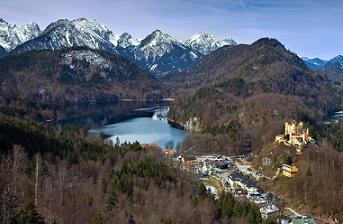
Neuschwanstein Castle is the most famous fairy-tale castle in the world, the soaring Romanesque Revival fantasy of King Ludwig II of Bavaria, perched dramatically on a rocky Alpine outcrop above the village of Hohenschwangau, whose turrets, towers, and white limestone walls inspired Walt Disney’s Sleeping Beauty Castle and have become the single most iconic image of German Romanticism. With over 1.5 million visitors annually, Neuschwanstein is Germany’s most visited tourist attraction, and for good reason: nothing else in Europe looks quite like it.
In This Article
Quick Facts: Neuschwanstein Castle, Germany
- Best time to visit: May–October (spring and summer for best photography and hiking); winter for a magical snow-covered Neuschwanstein (but Marienbrücke bridge may be closed); book tickets online well in advance
- Top attraction: The view from Marienbrücke (Mary’s Bridge), the iconic postcard shot spanning a 90-metre-deep gorge directly in front of the castle
- How to get there: ~1.5 hours from Munich by car (A95/A7); ~2.5 hours by train from Munich to Füssen then bus to Hohenschwangau
- Entry fee: ~€15 (adult); guided tours only, limited to 35 minutes; combo ticket with Hohenschwangau Castle ~€32
- Combine with: Hohenschwangau Castle (Ludwig’s childhood home, directly below Neuschwanstein) and the Museum of the Bavarian Kings
The Mad King’s Dream
Built between 1869 and 1886, Neuschwanstein was Ludwig II’s personal retreat from reality, an architectural realisation of his obsession with the operas of Richard Wagner and the medieval legends of Lohengrin, Parsifal, and Tannhäuser. Designed by theatre set designer Christian Jank rather than an architect, the castle is literally a stage set writ in stone. Ludwig lived in the castle for only 172 days before his mysterious death in 1886; the castle opened to the paying public just seven weeks later.
Hohenschwangau Castle (Schloss Hohenschwanstein) is a 19th century palace in southern Germany in wonderful place in mountains. It was the childhood residence of King Ludwig II of Bavaria and was built by his father, King Maximilian II of Bavaria. It is located very close to the border with Austria in the German village of Schwangau near the town of Füssen, part of the county of Ostallgäu in southwestern Bavaria. Ludwig originally named his new home New Hohenschwangau Castle, but after Ludwig’s death, it was re-named to Neuschwanstein.
More than 300,000 visitors from all over the world visit the castle each year. It is open all through the year from 9am to 6pm (April through September) and from 10am to 4pm (October through March). Guided tours are provided in German, English, French, Italian, Spanish, Russian, Czech, Slovenian and Japanese.
View Hohenschwangau Castle or Neuschwanstein in Germany in a larger map
Hohenschwangau Castle: The Royal Childhood Home
Before King Ludwig II built his famous Neuschwanstein, he spent his childhood summers at Hohenschwangau Castle, the yellow palace that sits on a hill overlooking the village. Built by his father King Maximilian II in the 1830s on the ruins of a medieval fortress, Hohenschwangau was the familys summer residence and the place where young Ludwig developed his love for medieval legends. The castle interiors are decorated with vivid frescoes depicting scenes from Germanic mythology and medieval history. The Hall of the heroes and the Hall of the Swan Knight are among the most impressive rooms, their walls covered in paintings that tell stories from the operas that would later inspire Neuschwanstein. The castles location offers stunning views of the surrounding Alpine landscape, including the two Alpine lakes Alpsee and Schwansee. A guided tour of Hohenschwangau takes about 35 minutes and provides a fascinating contrast to the more famous Neuschwanstein above it.
Tips for Visiting Both Castles in One Day
Many visitors want to see both Neuschwanstein and Hohenschwangau in a single day, and with proper planning it is entirely possible. The key is booking tickets online well in advance, ideally several weeks ahead during the busy summer season. The ticket center in the village of Hohenschwangau handles admissions for both castles. A sensible schedule involves touring Hohenschwangau first, then making the walk or shuttle ride up to Neuschwanstein. Allow at least 30 minutes between your tour times for the transit. The walk from Hohenschwangau to Neuschwanstein takes about 30 minutes uphill. After visiting Neuschwanstein, do not miss the walk to Marienbrucke, the bridge that offers the most famous view of the castle. Plan to spend a full day in the area to avoid rushing through these remarkable sites.
The Best Seasons to Experience the Bavarian Castles
Each season brings a different character to the Hohenschwangau valley. Spring, from April to June, offers mild weather, blooming flowers, and fewer crowds than the peak summer months. The Alpine meadows are covered in wildflowers and the lakes reflect the fresh green of the awakening forests. Autumn, particularly September and October, is perhaps the most photogenic time, with the golden and red foliage creating a stunning contrast with the white limestone of Neuschwanstein. Winter brings a magical atmosphere, with snow blanketing the castle towers and the Alpine peaks. Winter visits also mean far fewer tourists, allowing for a more intimate experience of these world-famous landmarks.
Have you visited Neuschwanstein or explored Bavaria’s royal castles? Share your fairy-tale experiences in the comments! 🏰
Explore all our Germany travel guides, from Berlin buzz to Bavaria castles.
Explore More
If you enjoyed this article, you might also like:
