Hoge Veluwe National Park is the Netherlands’ largest and most diverse protected area, a stunning 5,400-hectare mosaic of heathland, shifting sand dunes, and ancient woodland in the province of Gelderland that contains one of the world’s great art collections inside the park: the Kröller-Müller Museum, home to the second-largest collection of Van Gogh paintings on the planet and a world-famous sculpture garden set in the forest. With its famous free White Bicycles (over 1,800 of them, available to all visitors at no charge), Hoge Veluwe offers a uniquely Dutch combination of nature, art, and cycling that makes it one of the country’s most rewarding day trips and a highlight of any Netherlands itinerary.
In This Article
Quick Facts: Hoge Veluwe National Park
- Best time to visit: April–October; August–September for the purple heather bloom on the heathland; April–May for the rhododendrons; autumn for spectacular colours
- Top attractions: Kröller-Müller Museum (Van Goghs, including “Café Terrace at Night”, Mondrians, and the spectacular outdoor sculpture garden), the Jachthuis Sint Hubertus (the art-deco hunting lodge designed by Berlage), and the Museonder (underground museum exploring the park’s geology)
- How to get there: ~1 hour from Amsterdam by car (A1/A12); ~2 hours by train + bus from Amsterdam to the park entrances at Otterlo, Hoenderloo, or Schaarsbergen
- Entry fee: ~€13 (adult) including the Kröller-Müller Museum; ~€7 for park only
- White Bicycles: Free to use at all three park entrances and key points within the park, one of the world’s first and most successful free bike-share schemes, operating since the 1970s
The Kröller-Müller Museum and Sculpture Garden
The Kröller-Müller Museum is one of Europe’s finest art museums and the primary reason many visitors make the journey to Hoge Veluwe. Founded by the wealthy art collector Helene Kröller-Müller in the early 20th century, the museum houses an extraordinary collection of over 90 paintings by Vincent van Gogh, second only to the Van Gogh Museum in Amsterdam. Masterpieces such as “Café Terrace at Night,” “The Potato Eaters,” and “The Sower” are displayed in a bright, modern gallery that allows visitors to appreciate the vivid colours and expressive brushwork up close. Beyond Van Gogh, the collection includes major works by Piet Mondrian, Claude Monet, Georges Seurat, and Pablo Picasso, representing the full sweep of European modern art from the late 19th to the mid-20th centuries. The sculpture garden is equally impressive, spread over 25 hectares of woodland and lawn. It features over 160 sculptures by artists including Auguste Rodin, Henry Moore, Barbara Hepworth, and Jean Dubuffet, with the works carefully positioned to interact with the natural landscape. Walking through the sculpture garden, you encounter monumental forms emerging from the trees, delicate figures in grassy clearings, and abstract shapes reflected in still pools, making it one of the most rewarding outdoor art experiences in Europe.
Cycling the Diverse Landscapes of the Veluwe
The Hoge Veluwe’s famous White Bicycle scheme is one of the park’s most beloved features. Since the 1970s, the park has provided over 1,800 free white-painted bicycles at the three main entrances and at key points throughout the park. The bikes are simple, sturdy, and available on a first-come, first-served basis, allowing visitors to cover the park’s 42 kilometres of cycling paths without the need for a private bike or car. The cycling paths are well-maintained and clearly signposted, connecting the park’s main attractions while winding through its diverse landscapes. One route takes you across the vast open heathland of the Veluwe, where in late summer the purple heather stretches to the horizon like a violet sea. Another route leads through the shifting sand dunes of the Kootwijkerzand, a stark landscape of drifting sands that supports rare plant and animal species adapted to these harsh conditions. You can also cycle through ancient deciduous and pine forests, past hidden ponds where deer and wild boar come to drink at dawn and dusk. The park’s relatively flat terrain makes cycling accessible to all ages and fitness levels, and the combination of the White Bicycles with the park’s extraordinary biodiversity and world-class art collection creates a day out that is truly unique to the Netherlands.
Nationaal Park De Hoge Veluwe, or The Hoge Veluwe National Park in English, is situated in the province of Gelderland near the cities of Ede, Arnhem and Apeldoorn. It is approximately 55km2 in area, consisting of woodland, heathland, peat bogs and drift sand and it is the largest actively managed conservation area in private hands in the Netherlands. The Veluwe area contains the largest terminal moraine in the Netherlands.
Most of the landscape of the park and the Veluwe was created during the last Ice Age. The alternating sand dune areas and heathlands may have been caused by human utilization of the surrounding lands. The park forms one of the largest continuous nature reserves in the Netherlands.
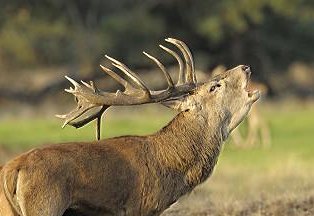
The Hoge Veluwe National Park enjoys a wide variety of plants and animals and provides habitats to extremely rare Red List species. Together with the Kröller-Müller Museum, the Sculpture Garden and Country-residence/Museum Jachthuis Sint Hubertus, the Park forms a unique and (inter)nationally renowned combination of nature, art and architecture.
View Hoge Veluwe National Park in Netherlands in a larger map
Have you cycled Hoge Veluwe’s White Bicycles or discovered the Kröller-Müller Museum? Share your Dutch nature and art experiences in the comments! 🚲
Explore all our Netherlands travel guides, from Amsterdam canals to tulip fields.
Explore More
If you enjoyed this article, you might also like:
- 10 Cool Things to Do on a Weekend in Amsterdam | Netherlands – Netherlands
- Five Most Famous Dutch Attractions – Netherlands
- Explore The Top 5 Sights Of The Netherlands – Netherlands
