The wide sandy beaches of Dunkirk stretch along the northern coast of France, their peaceful appearance today belying the dramatic events that unfolded here in the spring of 1940. The evacuation of over 338,000 Allied soldiers from the beaches of Dunkirk between May 26 and June 4, 1940, known as Operation Dynamo, was one of the most remarkable rescue operations in military history. Today, the city has rebuilt itself from the ashes of war into a vibrant port town with a rich maritime heritage, excellent museums, and a distinctive Flemish-influenced culture that sets it apart from the rest of France.
The Dunkirk Evacuation Museums
The most significant attraction in Dunkirk is the Musée Dunkerque 1940 Opération Dynamo, located in the Bastion 32 fortress that served as the headquarters for the evacuation. The museum houses an extensive collection of military vehicles, weapons, uniforms, and personal artefacts from the evacuation, telling the story of the nine days that saved the British Expeditionary Force from capture. The nearby Memorial du Souvenir, housed in the former harbour master’s building, focuses on the civilian contribution to the evacuation, including the famous little ships that crossed the Channel to rescue stranded soldiers. The museum also features a moving audio-visual presentation that recreates the sounds and atmosphere of the evacuation. The beaches themselves, the Plage de Malo-les-Bains, are marked by memorials and plaques that commemorate the events of 1940.
The City’s Maritime heritage
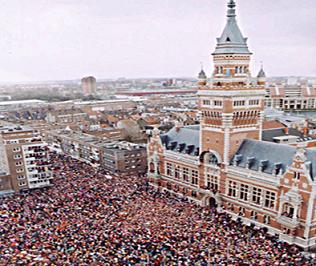
Dunkirk has been a major port since the Middle Ages, and its maritime history is celebrated in the Musée Portuaire, housed in a former tobacco warehouse on the harbour. The museum’s collection includes model ships, navigational instruments, and a full-size sailing barge, the Duchesse Anne, a three-masted ship that is the largest French sailing ship open to the public. Visitors can explore the ship’s decks, cabins, and cargo holds, gaining an understanding of life at sea in the age of sail. The Carnival of Dunkirk, held in February and March each year, is one of the most exuberant festivals in France, with parades, music, and the traditional throwing of herrings from the balcony of the town hall.
Practical Information
Dunkirk is easily reached from the UK by ferry from Dover, with crossings taking approximately two hours. The city is also well connected by train from Paris and Lille, with the TGV journey from Paris taking about 90 minutes. The old town, with its Flemish-style brick buildings and the 16th-century Gothic belfry, is best explored on foot. The belfry, a UNESCO World heritage Site, offers panoramic views over the city and the coastline from its 58-metre height. The local cuisine reflects the city’s Flemish influences, with dishes such as carbonade flamande, beef stewed in beer, and Welsh rarebit, a cheese-toasted bread dish, featuring on many restaurant menus. The best time to visit is from May to September, when the weather is mild and the outdoor cafes and markets are at their most lively.
Have you walked the beaches of Dunkirk and reflected on the extraordinary evacuation of 1940? What did you learn about Operation Dynamo from visiting the museums?

Dunkerque (or Dunkirk in English) is a city in northern France, near the border with Belgium. Administratively it is situated in Nord-Pas-de-Calais and the Nord département. Today the city has approximately 70.000 inhabitants. City of Dunkirk is situated on the banks of the North Sea and is significantly associated mainly with shipping. We can find here even the third largest French port after those of Marseille and Le Havre. A large part around Dunkirk is formed by sand dunes. The city got its name thanks to those dunes, which derives from an old Flemish and represents the church in the dunes. Dunkerque is also known as the venue of the traditional carnival, when the whole town dressed in masks and celebrate. But the town is linked to the turbulent history of the Second World War.
One of the most beautiful buildings in Dunkerque is certainly the local town hall dating from the early 20th century. Amongst others, we can notice the facade of the hero image of Jean Bart and his crew. Hall is registered as a UNESCO World heritage Site.
Equally beautiful is the Gothic church of Saint-Eloi. During the Second World War was almost completely destroyed, retained only the front wall. Reconstruction took place at the beginning of this millennium, as a reminder of the horrors of war were left craters in the facade of bullet holes. Church of Saint-Eloi was originally connected with a bell tower, in the late 19th century, these buildings were separated. Now, there is a busy street between them. Even the bell tower is part of UNESCO.
Near the port of Dunkerque is Leughenaer tower, which was originally part of the fortifications. Interesting is also the chapel of Notre Dame des Dunes.
In the port we can visit the Maritime Museum, just opposite is a beautiful ship Duchesse Anne, which is also a popular destination for visitors.
View Dunkerque (Dunkirk) – northern city in France in a larger map
Have you explored the natural wonders and historic treasures described here? Share your favourite European travel memory in the comments below!
Explore all our France travel guides, from Parisian boulevards to Provence lavender.
Explore More
If you enjoyed this article, you might also like:
