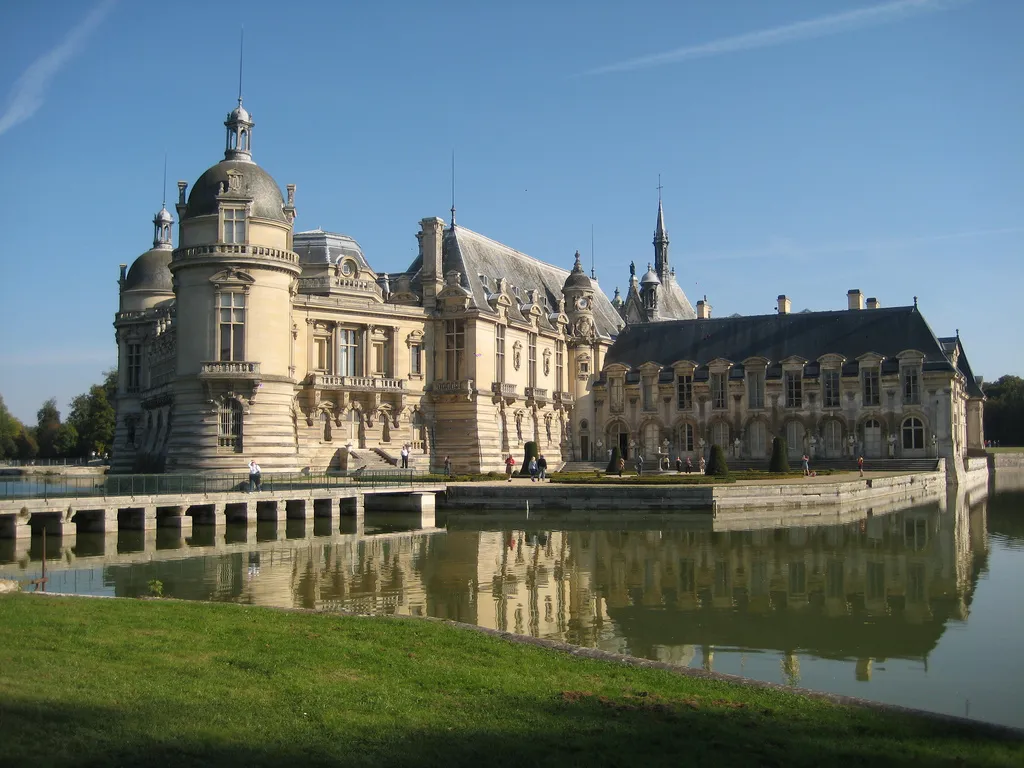
The Chateau de Chantilly rises from its moat like a storybook illustration polished by centuries of careful stewardship. Beyond the grand facades and formal gardens designed by Andre Le Notre lies something even more remarkable: whipped cream. The invention of creme Chantilly is attributed to the estate chef in the 17th century, and the town has never let the world forget it. Horse stables that rival palaces in scale house a living museum of equestrian art that attracts 200,000 visitors each year. The surrounding forest trails invite long walks beneath oaks that have stood since the age of the French kings. Chantilly is refinement without pretension, a place where elegance is worn lightly.
In This Article
The Chateau: Two Palaces, One Estate, and the Musee Conde
Chantilly is dominated by its chateau, which is actually two buildings joined by a long gallery. The Petit Chateau dates from the early 1500s and retains its original Renaissance character with mullioned windows and a tower that overlooks the moat. The Grand Chateau, rebuilt in the 1870s after the original was destroyed during the French Revolution, is a lavish neo-Renaissance palace commissioned by the Duc d’Aumale, the fifth son of King Louis-Philippe. The Duc installed his vast personal art collection in the Musee Conde, a museum that holds some 800 old master paintings and more than 5,000 drawings and engravings from the 14th to the 19th centuries. The collection is the finest of any French chateau and ranks second only to the Louvre in the breadth of its holdings. Highlights include Raphael’s Madonna of Loreto, three works by Botticelli, 40 paintings by Nicolas Poussin, and a rare portrait of the Duc d’Aumale himself by Ingres. More than 30,000 rare books fill the library, including an illuminated manuscript of the Tres Riches Heures du Duc de Berry, one of the most famous medieval manuscripts in existence. The Galerie de Psych, decorated with frescoes depicting the myth of Cupid and Psyche, runs the length of the Grand Chateau and opens onto the formal French gardens designed by Andre Le Notre, the same landscape architect who designed the gardens at Versailles.
The Great Stables and the Living Horse Museum
The Grandes Ecuries, the Great Stables of Chantilly, were built between 1719 and 1735 for the Prince de Conde, the Lord of the Chateau. They stretch 300 metres in length and were designed to accommodate 240 horses and 300 hunting dogs, with living quarters for the grooms and stable hands on the upper floors. The stables are larger than many royal palaces and stand as a monument to the status of horse ownership in 18th-century French aristocracy, where the size and opulence of your stables directly reflected your social standing. The dome over the central entrance rises 28 metres high and is visible from across the estate. Today the stables house the Musee Vivant du Cheval, the Living Horse Museum, with 31 rooms spread across 4,000 square metres of floor space on two levels. The exhibits trace the history of the horse from medieval tournaments and cavalry charges to modern dressage and carriage driving. Saddles from the 16th century, carriages used by the French royal family, harnesses decorated with silver and leather, veterinary instruments from the 18th century, and a collection of wooden carousel horses fill the display cabinets. Daily equestrian shows in the indoor arena demonstrate classical dressage, carriage driving in authentic 18th-century vehicles, and vaulting, a discipline combining gymnastics and horseback riding. The museum attracts 200,000 visitors annually and is one of the most visited equestrian attractions in Europe.
Whipped Cream, the Prix de Diane, and the Forest Trails
Creme Chantilly, the sweetened whipped cream that accompanies desserts across the world, was supposedly invented at the chateau in the 17th century by the chef Francois Vatel. The historical evidence is thin, but the town embraces the connection with enthusiasm. Every patisserie in Chantilly sells Chantilly-topped desserts, and the local restaurants serve it with everything from fresh strawberries to crepes and even savoury dishes. The racecourse, Hippodrome de Chantilly, hosts the Prix de Diane and the Prix du Jockey Club each June, two of the most important flat races in the French racing calendar. The course runs through the grounds of the chateau, the grandstand facing the palace across a stretch of immaculate green turf. Beneath the course runs a network of 18th-century tunnels built as escape routes for the royal residents during times of siege. The surrounding Forest of Chantilly, once the private hunting ground of the French kings, covers 6,000 hectares and is crisscrossed with bridleways and cycling paths. The oaks and beeches in the forest are centuries old, and the silence beneath the canopy on a weekday morning is the true luxury of the estate. Entry to the forest is free and open to everyone.
Would you visit Chantilly for the chateau or for the birthplace of whipped cream? 🍰
Explore all our France travel guides, from Parisian boulevards to Provence lavender.
Explore More
If you enjoyed this article, you might also like:
