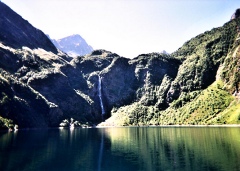
Monte Cinto (2,706m) is the highest peak on the Mediterranean island of Corsica, a challenging granite giant in the Monte Cinto massif that offers the most spectacular summit panorama on the island: on clear days, the entire sweep of Corsica from the Italian coast to the Gulf of Porto is visible from the top. Climbing Monte Cinto is the holy grail for hikers on the GR 20, Europe’s toughest long-distance trail, which passes along the northern flanks of the massif, but the summit is also accessible as a demanding one-day ascent from the Haut Asco ski station.
In This Article
Quick Facts: Monte Cinto, Corsica
- Best time to climb: June, September; the GR 20 and summit routes are typically snow-free from mid-June
- height: 2,706 metres, highest peak on Corsica
- How to get there: Trailhead at Haut Asco (1,422m), ~2 hours from Calvi or ~3 hours from Bastia by car; the summit route is 6, 8 hours round trip with 1,300m ascent
- Difficulty: Demanding, steep scree, some easy scrambling, exposure in places; good fitness and mountain experience required
The GR 20 and Monte Cinto
The GR 20 is widely regarded as the toughest long-distance hiking trail in Europe, and Monte Cinto is its crowning jewel. This legendary trail stretches approximately 180 kilometres across Corsica from north to south, traversing granite peaks, alpine lakes, and dramatic ridges. The section passing near Monte Cinto offers hikers a chance to glimpse the highest summit on the island while tackling some of the most challenging terrain the GR 20 has to offer. Many hikers plan their GR 20 itinerary to include a summit attempt on Monte Cinto as a highlight of their two-week journey. The trail approaches the massif from the northern side, passing through the Cirque de la Solitude, one of the most technical sections of the entire GR 20, before reaching the Refuge de Tighjettu, a perfect base camp for an early morning ascent. Experienced hikers recommend allowing an extra day specifically for the summit detour, as the round trip from the refuge adds approximately five hours to the route. The combination of the GR 20 experience with a Monte Cinto summit is arguably the ultimate mountain adventure in the Mediterranean.
Flora, Fauna and Natural environment
The Monte Cinto massif is a biodiversity hotspot within the Corsica Regional Natural Park. The lower slopes are covered with dense Corsican pine forests, interspersed with chestnut groves and the aromatic maquis scrub that gives the island its distinctive fragrance. As you climb higher, the vegetation gives way to alpine meadows dotted with endemic species such as the Corsican snowbell and the rare Corsican violet. The massif is home to the mouflon, a wild sheep that is the symbol of Corsican wildlife, as well as golden eagles, peregrine falcons, and the elusive Corsican nuthatch, a small bird found nowhere else on Earth. The Lac de Cinto, a glacial lake nestled in a cirque on the southern slopes of the massif, is a stunning sight reflecting the granite peaks above. The lake is fed by snowmelt and surrounded by wildflowers in late spring, making it a popular destination for photographers and nature lovers. The geological composition of Monte Cinto is primarily granite, shaped by glacial erosion during the last Ice Age, creating the classic pyramidal profile that makes the mountain so recognisable from afar.
Planning Your Ascent
Proper planning is essential for a successful Monte Cinto climb. The most common approach begins at the Haut Asco ski station, located at 1,422 metres, where a well-marked trail leads upward through the forest and then across rocky scree slopes to the summit. The round trip takes between six and eight hours, covering approximately 1,300 metres of elevation gain. Hikers should start early, ideally before sunrise, to avoid the intense afternoon heat and the frequent thunderstorms that build over the massif in summer. Essential equipment includes sturdy hiking boots, warm layers even in summer (temperatures at the summit can drop below 10 degrees Celsius even in July), sun protection, and at least two litres of water per person as there are no reliable water sources on the upper mountain. The trail is steep and requires good fitness, with some exposed sections where care is needed. While the route does not require technical climbing equipment in summer, sure-footedness and a head for heights are essential. For those based on the southern side, the ascent from Calacuccia offers an alternative but longer route, and the off-road track from Calacuccia to the higher trailhead can save several hours of walking if you have a suitable vehicle.
Have you climbed Monte Cinto or trekked the GR 20? Share your Corsican mountain adventures in the comments! ⛰️
Explore all our France travel guides, from Parisian boulevards to Provence lavender.
Explore More
If you enjoyed this article, you might also like:
- Spending time in St Tropez, France – France
- Mercantour National Park in France – France
- Top sights to see in Paris | France – France

What a fantastic write-up. We followed your itinerary for Monte Cinto almost to the letter and it was one of the best travel experiences we have ever had. The balance of famous sights and hidden corners was perfect.