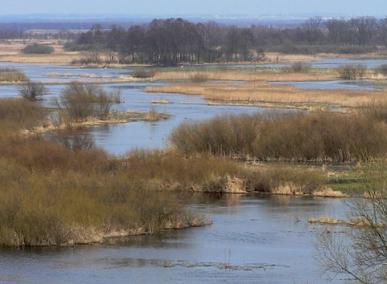
Biebrzanski National Park protects Poland’s largest expanse of pristine wetlands, a vast mosaic of marshes, peat bogs, and river channels that stretches across 592 square kilometres of northeastern Poland. This extraordinary landscape, carved by the meandering Biebrza River, is one of Europe’s most important strongholds for wetland birds and wildlife. The park’s sprawling marshes, known locally as the Biebrza Marshes, remain largely untouched by modern development, offering visitors a rare glimpse of wilderness that has existed since the last ice age. From the observation towers that dot the park boundaries, you can watch elk wading through shallow waters, hear the haunting calls of cranes echoing across the reeds, and spot the distinctive ruff performing its elaborate courtship display.
Biebrzanski National Park is an attractive natural area and the largest national park in Poland. It lies on the north-eastern part of the country, near the village Osowiec-Twierdza. It stretches over an area of approximately 592 km2. Typical for it is the unique nature and rich diversity of plant and animal species. Its name was gained from the river Biebrza, which flows through it.
Wildlife and Birdwatching in the Marshes
The Biebrza Marshes are a paradise for birdwatchers, with over 270 bird species recorded within the park boundaries. The park is particularly important for breeding waders such as the ruff, great snipe, and black-tailed godwit, which gather in large numbers on the open marshes during spring. The elk, or European moose, is the park’s most iconic large mammal, and the Biebrza Valley supports one of the highest densities of elk in Poland. Visitors frequently spot these majestic animals feeding in the shallow waters of the marshes, especially around dawn and dusk. The park is also home to beavers, otters, wolves, and lynx, though the predators are rarely seen. The botanical diversity is equally impressive, with over 800 species of vascular plants, including rare orchids and carnivorous sundews that thrive in the nutrient-poor bog conditions. Spring and early summer are the best times for wildlife viewing, when the marshes are alive with birdsong and the vegetation is at its most vibrant. The park’s network of wooden boardwalks and observation towers provides excellent access to the wetlands without disturbing the fragile ecosystem.
Biebrzanski National Park is situated on an area where is a large representation of wetlands and swamps. They are also its main attraction. Biebrzanski National Park is largely composed of forests, mostly deciduous. The rest of the area is occupied with already mentioned bogs and wetlands.
Biebrzanski National Park is very rich in the representation of different organisms. It is a paradise for all kinds of water birds. One of them, the Ruff, even got into the character of the park. You can meet here also a beaver or moose. There are also various mosses and lichens.
Exploring the Park: Trails, Canoeing, and the Red Marsh
The best way to experience Biebrza National Park is by combining its walking trails with a canoe trip along the Biebrza River. The park offers several marked hiking trails, the most popular being the Red Trail, a 42-kilometre route that follows the river through the heart of the marshes. For a shorter visit, the boardwalk trails near the village of Osowiec provide a 5-kilometre loop through the wetlands, with two bird observation towers offering panoramic views. Canoeing on the Biebrza River is the most immersive way to explore the park. The river flows slowly through the marshes, making it suitable for beginners. Canoe rentals are available in the villages of Gronostaje and Woznawies, and the most popular route covers about 20 kilometres from Woznawies to the Osowiec bridge, taking four to six hours. The Red Marsh area, or Czerwone Bagno, is the most strictly protected part of the park. Access is limited to guided tours, which depart from the park’s educational centre. This area contains the oldest and most pristine peat bog habitats, where the water table has remained stable for thousands of years, preserving a unique ecosystem of mosses, sedges, and rare invertebrates.
The northeastern boundary of the park is near the Belarus.
Biebrzanski National Park was founded on 9th September 1993 as one of 23 Polish national parks. In 1995 it was added to the list of The Ramsar Convention (The Convention on Wetlands of International Importance, especially as Waterfowl Habitat). The most important part of the Park is Red Marsh, which is under strict protection.
View Biebrzanski National Park – the largest national park in Poland in a larger map
Would you explore Poland’s wildest wetlands by canoe or on foot? 🦆
Explore all our Poland travel guides, from Kraków square to the Tatra Mountains.
Explore More
If you enjoyed this article, you might also like:
