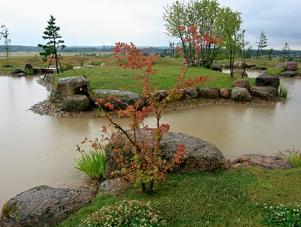
The Mažučiai Japanese Garden is the largest Japanese garden in Europe, an extraordinary 16-hectare landscape of cherry trees, koi ponds, stone lanterns, traditional Japanese bridges, and meticulously raked gravel gardens in the countryside of western Lithuania that is the life’s work of the Lithuanian landscape architect šarūnas Kasmauskas. This improbable slice of Japan in the Baltic countryside is a stunning labour of love, created over 25 years with the guidance of Japanese garden masters, and is now recognised as one of the most authentic Japanese gardens outside Japan.
In This Article
The Story and Design of the Garden
The creation of the Mazuciai Japanese Garden began in 2007 when Sarunas Kasmauskas, a Lithuanian landscape architect with a deep passion for Japanese culture, decided to create something extraordinary on a hill known as Musicians Hill, the highest point in the area at 32.4 metres above sea level. Working in close collaboration with Japanese garden masters including Hadzime Watanabe and Hiroshi Cunoda, Kasmauskas set out to design a garden that would be as authentic as any garden in Japan. During excavation for the central pond, a total of 24 natural springs were revealed, adding an unplanned but deeply authentic water feature to the garden.
The garden has no official government or Europe sponsorship; all funding comes from Kasmauskas, his family, and charitable donations. The garden covers 16 hectares of rolling hills with carefully planned vistas, winding paths, and hidden corners that reveal new surprises around every bend. The central pond, fed by the 24 natural springs, is home to colourful koi carp, and a traditional wooden bridge arches gracefully over the water. Stone lanterns, meticulously raked gravel gardens, and carefully pruned trees create an atmosphere of tranquillity that feels genuinely Japanese. The eventual name for the completed garden will be the Valley of Singing Stones.
Seasonal Beauty and Visitor Information
The best time to visit is in late April to early May when the cherry blossoms create a spectacular display of delicate pink flowers. Summer brings lush green foliage, while autumn transforms the Japanese maples into brilliant shades of red and orange. The garden’s elevated location rewards visitors with views over the surrounding Lithuanian countryside. The garden is located near the village of Mazuciai in the Kretinga district of western Lithuania, approximately 1.5 hours from Klaipeda and 3 hours from Vilnius by car.
The entry fee is around 10 to 15 euros for adults, and guided tours are available for those who want to learn more about the garden’s design philosophy and horticultural techniques. The garden can be combined with a visit to the nearby Baltic Sea coast and the Curonian Spit with its unique sand dunes and pine forests. As the garden is a privately funded project without large-scale commercial infrastructure, visitors should plan ahead for accommodation and dining. The village of Mazuciai has only 23 inhabitants, yet this tiny village is world famous for hosting the largest Japanese garden in Europe, a testament to what one person’s vision and dedication can achieve.
Garden Design and Japanese Authenticity
What makes the Mazuciai Japanese Garden so special is the authenticity of its design, which follows the traditional principles of Japanese garden art developed over a thousand years. The garden incorporates all the essential elements of a classical Japanese landscape: water features, stones, plants, and architectural elements such as bridges and lanterns, each carefully positioned according to the principles of balance, asymmetry, and naturalism. The 24 natural springs that were discovered during construction create a constantly flowing water system that feeds the koi ponds and adds the soothing sound of running water throughout the garden.
The garden’s name, the Valley of Singing Stones, reflects the importance of stone in Japanese garden aesthetics. Large and small stones have been placed throughout the garden according to traditional principles, creating a sense of natural harmony and guiding the visitor’s eye along carefully composed views. The cherry trees, which are the highlight of spring, were selected for their authentic Japanese varieties, and the Japanese maples provide spectacular autumn colour. The garden is a living work of art that continues to evolve, with new areas being developed each year as Kasmuaskas’s vision gradually becomes reality. Despite being located in the Lithuanian countryside, the garden successfully transports visitors to a different world.
View Mazuciai – Largest Japanese Garden in Europe Lithuania in a larger map
Have you experienced the cherry blossoms at Mazuciai or discovered Lithuania’s Japanese garden? Share your Baltic-zen discoveries in the comments! 🌸
Explore all our Lithuania travel guides, from Vilnius baroque to the Curonian Spit.
Explore More
If you enjoyed this article, you might also like:
