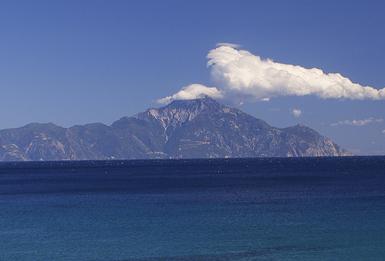
Mount Olympus (Ólympos) is the highest mountain in Greece and, far more significantly, the mythological home of the twelve Olympian gods, the sacred peak where Zeus ruled, Athena was born from his head, and the ancient Greeks believed the boundary between the mortal and divine worlds was at its thinnest. Rising to 2,918 metres above the Aegean coast of northern Greece, Olympus is both a UNESCO Biosphere Reserve of exceptional biodiversity (over 1,700 plant species, 25 of which are found nowhere else on Earth) and one of Europe’s most rewarding hiking destinations, a challenging but non-technical two-day ascent to Mytikas, the highest summit.
In This Article
Hiking the Standard Route to the Summit
The most popular route follows the E4 European long-distance path from the trailhead at Prionia, located at 1,100 metres and the highest point accessible by road in Greece. The first day involves a steady three-hour climb through pine and beech forest up to the Spilios Agapitos Refuge at 2,100 metres. As you ascend, the forest gradually opens into alpine terrain with stunning views of the Aegean Sea in the distance. The refuge offers simple accommodation, hot meals, and one of the best sunset views in Greece, watching the light fade over the Aegean far below.
The summit push begins before dawn, with hikers aiming to reach Mytikas by mid-morning before clouds build on the peak. The final section from the Skala saddle to the summit at 2,918 metres involves Class III scrambling over loose limestone. This section is not technical climbing, but it is exposed and demands a good head for heights, proper footwear, and full concentration. The total round trip from the refuge takes about five to six hours. The reward is the summit of one of the most mythologically charged mountains on Earth, with views stretching from the Aegean islands to the peaks of Albania on clear days.
Biodiversity and Visitor Information
Mount Olympus is recognised as a UNESCO Biosphere Reserve, protecting extraordinary biodiversity across its varied elevation zones. The lower slopes are covered in Mediterranean maquis and olive groves, while the middle elevations are dominated by forests of black pine, beech, and Greek fir. The highest zone above the treeline at about 2,500 metres is an alpine landscape of rocky screes and hardy grasses. Over 1,700 plant species have been recorded, including 25 endemic species found nowhere else on Earth, such as the delicate Olympus violet and several species of saxifrage that cling to the limestone cliffs.
The best time to climb is between June and September, with June and September offering the best balance of good weather and fewer climbers. The gateway town of Litochoro is about 1.5 hours from Thessaloniki by car, with regular trains and buses available. Several mountain refuges operate along the main routes, and advance booking is essential during peak season. Proper hiking boots, warm clothing even in summer, plenty of water, and a head torch for the pre-dawn summit push are all essential. While the standard route is non-technical, a reasonable level of fitness is required. Don’t miss the Agios Dionysios Monastery near Litochoro, built in the 15th century.
The Mythological Home of the Gods
Mount Olympus was not just a mountain to the ancient Greeks, it was the literal home of their gods. According to Greek mythology, the twelve Olympian gods, led by Zeus, ruled the cosmos from a palace on the highest peak of Olympus. The mountain was considered a sacred place where the boundary between the mortal and divine worlds was at its thinnest, and it was forbidden for humans to climb to its summit on pain of death. The myths that surround Olympus are among the most famous in all of world literature, from the birth of Athena to the twelve labours of Heracles.
Today, hiking to the summit of Mytikas at 2,918 metres allows modern visitors to experience something of the awe and reverence that the ancient Greeks felt for this sacred peak. Standing on the summit, surrounded by clouds that swirl around the peaks just as they did in the age of myths, it is easy to understand why the Greeks chose this dramatic mountain as the dwelling place of their most important gods. The mountain is a UNESCO Biosphere Reserve, protecting over 1,700 plant species including 25 that are found nowhere else on Earth, making it as ecologically significant as it is historically important.
View Mount Olympus – the highest mountain in Greece in a larger map
Have you climbed Mount Olympus or hiked in the footsteps of the ancient gods? Share your Greek mountain adventures and summit stories in the comments! 🏔
Explore all our Greece travel guides, from ancient ruins to Aegean beaches.
Explore More
If you enjoyed this article, you might also like:

Mount Olympus is a proper challenge. We did the two-day hike staying overnight at the refuge and it was the most physically demanding thing I have ever done. But standing on the summit knowing this is where the ancient Greeks believed the gods lived is an incredible feeling. The views over the Aegean Sea are breathtaking. Hire a guide if you are not an experienced hiker.