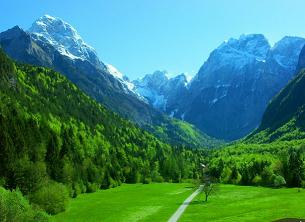
Bovec is a popular resort in the Julian Alps. It is a town located in the north-western part of Slovenia, just about 80 kilometers from the capital city of Ljubljana. Nestled in the Soca Valley at the foot of Mount Kanin, Bovec enjoys a spectacular alpine setting. The turquoise waters of the Soca River, one of the most beautiful rivers in Europe, run through the valley and provide the backdrop for nearly every outdoor activity the region offers. The water is so clear that you can see the riverbed clearly at depths of 10 metres or more, and its distinctive emerald colour comes from finely ground limestone particles suspended in the glacial meltwater.
In This Article
The History of Bovec and the Soca Front
The first written mention of Bovec dates back to the 11th century, when it appeared in medieval records as a small settlement within the Patriarchate of Aquileia. Over the centuries it was ruled by the Venetian Republic, the Habsburg Monarchy, and eventually became part of Yugoslavia before Slovenia gained independence in 1991. The most valuable historical monument in town is the Church of St. Leonard, built in the 15th century and recently restored to reveal exquisite Gothic frescoes on its interior walls. The church stands on a small hill overlooking the town centre, and its bell tower is visible from the main approach road. The town was heavily damaged during World War I, when the Soca Front, also known as the Isonzo Front, ran directly through these mountains. Twelve major battles were fought along the Soca River between 1915 and 1917, with hundreds of thousands of casualties on both sides. The Bovec Museum, located in a traditional stone building in the town square, preserves artefacts from this brutal chapter of alpine warfare. The exhibits include rusted helmets, fragmented artillery shells, personal letters, and photographs that bring the human cost of the conflict into sharp focus. Visitors can also hike to the preserved trenches and tunnels carved into the surrounding peaks, where the original positions of machine-gun nests and observation posts are still visible.
Outdoor Adventures: From White-Water Rafting to Paragliding
Bovec is one of the premier adventure sports destinations in the Alps. In winter, the ski centre on the slopes of Mount Kanin offers 30 kilometres of runs with altitudes reaching 2,300 metres, making it one of the highest ski resorts in Slovenia. The snow cover lasts from December through April, and the views from the summit stretch across the Julian Alps into Italy and Austria. In summer, the ski lift operates for hikers and mountain bikers, giving access to high-altitude trails without the strenuous ascent. The Soca River draws kayakers and rafters from across Europe, with rapids ranging from Class II to Class IV depending on the season. The most popular section is the stretch from Bovec to Trnovo, a 10-kilometre run through a deep limestone gorge that takes around two hours to complete. Several local operators run guided trips with all equipment provided, and the cost is roughly 40 euros per person. The Boka Waterfall, located 5.5 kilometres from Bovec, plunges 144 metres in two stages and is one of the tallest waterfalls in Slovenia. The spray from the falls creates a permanent rainbow on sunny afternoons, and the 30-minute walk to the viewing platform passes through fragrant pine forest. Paragliding and hang-gliding are also popular, with a designated take-off point above the town that offers thermals strong enough for extended flights over the Soca Valley. A tandem flight with an instructor costs approximately 120 euros and lasts about 20 minutes.
Where to Stay, Eat, and How to Reach Bovec
Bovec offers accommodation to suit all budgets. The town’s campsite, Kamp Polovnik, sits right on the Soca River and is popular with rafters and cyclists, with pitches starting at 12 euros per night. Several guesthouses, known locally as gostisce, serve traditional Slovenian food including jota (a hearty bean and sauerkraut stew) and Istrian prsut (air-dried ham similar to prosciutto). The nearest international airport is Ljubljana Joze Pucnik Airport, about 80 kilometres east. Bus connections run from Ljubljana’s main bus station to Bovec several times daily, taking roughly two and a half hours. Driving from the capital follows the A2 motorway to Jesenice and then crosses the Vrsic Pass, one of the most spectacular mountain roads in the Alps with 50 hairpin turns and panoramic views at every switchback. There is no train station in Bovec; the nearest rail connection is in Most na Soci, about 40 kilometres south, from where a local bus completes the journey. The town has a pharmacy, a small supermarket, a post office, and a wellness centre where visitors can relax after a day on the river or the slopes.
Explore all our Slovenia travel guides, from Lake Bled to the Julian Alps.
Explore More
If you enjoyed this article, you might also like:
