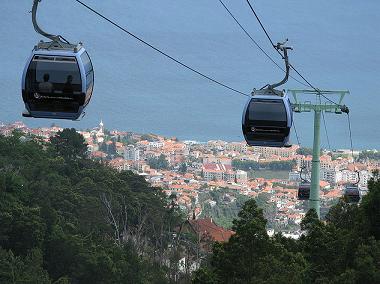
The cable car lifts you over the red-tiled rooftops of Funchal, climbing steadily toward the hills that cradle this Atlantic capital. Below, the harbour glitters with yachts and fishing boats while the scent of tropical flowers drifts up from the botanical gardens. Madeira, the Portuguese archipelago that sits closer to Africa than to Europe, has been a crossroads of seafarers for five centuries. Funchal, its main city, spreads along the coastline in a cascade of whitewashed buildings, colourful gardens, and cobblestone streets that climb into the forested mountains. The warm Gulf Stream keeps winter temperatures above 18 degrees Celsius, making this one of Europe most reliable escapes from the cold.
Funchal is the capital of subtropical Portuguese island of Madeira, which lies about 600 km from the African coast. The historic core of the city boasts beautiful government buildings, private houses with iron balconies and courtyards, splendid villas and lots of museums and galleries. This is why the city is also called “Little Lisbon.”
This picturesque port city was named after fennel, which grows here. It is a modern city and tourist center of the island. It has a beautiful beach promenade and is ideal for the lovers of history. Funchal is formed by the centre of the city, eastern old town of Zona Velha and western tourist area with hotels and restaurants. From the coastal side it is protected by the volcanic peaks. Green peaks create a beautiful background of the city.
The historic centre is full of narrow streets of cobblestone. Because of frequent traffic congestion it is better to move on foot here. The heart of Funchal is situated near Avenida Arriaga. You can find here a bustling port with a small fleet. The port was an important transport hub already in the 15th century, and you can still see the fishing and merchant ships here together with luxury ocean-going cruise ships. It is worth visiting the pier Ilheu de Pontinha, where you experience an unforgettable view of Funchal.
The most important monument of Funchal is its Cathedral of the 15th century, which is the work of architect Pêra Anes. It is one of the few buildings that remained almost untouched from the early days of colonization of the island. The cathedral has an interesting, relatively dark interior, where you can see the ceiling with Gothic arches and beautiful ceiling decorations of cedar wood in the Arab style. The cathedral features gilded altar or hand carved and decorated seats.
It is recommended to visit also the Botanical Gardens Jardim Botanico, situated on the steep slopes north of Funchal, which is formed into terraces. It was opened in 1960 and you can enjoy plants here from around the world.
Funchal boasts also several palaces, e.g. Quinta das Cruzes, or fortress Palacio de Sao Lourenco and lots of museums. If you wish to enjoy European culture out of Europe, then Funchal with other Madeira’s attractions is best tip for you!
View Funchal – the capital city of Madeira known as Little Lisbon | Portugal in a larger map
In This Article
The Funchal Cable Car and Monte
The Funchal Cable Car, Teleferico do Funchal, opened in 2000 and carries passengers on a 3.2-kilometre ascent from the old town to the Monte district. The journey takes 15 minutes and rises 560 metres above sea level, offering panoramic views of the city, the harbour, and the surrounding mountains. At the top, the Monte Palace Tropical Garden spreads across 70,000 square metres of terraced hillside, planted with exotic species from four continents including cycads, orchids, and giant ferns. The garden also houses a museum of mineral specimens and a collection of contemporary sculpture. Adjacent to the gardens stands the Igreja do Monte, the church where Emperor Charles I of Austria, the last Habsburg emperor, is buried after his exile and death in Madeira in 1922. The traditional descent from Monte is by toboggan, a wicker sled mounted on wooden runners that two carreiros steer down the steep cobblestone streets. The 2-kilometre ride takes approximately 10 minutes and has been operating since 1850. A one-way ticket costs 25 euros as of 2026, and the experience is unique to Madeira.
Madeira Wine and the Old Town Culinary Scene
Madeira wine is the islands most famous export, a fortified wine that has been produced here since the 15th century. The wine is unique for its estufagem process, which heats the wine to 45 degrees Celsius for three months, replicating the effect of long sea voyages through tropical climates. The four main styles range from the dry Sercial, which pairs with soups and consommé, to the sweet Malmsey, which complements dark chocolate and blue cheese. The Blandy Wine Lodge in Funchal offers guided tours through its 18th-century cellars, including tastings of wines aged between 5 and 50 years. Tours cost 22 euros and run daily except Sundays. The old town of Funchal, the Zona Velha, centres on Rua de Santa Maria, where painted doors on the restaurants and bars form an open-air art gallery known as the Doors of Funchal. The project began in 2010 and now covers over 200 doorways with murals by local and international artists. The Mercado dos Lavradores, the farmers market, operates in a striking Art Deco building from 1940 and offers fresh produce, flowers, and the famous espada fish, a black scabbardfish caught in the deep waters around the island. The fish is typically served with fried banana, an unusual but delicious combination that epitomises Madeiran cuisine.
Exploring the Madeira Levadas
The levadas, the irrigation channels that crisscross Madeira, form a network of over 2,000 kilometres of walking trails through the islands dramatic interior. Built between the 16th and 20th centuries, these stone channels carry water from the wet northern slopes to the drier southern farmland. The most popular levada walk is the Levada das 25 Fontes, a 4.6-kilometre trail that passes through lush laurel forest to a waterfall-fed pool surrounded by 25 springs. The walk takes approximately three hours round trip and requires sturdy footwear. The Levada do Risco, which branches off the same route, leads to a 100-metre vertical waterfall. The Laurissilva forest, a UNESCO World heritage site, covers 20 per cent of the islands land area and is a remnant of the subtropical forests that covered southern Europe during the Tertiary period. The forest supports over 70 species of endemic plants and provides habitat for the Madeiran firecrest and the Trocaz pigeon. Guided levada walks cost between 30 and 50 euros and include transport from Funchal. The best time for walking is between April and October, though the trails are accessible year-round with proper waterproof clothing.
Have you ever tasted Madeira wine in the cellars where it has aged for decades? What is your favourite fortified wine?
Explore all our Portugal travel guides, from Lisbon hills to the Algarve coast.
Explore More
If you enjoyed this article, you might also like:
