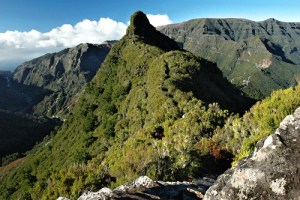
The Laurisilva forest of Madeira is a living fossil, the largest surviving tract of laurel forest in the world, a UNESCO World heritage ecosystem that once covered much of southern Europe 15–40 million years ago but now survives almost exclusively on the Atlantic island of Madeira, where it cloaks the island’s mountainous interior in an impossibly lush, perpetually misty blanket of ancient trees, rare ferns, and endemic orchids. The Laurisilva is Madeira’s greatest natural treasure: a primeval forest unlike anything else in Europe, more akin to Jurassic-era landscapes than anything you would expect to find on a Portuguese island a short flight from Lisbon.
In This Article
Quick Facts: Laurisilva Forest, Madeira
- Best time to visit: Year-round, Madeira’s subtropical climate means the forest is always lush; the levada trails are accessible in all seasons; spring for the best wildflowers
- Size: Approximately 15,000 hectares, covering 20% of Madeira island and forming the largest continuous area of laurel forest in the world
- How to get there: The Laurisilva covers central and northern Madeira; accessible from Funchal (the capital) by car in 30–60 minutes; the most popular entry points are at Ribeiro Frio, Queimadas, and Rabaçal
- UNESCO status: Natural World heritage site since 1999
- Best experience: Walk one of Madeira’s famous levada trails, irrigation channels originally built to carry water from the wet north to the dry south, that wind through the forest on impossibly scenic paths
Laurisilva forest on the island of Madeira is a rest of formerly widespread laurel forest. It contains the largest surviving relict of the defunct laurisilva forest that was once widespread across Europe. This forest is considered the center of plant diversity where you can find numerous rare, relict and endemic species, like bryophytes, ferns or flowering plants. Laurisilva forest also has a very rich fauna. Endemic species include the Madeiran long-toed pigeon and some 66 species of vascular plants.
Laurisilva forest was classified by UNESCO as a World Natural heritage in 1999, and it is still the only natural UNESCO site in Portugal. Such a forest exists now only on the Atlantic Islands, forming the so called Biographical Region of Macaronesia – Madeira, Azores and Canaries Islands, however the most extensive laurisilva forests remain on the island of Madeira.
Close to the Laurisilva forest you can visit also Santana 12 km, Ponta Delgada 7 km, Machico 23 km, Pico Ruivo 5 km, Pico do Arieiro 8 km, Madeira 3.8 km, Fortaleza do Pico 15 km, Monte 14 km or Madeira Theme Park 11 km.
View Laurisilva forest on the island of Madeira Portugal in a larger map
The Levada Trails Experience
The levada trails of Madeira form an extraordinary network of walking paths through the Laurisilva forest. Originally built between the 16th and 20th centuries to carry water from the wet north to the drier agricultural areas in the south, they now serve as hiking routes that traverse mountainsides and pass through tunnels carved into volcanic rock, offering spectacular views over deep valleys and sheer cliffs. The Levada das 25 Fontes is a 4.6-kilometre walk through dense laurel forest to a spectacular waterfall-fed pool surrounded by ferns and mosses. The Levada do Caldeirão Verde, 6.5 kilometres long, passes through three tunnels and ends at a beautiful green lagoon beneath a cascading waterfall. Both routes start from the Rabaçal area and take approximately two to three hours round trip.
Flora and Fauna of the Ancient Forest
The Laurisilva forest supports an extraordinary diversity of plant and animal life found nowhere else on Earth. The forest canopy is dominated by several species of laurel tree, including the Canary laurel and the Madeira mahogany, reaching heights of 40 metres. The understory is rich in ferns, mosses, and lichens thriving in the constant humidity created by the island’s northeasterly trade winds. Endemic plant species include the Madeira violet and several heather species unique to the island, all growing on a layer of peat that can be several metres deep. The Madeira long-toed pigeon relies entirely on the Laurisilva forest for its habitat. Access is free and open year-round through the main access points at Ribeiro Frio, Queimadas, and Rabaçal. Sturdy footwear and warm clothing are recommended.
Have you hiked the Laurisilva’s levada trails or discovered Madeira’s primeval forest? Share your Madeira adventures in the comments! 🌿
Explore all our Portugal travel guides, from Lisbon hills to the Algarve coast.
Explore More
If you enjoyed this article, you might also like:
