The first turn in powder is not a turn, it is a surrender. The skis disappear beneath you, the snow rises to your knees and then your waist, and the normal sounds of skiing, the scrape of edges on hardpack, the chatter of skis on ice, vanish entirely. Powder skiing is silent. It is floating. And the first time you get it right, in the bowl beneath the Grands Montets on a Tuesday morning with fresh snow still falling and nobody else in sight, you will spend the rest of your skiing life chasing that feeling.
In This Article
Chamonix: The Alpinist’s Choice
Chamonix is not a ski resort in the conventional sense. It is a working alpine town, 8,900 permanent residents, a proper high street with a butcher and a boulangerie and a hardware store, that happens to sit at the foot of Mont Blanc (4,809 m, the highest peak in western Europe). The skiing is spread across five separate areas along the valley, Les Houches, Brévent-Flégère, Grands Montets, Le Tour, and the Aiguille du Midi, connected by free bus, not by lifts. This fragmentation is Chamonix’s defining feature: it rewards planning, punishes laziness, and offers some of the most demanding and rewarding skiing in the Alps for those willing to work for it.
The Five Areas, and Which One for What
Grands Montets (Argentière, 1,235-3,275 m): The powder capital of the valley. The famous off-piste runs, the Pas de Chèvre, the Glacier d’Argentière, the bowls off the Bochard gondola, are world-class, avalanche-prone, and absolutely require a guide unless you are qualified and equipped. The Grands Montets cable car, destroyed by fire in 2018, has been partially rebuilt; the new Bochard gondola opened in 2024, and the top station rebuild is ongoing (expected completion 2027). The terrain accessed by the existing lifts is still exceptional. The snow record, 12 metres annual snowfall on the glacier, with reliable powder from December to April, is the best in the valley.
Brévent-Flégère (1,030-2,525 m): South-facing, sun-drenched, and home to the best view of Mont Blanc in the valley, from the summit of Brévent, the entire massif fills the horizon, close enough to feel the cold radiating off the glacier. The skiing here is intermediate-friendly: wide red pistes, good grooming, and a terrain park that attracts the younger crowd. The Flégère side connects to Brévent via the Index chair; the combined area offers some of the best lift-served cruising in Chamonix. Lunch at the Panoramic restaurant on the Brévent summit (book ahead, the terrace fills by 12.30pm) puts you face-to-face with Mont Blanc while you eat tartiflette.
Le Tour / Balme (1,453-2,270 m): The beginner-friendly end of the valley, but do not dismiss it, the off-piste on the back side of the Balme ridge, dropping into Switzerland (Vallorcine), is excellent intermediate-advanced terrain with fewer crowds than Grands Montets. The snow holds well here; the altitude is lower but the aspect is north-facing, which preserves powder days after the rest of the valley has turned to crust. Le Tour connects to the Swiss resort of Vallorcine via the Col de Balme chair, making it possible to ski from France into Switzerland and back before lunch.
Les Houches (950-1,900 m): Tree-lined, family-oriented, and the only area in the valley with extensive tree skiing, which matters enormously on low-visibility days when the higher areas are whiteout. Les Houches hosts the Kandahar World Cup downhill course (the Verte piste, one of the longest and most demanding downhill courses on the circuit). The tree runs after fresh snow, silent, sheltered, the snow untouched between the pines, are a different kind of powder experience from the open bowls of Grands Montets: intimate, winding, magical.
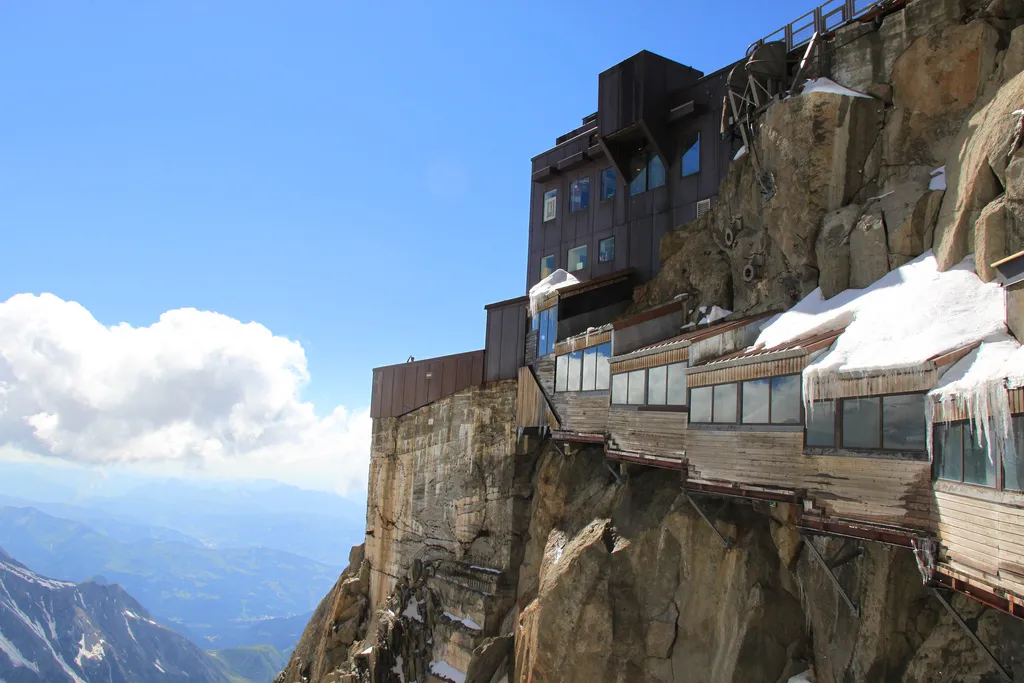
The Vallée Blanche (20 km off-piste, 2,800 m vertical descent): The most famous off-piste run in the world begins at the top of the Aiguille du Midi cable car (3,842 m), a 20-minute ride that climbs 2,800 vertical metres in a single lift and deposits you on a knife-edge ridge with a view across the Alps that makes people forget to breathe. The descent through the Mer de Glace glacier, a 20 km journey that takes 4-6 hours depending on conditions and pace, is not technically difficult (the skiing is comparable to a red piste) but the objective dangers are real: crevasses, seracs, and rapidly changing weather. A guide is mandatory unless you are a qualified mountaineer with crevasse rescue training and local knowledge. The route changes every season as the glacier shifts; what was safe last year may not be safe this year. The guide cost (€400-450 per day, split between 4-6 people) is the cheapest insurance you will ever buy.
The Town: Après-Ski Without the Silliness
Chamonix après-ski is more microbrewery than nightclub. The Micro Brasserie de Chamonix (MBC) on the Rue des Moulins serves craft beer brewed on-site, the Blonde des Guides, named for the Compagnie des Guides de Chamonix (founded 1821, the oldest mountain guide company in the world), and burgers that restore life to frozen limbs. Elevation 1904 on the Avenue Michel Croz is a tiny bar with a big whiskey selection and a jukebox that plays whatever the person who got there first put on. For proper nightlife, the Cantina on Rue du Moulin does live music and dancing until 2am; the crowd is a mix of seasonnaires, guides, and tourists who are still buzzing from the day’s skiing and refusing to accept that the chairs stop turning at 4.30pm.
Practical Sense
Chamonix is expensive, lift passes (€69/day adult in high season), accommodation (book 6-8 months ahead for February), and food (a fondue for two with wine at La Caleche is €80) add up quickly. The Mont Blanc Unlimited pass (€370 for 6 days, covers the entire Chamonix valley plus Courmayeur in Italy and Verbier in Switzerland) is the only pass that makes sense if you are skiing more than three days. The free bus connects all areas efficiently. Do not drive between areas, the valley road is a single track in places and the traffic in peak weeks is biblical. Park at the accommodation and leave the car. The Chamonix valley is a UNESCO World heritage site candidate (application submitted 2022, under review); the environmental protections are genuine and enforced. Respect the mountain, respect the guide’s advice, tip the ski tech at the end of the week, and Chamonix will give you some of the best skiing of your life.
7 Of The Best French Ski Resorts For 2013
France is the most popular tourist destinations in the world. According to the UNWTO, 79.5 million tourists arrived in France in 2011. From Paris and Versailles to the French Riviera and the Alps, France abounds in tourist attractions. For Britishers, France has been the traditional destination for skiing holidays. Each year, millions of British tourists […]
