The stile, a simple wooden step, worn smooth by a thousand boots, deposits you onto a ridge with views in three directions, and the England spread out below you (patchwork fields, a church spire in the middle distance, the silver thread of a river winding through the valley) is so perfectly arranged it looks like a map of itself. Walking in England is not exercise. It is access, to views that have been framed by centuries of agriculture, to villages that have not changed much since the Domesday Book, to a landscape that rewards slow attention with a generosity that never seems to run out.
Ten Walks That Define the English Landscape
1. The South West Coast Path (630 miles, but do Lulworth Cove to Durdle Door, 4 miles): The Jurassic Coast, a UNESCO site, 185 million years of geology exposed in the cliffs, is at its most dramatic on this short stretch. Lulworth Cove (a perfect circular bay, formed by the sea breaking through a weakness in the limestone) to Durdle Door (the natural limestone arch, the most photographed rock formation in England, accessible only by foot) is 4 miles of chalk cliff path with the English Channel glittering below. The climb out of Lulworth Cove is steep (150 metres in half a mile) but the view back across the cove from the top is the reward. The path continues to Weymouth (11 miles) for the committed; the Man o’ War beach below Durdle Door (737 steps down, 737 steps back up) is the best swimming spot on this stretch.
2. Helvellyn via Striding Edge (Lake District, 8 miles, 6 hours): The classic Lakeland ridge walk. Striding Edge, a knife-edge arête, the path narrow, the exposure real, the drop on either side a vertiginous reminder of your mortality, is the most exciting ascent route in England. It is not technically difficult (hands are useful but not essential; the exposure is psychological rather than physical), but the weather can change in minutes, and the ridge in wind or cloud is dangerous. Check the forecast. Do not attempt in winter conditions without crampons and an ice axe. The summit (950 m) offers a view across the Lake District that includes Ullswater, Thirlmere, and on a clear day the Solway Firth and the Scottish hills beyond. The descent via Swirral Edge (less exposed, less celebrated, equally beautiful) completes the horseshoe. The pub in Glenridding, the Traveller’s Rest, serves Cumberland sausage and mash that tastes like victory.
3. The White Cliffs of Dover (Dover to Deal, 10 miles, 5 hours): The cliffs that define England in the national imagination, chalk, 110 metres high, visible from France on a clear day, are best walked from the National Trust visitor centre at Langdon Cliffs east to Deal. The path hugs the cliff edge; the ferries in the Channel are the size of toys from this height, and the lighthouse at South Foreland (built 1843, the first to use an electric light, now a National Trust tea room) is the perfect midpoint. The castle at Deal, one of Henry VIII’s Device Forts, a low, squat artillery fortress built in 1539 to defend against French invasion, is the endpoint. The walk is mostly flat, mostly chalk grassland (wildflowers in spring and summer, chalkhill blue butterflies in July), and entirely evocative. The view of France across the Channel, the coast of Pas-de-Calais, 21 miles away, the cliffs of Cap Blanc-Nez mirroring the White Cliffs, makes the geography of England and Europe suddenly, vividly physical.
4. Hadrian’s Wall (Steel Rigg to Housesteads, 4 miles, 2 hours): The most scenic section of the 73-mile Roman frontier. The wall, built by three legions over six years, completed in 128 CE, 15 feet high originally and patrolled by 10,000 soldiers, snakes along the Whin Sill, a volcanic ridge that the Romans used as a natural defensive line. The section from Steel Rigg to Housesteads (the best-preserved Roman fort on the wall, the latrines, a communal toilet block with drainage channels, the Roman equivalent of the office water cooler, the most humanising detail) is dramatic: the wall cresting the crags, the Northumberland countryside rolling away to the north and south, the wind a constant companion. The view from the crags, the wall marching away into the distance, the Roman Empire reduced to a line of stone in a landscape that has absorbed it, is one of the great historical panoramas in England.
5. Malham Cove and Gordale Scar (Yorkshire Dales, 7 miles, 4 hours): A geological double bill. Malham Cove, a limestone amphitheatre, 80 metres high, formed by a glacial waterfall at the end of the last Ice Age, is the scale model of a cliff that nature never quite finished. The limestone pavement on top (the grykes, the deep fissures between the blocks, a microclimate supporting ferns and rare plants) was used by Harry Potter as a location in The Deathly Hallows. Gordale Scar, a limestone gorge, the cliffs 100 metres high and so narrow you can touch both walls at some points, is the more dramatic of the two. The waterfalls (Gordale Beck, Janet’s Foss) are the bonus. The walk is circular; the pub at Malham (the Lister Arms) is the reward.
6. The Ridgeway (Ivinghoe Beacon to Wendover, 10 miles): The oldest road in England, a chalk ridge track used since the Neolithic, 5,000 years before the Romans arrived, runs 87 miles from Wiltshire to the Chilterns. The final section, from Ivinghoe Beacon (the start or end point, a prominent chalk hill with views across five counties) to Wendover, is classic Chilterns walking: beech woods, chalk downland, red kites wheeling overhead. The kites, reintroduced in 1990 after being hunted to extinction in England, now so common in the Chilterns they are practically pigeons, are the soundtrack and the spectacle. The pub in Wendover (the Red Lion) is the destination. The Ridgeway is easy walking, mostly flat, well-signed, gentle, and the sense of walking in the footsteps of the Neolithic, Bronze Age, and Iron Age travellers who used this route before history began is the quiet, persistent magic of the path.
The Top 10 European Ski Resorts
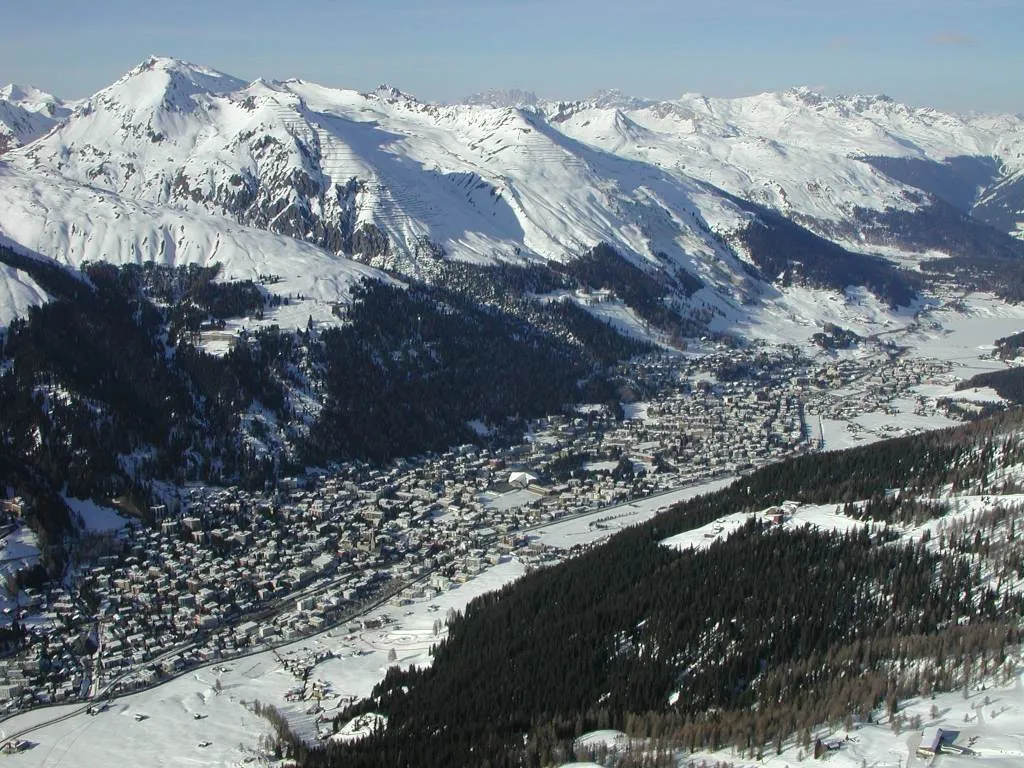
Europe remains a key continent for ski enthusiasts, with a proliferation of resorts. It’s fair to say that new resorts are being opened at regular intervals, although the quality of those destinations can vary somewhat. I enjoy a variety of winter sports and have been fortunate enough to visit a number of leading resorts. Here […]
