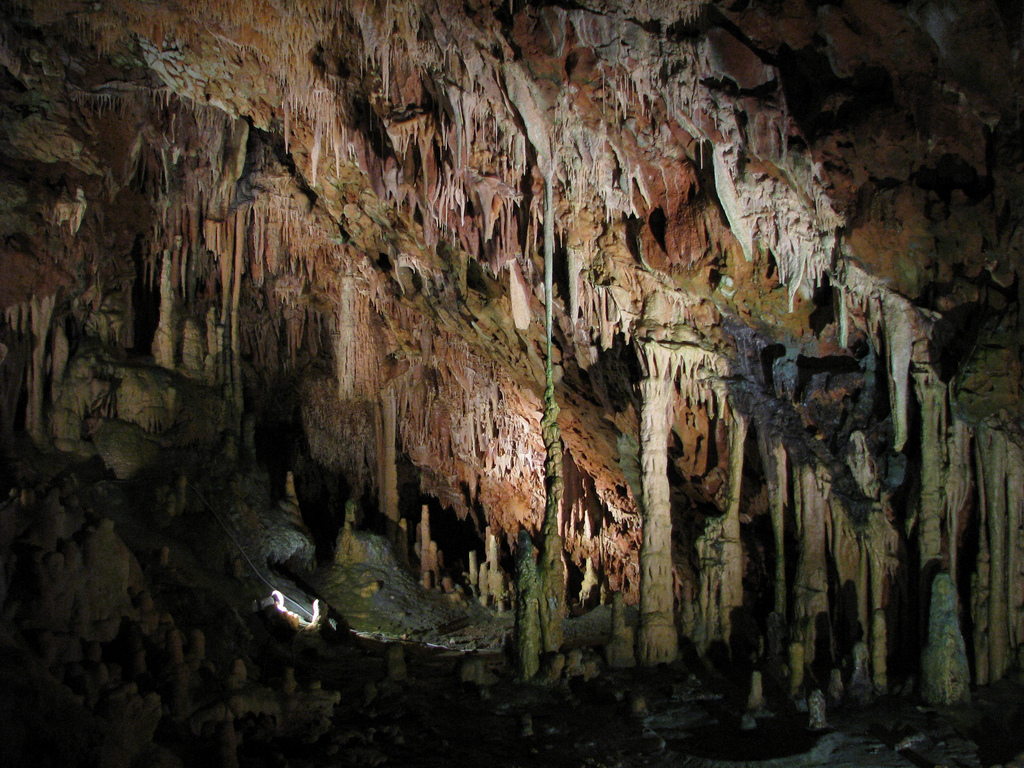
The Diros Caves are a network of limestone caverns on the western coast of the Mani Peninsula in the Peloponnese, and they contain one of the longest underground rivers in Europe. The caves were formed over millions of years by water dissolving the limestone bedrock. They extend for at least 14 km, of which roughly 1.5 km is accessible to the public. The water in the caves is a constant 16 degrees Celsius. The air is damp and cool. The stalactites above your head have been growing for 500,000 years.
In This Article
A Boat Journey Through Subterranean Chambers
The guided tour of the Diros Caves begins with a small rowboat, gently poled through a series of underground chambers connected by narrow canals. The water is so clear and still that the stalactites above are perfectly reflected on the surface, creating the illusion of an endless cavern stretching in all directions. The boat journey covers approximately 800 metres of navigable waterways, passing through halls adorned with massive stalactites that have taken hundreds of thousands of years to form. Some formations resemble organ pipes, frozen waterfalls, or delicate curtains of calcite. The boatman occasionally points out particularly notable features, including the impressive Chamber of the Apocalypse, a vast hall rising over 20 metres high. The silence between the drip of water and the gentle splash of the oars gives the cave an almost cathedral-like atmosphere.
Geological Significance and Discovery
The Diros Caves were formed over millions of years as rainwater slowly dissolved the surrounding limestone bedrock, creating an extensive network of underground passages. The cave system extends for over 15 kilometres, though only a portion is open to the public. Archaeological discoveries within the caves have revealed evidence of Neolithic and early Bronze Age human activity, including pottery fragments and tools dating back over 5,000 years. These findings suggest that the caves were used as a shelter and possibly a ceremonial site long before modern exploration began in the 19th century. The scientific value of the caves was formally recognised in the 1950s when systematic exploration uncovered the full extent of the system, establishing Diros as one of Greece’s most important geological sites.
Visitor Information and Practical Tips
The Diros Caves are located on the western coast of the Mani Peninsula in the Peloponnese, roughly a three-hour drive from Athens. The site is open year-round except for certain maintenance periods, typically in late winter. Standard admission costs around 20 euros for adults, and tours last approximately 30 to 40 minutes. The temperature inside the caves stays at a constant 16 to 18 degrees Celsius regardless of the season, so bring a light jacket even in summer. Photography is allowed in most areas, though the use of flash may be restricted to protect the cave ecology. Sturdy footwear is recommended for the section of the tour that continues on foot after the boat. Combine your visit with a trip to the nearby town of Areopoli or the coastal village of Gerolimenas for a full day of Mani exploration.
The Boat Tour Through the Caves
The only way to see the caves is by boat. The guides, called gondoliers, stand at the back of flat-bottomed wooden boats and push them through the underground river using long poles. The ceiling drops to less than a metre in some sections, forcing you to duck or lie back in the boat. The stalactites hang close enough to touch, though the guides discourage it: the natural oils from human hands stop the growth of the formations. The tour lasts 25 to 30 minutes and covers roughly 800 metres of the river. The electric lights along the route illuminate the formations: columns of flowstone, curtains of calcite, the reflections on the black water creating the illusion of depth in every direction.
The Walking Section and the Glyphada Chamber
After the boat tour, the walkway continues for another 700 metres through the Glyphada Chamber, the largest room in the cave system. The chamber is 250 metres long and 50 metres wide. The concrete path winds between massive stalagmites that rise 10 metres or more from the cave floor. The acoustics in this chamber are remarkable, which is why the municipality of Diros holds occasional classical music concerts inside the cave. The sound carries without amplification. The temperature and humidity make the experience unusual. The concerts are held in October and November, after the tourist season ends.
Getting to Diros and Practical Tips
The caves are located near the village of Pyrgos Dirou, roughly 45 km south of Kalamata. The entrance fee is €15 as of 2026. The site opens at 8.30am and the last entry is at 4pm in the summer, 3pm in winter. The caves are closed between February 15 and March 15 for annual cleaning and maintenance. Arrive early. The queue forms by 10am in July and August. The boat tour is not suitable for visitors with mobility issues: the boarding step is steep and the low sections require bending. A jacket is necessary even in summer. The cave temperature does not change with the seasons. It stays at 16 degrees year-round.
Did the boat through the Diros caves feel like an adventure, or did the low ceiling and the black water make you grateful for the electric lights?
Looking for more European travel inspiration? Check out our other guides and start planning your next European adventure!
Explore all our Greece travel guides, from ancient ruins to Aegean beaches.
Explore More
If you enjoyed this article, you might also like:
