The Gower Peninsula unfurls along the south coast of Wales like a secret waiting to be discovered. Designated the United Kingdom first Area of Outstanding Natural Beauty in 1956, this stunning coastline delivers dramatic limestone cliffs, secluded coves, and some of the finest sandy beaches in Britain. Rhossili Bay sweeps for three miles beneath the imposing headland of Worm Head, while the tidal island invites adventurous souls to walk across the sands at low tide. The village of Mumbles guards the eastern gateway with its Victorian pier and promenade. Inland, ancient woodlands and heathland crisscrossed with footpaths reward hikers with panoramic views across the Bristol Channel. Gower remains wild, windswept, and gloriously unpolished.
\n\n\n
\n \n
You will find the Gower Peninsula in South Wales where it shoots out into the Bristol Channel. The Gower Peninsula covers a total area of just over seventy square kilometres. It is a very popular destination due to it having been dedicated as the first Area of Outstanding Natural Beauty in Britain back in 1956.
\n
The entire region not only includes the peninsula, but covers an area of more then 188 kilometres. In the north, you will find the Loughor Estuary and to the east one can find Swansea Bay.
\n
\nGower Peninsula, Wales, UK by Mike Mantin
\n\n
In This Article
Castles and Ancient History of Gower
\n
The Gower Peninsula has been inhabited since the upper Palaeolithic Era, and archaeological discoveries here have shaped our understanding of prehistoric Britain. In 1823, archaeologists uncovered the skeleton of a male who lived here more than 33,000 years ago, known as the Red Lady of Paviland. Several burial chambers dating to the Neolithic period have also been found across the peninsula. Out of the original nine Bronze Age menhirs that once stood on Gower, eight remain upright today. Among them is the famous Arthur’s Stone, a massive twenty-five ton capstone balanced on smaller uprights. The area is also home to six castles, including Bovehill, Oxwich, Oystermouth, Pennard, Weobley, and Penrice Castles. The Roman fort of Leucarum once stood where the River Loughor meets the sea, and a Norman castle now occupies that strategic location. Walking the peninsula means walking through layers of history stretching back tens of thousands of years.
\n\n
Beaches and Coastal Highlights
\n
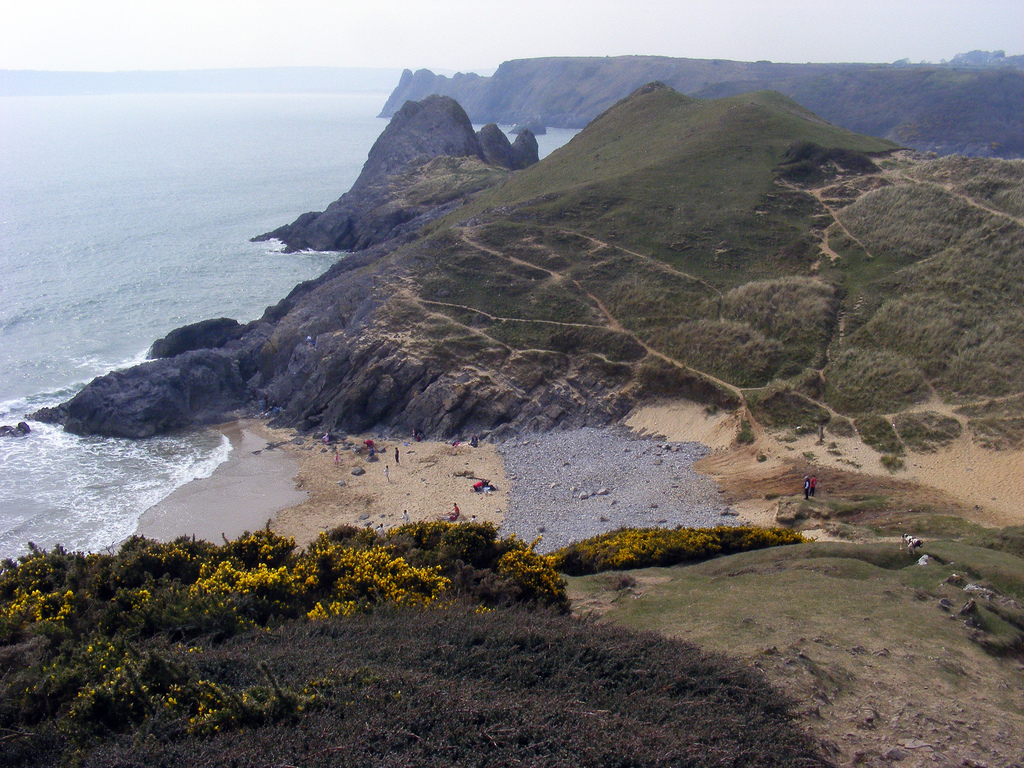
The Gower Peninsula coastline offers some of the finest beaches in Britain. Rhossili Bay is the standout, a three-mile stretch of golden sand backed by grassy cliffs and overlooked by the distinctive hump of Worm Head. At low tide, visitors can walk across the sands to the tidal island. Three Cliffs Bay features dramatic sand dunes and a ruined castle perched on the headland. The bay takes its name from three limestone sea stacks rising from the water. Further east, Caswell Bay and Langland Bay offer sheltered swimming. The Wales Coast Path runs the entire Gower coastline, providing access to secluded coves reachable only on foot. The cliffs reveal Carboniferous limestone with fossils and rock formations shaped over millions of years.
\n\n
Inland Walks and Nature Reserves
\n
Beyond the coastline, the interior of the Gower Peninsula offers quiet countryside with ancient woodlands and heathland. The central portion is agricultural land, with small villages that have seen little development. Cwm Ivy Wood is a fantastic spot for a walk, with bluebells carpeting the forest floor in spring. The salt marshes at Whiteford Burrows form a nature reserve that attracts wading birds throughout the year. Over 188 square kilometres are protected as the Gower Area of Outstanding Natural Beauty. The footpaths offer panoramic views across the Bristol Channel to Exmoor and beyond.
\n
It has been well known that the area of Wales has been inhabited by civilizations dating back to the upper Palaeolithic Era. Over the years, a number of archaeological discoveries on Gower Peninsula have been made. Back in 1823, an archaeologist uncovered the skeleton of a male who had lived in the peninsula more than 33,000 years ago. Several burial chambers that have been successfully dated back to the Neolithic period have also been uncovered.
\n
Out of the original nine stones Bronze Age menhirs that once existed on the peninsula, eight of them are still standing upright today. It is here that one will find the infamous Arthur’s Stone which weighs in at a massive twenty-five tons. To imagine that these massive rocks were cut and moved to the area during the Bronze Age is simply amazing.
\n
\nThree Cliffs Bay on the Gower Peninsula, South Wales, UK by Walter Daw
\n
You will not only find a castle in the peninsula that dates back to the medieval period, you will also find the Roman fort of Leucarum. The Roman built fortress can be found where the River Loughor’s mouth existed back in the first century. Today a Norman Castle exists in the location.
\n
You will find that the area is home to a total of six castles. You will find the Bovehill Castle on the Gower Peninsula as well as the Oxwich, Oystermouth, Pennard, Weobley and Penrice Castles. While not all of them are in the best conditions, they are nonetheless a very popular part of visiting the area.\n
