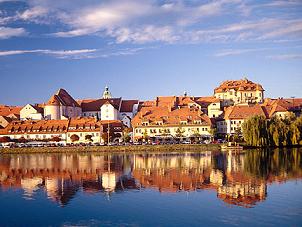
The oldest vine in the world still produces grapes in Maribor, a fact that tells you everything about this Slovenian city’s relationship with wine. The Stara trta, or old vine, has been growing on the same wall for over 450 years, surviving wars, invasions, and urban development. Maribor sits in the heart of the Styria wine region, where rolling hills covered in vineyards surround a compact medieval centre. The Lent district stretches along the Drava River, its narrow streets filled with wine bars and restaurants serving regional specialities.
In This Article
The Old Vine of Maribor and Wine Culture
The Stara trta, or Old Vine, is the undisputed symbol of Maribor and one of the city’s most remarkable attractions, drawing wine enthusiasts from around the world. Growing on the front wall of a medieval house in the historic Lent district along the Drava River, this ancient vine is officially recognised by Guinness World Records as the oldest grapevine in the world that still produces fruit each year. The vine has survived for over 450 years, through wars, invasions, urban development, and changing climates, a testament to the resilience of both the plant and the people who have cared for it through the centuries. Each autumn, a small quantity of red grapes is harvested from the vine with great ceremony, typically in late September or early October, when the city celebrates its wine-growing heritage. The wine made from these grapes is rarely available for purchase in shops; instead, it is presented to distinguished visitors to the city in tiny decorative bottles as a gesture of honour and hospitality. The Old Vine House, a museum dedicated to the vine and the wine-making traditions of the Styria region, occupies the historic building behind the vine and welcomes visitors throughout the year.
Exploring Maribor’s historic Centre
Maribor’s compact historic centre is built around two main squares that anchor the city’s social life and architectural heritage. The Main Square, known as Glavni Trg, is dominated by the Renaissance-style Town Hall with its elegant arcaded courtyard and the Plague Column, a Baroque monument erected in 1743 to give thanks for the end of a devastating outbreak of bubonic plague that killed a third of the city’s population. The Slomškov Square, or Slomškov Trg, features the Maribor Cathedral, a Gothic structure with a 57-metre bell tower that offers panoramic views of the city and the surrounding wine-growing hills in every direction. Between the two squares, the narrow streets of the old town conceal hidden courtyards, artisan workshops, and traditional gostilnas serving hearty Styrian cuisine that reflects the agricultural richness of the region. The Maribor Regional Museum, housed in a former castle on the edge of the old town, presents the history of the region from prehistoric times through the present day, with particularly strong collections of medieval weaponry, traditional folk costumes, and exhibits on the region’s industrial heritage.
The Lent Festival and Outdoor Activities
The Lent district, once a working-class neighbourhood of boatmen, fishermen, and small tradesmen, has been beautifully transformed into Maribor’s most vibrant waterfront area. During the summer months, the banks of the Drava River come alive with the Lent International Summer Festival, one of the largest and most diverse open-air cultural events in Central Europe. The two-week festival, held annually in late June and early July, presents over 400 separate events including concerts by international artists, theatre performances, dance shows, and street entertainment across multiple stages along the riverbank. At other times of the year, Lent offers a peaceful setting for riverside walks, with cafes and wine bars occupying the ground floors of carefully restored historic buildings. The Maribor Pohorje ski resort, a convenient 15-minute drive from the city centre, provides winter sports activities including downhill skiing and snowboarding on well-maintained slopes, as well as cross-country trails through snow-covered forests. In summer, the same mountain offers extensive hiking and mountain biking trails through forests of beech and spruce, with panoramic views stretching across the Drava valley all the way to the nearby Croatian border.
Would you travel to a city specifically to taste its oldest wine? 🍇
Explore all our Slovenia travel guides, from Lake Bled to the Julian Alps.
Explore More
If you enjoyed this article, you might also like:
