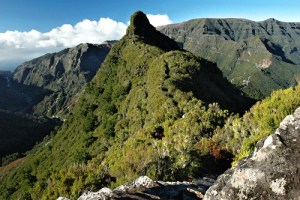
Dark volcanic cliffs plunge into an Atlantic that shifts between deep blue and emerald green. Above, the terraced hillsides of Madeira are thick with laurel forests, banana plantations, and vines trained low over stone-walled patches of red soil. Levada channels trace the contours of the mountains, carrying clear water from the rainy highlands to the drier south, and walking these narrow irrigation paths remains one of the island’s greatest pleasures. The scent of eucalyptus and damp earth mingles with the salt breeze from the sea. Funchal’s harbour glows with evening lights, and the cable car rises above terracotta roofs toward Monte, where the famous wicker toboggan ride awaits.
In This Article
The Levada Walks of Madeira
The levadas are the defining feature of Madeira’s landscape and the very best way to explore the island’s lush interior. These irrigation channels, built over centuries by generations of local workers to carry water from the rainy northwest to the drier southern coast, are accompanied by maintenance paths that now form a remarkable 2,000-kilometre network of walking trails across the island. The most popular levada walk is Levada das 25 Fontes, a moderate hike that leads through native laurel forest to a stunning waterfall fed by 25 natural springs cascading down the mountainside. The Levada do Risco trail offers a shorter but equally rewarding walk to the highest single-drop waterfall on the island, a spectacular sight as water plunges over a sheer cliff face into the pool below. For more experienced hikers, the challenging trek to Pico Ruivo, the highest peak in Madeira at 1,862 metres above sea level, provides breathtaking sunrise views over the island and across the vast Atlantic Ocean. The laurel forest itself, classified as a UNESCO World heritage site, is a rare remnant of the subtropical forests that once covered southern Europe millions of years ago, with ancient plant species found nowhere else on Earth today.
Funchal and the Coastal Experience
Funchal, the capital of Madeira, combines a charming historic centre with modern attractions that make it one of the most pleasant and liveable cities in the Atlantic archipelago. The Old Town, known as Zona Velha, features narrow streets lined with restaurants and art galleries, most notably the Rua de Santa Maria where painted doors transform the entire street into an open-air gallery of contemporary art. Funchal’s cable car rises 560 metres to the hilltop village of Monte, where the famous wicker toboggan ride descends through steep streets at thrilling speeds in a tradition dating back to the early 19th century. The Monte Palace Tropical Garden, with its exotic plants from around the world, peaceful Oriental gardens, and contemporary sculpture collection, occupies the former estate of a wealthy merchant and provides hours of exploration. The Madeira Botanical Garden, located on a separate hill overlooking the city, offers panoramic views over Funchal and the harbour, with beautifully labelled collections of both indigenous and introduced plant species growing in carefully designed displays.
Madeira’s Food and Wine Traditions
Madeira’s culinary traditions reflect its historical position as a crossroads of Atlantic trade routes and its unique volcanic terroir. The fortified Madeira wine, produced on the island since the 15th century using a unique heating process called estufagem, is by far the most famous export, with styles ranging from the dry Sercial to the sweet Malmsey to suit every palate. A visit to a traditional wine lodge in Funchal, such as Blandy’s or Henriques & Henriques, offers guided tastings and an education in the winemaking process that has made this wine famous worldwide. Local cuisine centres on fresh seafood from the surrounding Atlantic waters, with espada, the black scabbardfish, being the most iconic local dish, often served with passion fruit sauce or fried bananas in a uniquely Madeiran combination of flavours. The espetada, beef skewers seasoned with garlic and bay leaf and cooked over open wood fires, is a traditional Madeiran speciality that pairs perfectly with the island’s robust red wines. For a sweet end to your meal, the bolo do caco, a garlic bread made from sweet potato dough served warm with garlic butter, accompanies almost every restaurant meal.
Have you ever visited a volcanic island? What was your experience like? 🌴
Explore all our Portugal travel guides, from Lisbon hills to the Algarve coast.
Explore More
If you enjoyed this article, you might also like:
