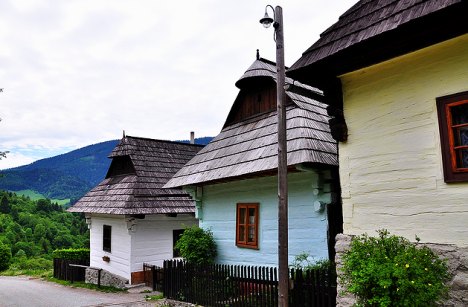
Step into Vlkolínec and the 21st century falls away. This tiny UNESCO-listed village in the mountains of central Slovakia preserves a way of life that has almost vanished from Europe. Wooden log houses with steep shingled roofs and whitewashed walls line a single street. Each house is numbered and painted in traditional patterns. Smoke rises from chimneys in winter. Goats graze on the hillsides. There are no electricity pylons, no satellite dishes, no modern intrusions to break the spell. The bell tower stands at the centre, a simple wooden structure that has called villagers to prayer for generations. Vlkolínec is not a museum. People still live here.
Slovakia is known for its picturesque villages with traditional houses and folk architecture. One of those villages is so unique that it has even got on the UNESCO World heritage List. Vlkolínec represents a living link to a pre-industrial past that has disappeared almost everywhere else in Europe. The village sits in a valley surrounded by the forested peaks of the Veľká Fatra range, accessible by a narrow road that winds up from the city of Ružomberok, about ten kilometres away.
Photo licensed under the Creative Commons, created by Janos Korom Dr.
In This Article
The History and Layout of Vlkolínec
Vlkolínec is now a part of the city of Ružomberok. It lies at an altitude of 718 m in Revúca Valley, south of the rocky mountain massif Sidorovo, also called Žiar (1099 m asl), which belongs to the mountains of Veľká Fatra. Vlkolínec is in fact a reservation of folk architecture, a kind of outdoor museum of medieval village with wooden houses that are typical for the mountain areas. This is the best preserved, most complete and most original collection of folk buildings in the Slovak Republic, spreading on an area of 797 hectares. Archaeological findings confirm the existence of a fort on the hill Sidorovo already 2,500 years ago. The name of the village is supposedly derived from the ancient presence of wolves in the area (these animals can still be seen here). The first written mention of Vlkolínec dates from 1376, where it is mentioned as one of the streets of Ružomberok. Originally, there were just a few houses, although the number gradually increased over the centuries as the village grew.
Photo licensed under the Creative Commons, created by Janos Korom Dr.
Preserved Architecture and Daily Life
At present, there are 73 listed buildings, 55 of them residential houses. Of these, 18 are now permanently settled with 35 inhabitants. Owners of other houses are here just seasonally. Everything is built of wood, including a local landmark – a two-storey wooden belfry from 1770. Interesting is also a timbered well from 1860, previously the only source of drinking water for the whole village. One of the few brick buildings is a local Classicist-Baroque Church from 1875. Also the local cemetery is worth a visit, with its traditional wrought-iron crosses and carved wooden headstones that follow patterns passed down through generations. The whole complex is rare also due to the fact that it was not affected by any new constructions. Already in 1977 the village of Vlkolínec was declared the Reservation of Folk Architecture Monuments, and in 1993 inscribed on the UNESCO World heritage List.
Photo licensed under the Creative Commons, created by Janos Korom Dr.
Visiting Vlkolínec Today
Walking through Vlkolínec feels like stepping back in time. The log houses, painted in white with distinctive blue or green trim, showcase the traditional building techniques of the Carpathian mountain region. Inside some of the open houses, visitors can see period furnishings, tools, and household items that illustrate rural life in centuries past. The surrounding landscape of the Veľká Fatra mountains offers excellent hiking opportunities, with marked trails leading through meadows and forests. The best time to visit is late spring or early autumn when the weather is mild and the village is less crowded. Accommodation is available in Ružomberok, a short drive away, and local guides offer tours that explain the history and traditions of this remarkable place. The village has a small museum and a traditional pub where visitors can sample local food and drink while taking in the atmosphere of this unique living heritage site.
Would you trade modern comfort for a stay in a village like this? 🌄
Explore all our Slovakia travel guides, from the High Tatras to Bratislava charm.
Explore More
If you enjoyed this article, you might also like:
