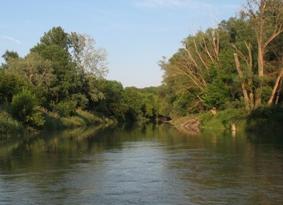
Danube-Auen National Park is one of Europe’s last remaining large-scale floodplain ecosystems, a 9,300-hectare protected natural paradise of meandering river channels, old-growth riparian forest, and vast water meadows stretching along the Danube between Vienna and Bratislava. One of Austria’s six national parks and part of the transboundary Ramsar wetland complex shared with Slovakia, the Donau-Auen offers a remarkable wild refuge within sight of two capital cities, a biodiversity hotspot where beavers, white-tailed eagles, and the endangered European pond turtle thrive.
In This Article
Quick Facts: Danube-Auen National Park
- Best time to visit: Spring (April–June) for birdwatching and wildflowers; summer for boat tours on the Danube side channels; autumn for the deer rut and golden floodplain forests
- Top attraction: The Lobau section, the closest wild floodplain to Vienna, and the Orth Castle visitor centre with its open-air wetland enclosures
- How to get there: ~30 minutes from Vienna by car or S-Bahn to the Lobau; the main national park centre is at Orth an der Donau (~40 min from Vienna)
- Entry fee: Free access to trails and most areas; guided boat tours ~€15–20
- Best for: Birdwatchers, cyclists, kayakers, families, and nature lovers
Biodiversity and Conservation in the Floodplain
The Danube-Auen National Park is a refuge for an extraordinary diversity of plant and animal life, supported by the dynamic floodplain ecosystem that the free-flowing Danube creates. The park is home to over 800 species of vascular plants, more than 30 mammal species, and over 100 breeding bird species. Beavers have made a remarkable comeback here and their lodges and dams are visible along many of the quieter side channels. The white-tailed eagle, Europe’s largest eagle with a wingspan of over two metres, has returned as a breeding species thanks to dedicated conservation efforts, and visitors may spot these magnificent birds soaring above the floodplain forests. The endangered European pond turtle, Austria’s only native turtle species, finds refuge in the park’s warm, shallow backwaters. The waters themselves teem with over 50 species of fish, including the Danube salmon (Huchen), one of Europe’s largest freshwater fish. In spring, the floodplain forests are carpeted with wildflowers, including rare orchids and the striking yellow iris, while summer brings clouds of dragonflies and butterflies to the water meadows. The park’s conservation programmes also focus on maintaining the natural flooding regime that sustains this unique ecosystem, ensuring that seasonal floods continue to reshape the landscape and create new habitats.
Exploring by Bike, Canoe, and on Foot
The best way to experience the Danube-Auen National Park is by getting out onto the water or into the forest. The park offers an extensive network of cycling paths, including a section of the famous Danube Cycle Path (Donauradweg) that runs from Vienna to Budapest. Cyclists can explore the northern edge of the park on well-maintained trails that pass through floodplain forests, past beaver ponds, and along the river itself. For a more intimate experience, guided canoe tours allow visitors to paddle silently through the narrow side channels of the Danube, where the forest canopy closes overhead and the sounds of the modern world fade away. These guided paddles offer the best chance to see kingfishers darting along the water’s surface, herons standing motionless in the shallows, and perhaps even a beaver swimming alongside the canoe. For walkers, the park offers numerous hiking trails, from short educational paths near the Orth Castle visitor centre to longer routes that venture deep into the floodplain. The Orth Castle itself houses an excellent visitor centre with interactive exhibits about the park’s ecosystems, plus open-air enclosures where you can see beavers, otters, and native fish species up close. The Lobau section, the closest part of the park to Vienna, is the most accessible and popular for afternoon walks and weekend cycling trips.
The Danube-Auen National Park or Nationalpark Donau-Auen in German covers 93km2 and it is situated between the European capitals Vienna and Bratislava and is one of the largest remaining floodplains of the Danube in Central Europe.
Danube is still free flowing here and is the lifeline of the National Park. It creates a habitat for a number of animals and plants, some of which are rare species. Accompanied on guided walking tours or on boats, visitors have ample opportunity to get to know the fascinating world of the “Donau-Auen”, the Danube wetlands.
Donau-Auen National Park was established in 1996 and in 1977 the Lobau region was declared a preserved area by the Austrian government, as well as by UNESCO.
It is good alternate at your visit to Wienna.
View Danube-Auen National Park in Austria in a larger map
Have you explored Danube-Auen National Park or paddled the wild Danube? Share your wildlife encounters and favourite trails in the comments! 🦅
Explore all our Austria travel guides, from Vienna coffeehouses to Alpine peaks.
Explore More
If you enjoyed this article, you might also like:

Danube-Auen National Park is a hidden gem just outside Vienna. We rented bikes and cycled the floodplain forests for an afternoon — saw beavers, herons, and barely saw another person. Incredible to think this wild landscape exists so close to a capital city. The national park centre has good maps and the staff speak perfect English.