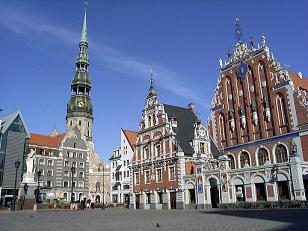
Riga is the capital and largest city of Latvia, the biggest and most vibrant city in Baltics, and an important seaport, situated on the mouth of the Daugava. It is also the largest city of the Baltic states and third-largest in the Baltic region, behind Saint Petersburg and Stockholm.
Riga’s historical centre is declared a UNESCO World heritage Site thanks to its amazing houses. The city is known as the most expensive Baltic city and is particularly notable for its extensive Jugendstil (German Art Nouveau) architecture, which UNESCO considers to be unparalleled anywhere in the world.
In This Article
Art Nouveau Architecture: Riga’s Defining Feature
Riga boasts the highest concentration of Art Nouveau (Jugendstil) architecture of any city in Europe, with over 800 buildings in this distinctive style scattered across the city centre. The most impressive concentration lies along Alberta iela (Albert Street), where the architect Mikhail Eisenstein designed a series of ornate apartment buildings between 1901 and 1906 that have become the iconic symbol of Riga. These facades are adorned with elaborate masks, mythical creatures, floral motifs, and dramatic female figures, all carved in stone with extraordinary attention to detail. Nearby, Elizabetes iela features more of Eisenstein’s work, including the building at number 33 with its striking blue and gold decorations. Beyond the decorative excesses of Eisenstein, the quieter streets of the Quiet Centre district contain the work of Latvian Art Nouveau architects such as Eižens Laube and Konstantīns Pēkšēns, who developed a distinctively national romantic style incorporating traditional Latvian folk motifs into the Art Nouveau vocabulary. Walking tours of the Art Nouveau district are available and highly recommended, as they provide context about the social and economic boom that fuelled this architectural flowering when Riga was one of the wealthiest cities in the Russian Empire.
Exploring the UNESCO Old Town
Riga’s Old Town (Vecrīga) is a compact maze of cobbled streets, medieval churches, and historic merchants’ houses that earned its UNESCO World heritage designation alongside the Art Nouveau district. The architectural complex known as the Three Brothers, three adjoining stone houses built between the 15th and 18th centuries, represents the finest surviving example of medieval domestic architecture in Latvia and now houses the Museum of Architecture. The Dome Cathedral, originally founded in 1211, dominates the Old Town with its impressive Romanesque, Gothic, Baroque, and Art Nouveau elements, reflecting centuries of architectural evolution. Inside, one of the largest pipe organs in the world, built by the renowned Walcker company in 1884, fills the vast space with extraordinary sound during regular concerts. The Great Guild Hall and Small Guild Hall, historic meeting places of the city’s German merchant elites, stand as reminders of Riga’s Hanseatic past and the wealth generated by its position as a Baltic trading port. Other essential sights include St. Peter’s Church, whose tower offers panoramic views over the red-tiled rooftops of the Old Town, and the Swedish Gate, the last surviving of the original 25 city gates.
Day Trips from Riga
Riga serves as an excellent base for exploring the wider Latvian landscape. Just 25 kilometres west lies Jūrmala, Latvia’s premier coastal resort, with over 30 kilometres of white sand beaches, pine forests, and charming wooden architecture. The town of Sigulda, about 50 kilometres northeast of Riga, is the heart of the Gauja National Park and offers three medieval castle ruins, spectacular autumn colours, and adventure activities including bobsleigh rides on the Olympic track. The Rundāle Palace, designed by the Italian architect Francesco Bartolomeo Rastrelli (who also designed the Winter Palace in St. Petersburg), is a magnificent Baroque palace about 70 kilometres south of the city, often called the “Versailles of Latvia.” For those with more time, the city of Cēsis with its medieval castle and picturesque Old Town makes an excellent overnight trip. All of these destinations are easily reached by public transport from Riga, making day trips straightforward and rewarding.
Around Riga you can visit several great places such as the coastal resort Jurmala, the Sigulda castles overlooking the scenic Gauja River Valley, and the Rastrelli Palace at Rundale.
What to see in Riga
- Great Guild Hall and Small Guild Hall
- Symbol of the historical centre – The Dome Cathedral – impressive mixture of romantic, gothic, Renascence, baroque and classical styles. There is one of the largest organs in the world in the cathedral
- The architectural complex Three brothers – three houses are the oldest stone buildings in Riga built in the 15th, 17th and 18th centuries
- St. Maria Magdalena Catholic Church – built in the 13th century
- Sweden Gate – the newest and the only saved as they are of 25 gates of Riga, which used to protect the city from enemies
- St Jacob Church – served both to the Catholics and the Lutherans in the past
Explore all our Latvia travel guides, from Riga Art Nouveau to Baltic beaches.
Explore More
If you enjoyed this article, you might also like:
