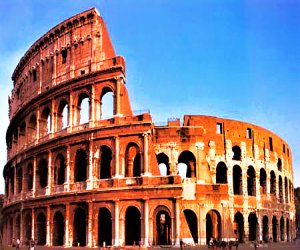
Italy is quite simply one of the greatest travel destinations on Earth, a country that packs more UNESCO World heritage sites (60), more artistic masterpieces, more culinary diversity, and more sheer geographic beauty into a single nation than any other on the planet. From the snow-capped Dolomites to the sun-baked beaches of Sicily, from the canals of Venice to the ruins of Pompeii, from Michelangelo’s David to a perfect plate of pasta in a tiny Tuscan trattoria, Italy is a sensory overload in the best possible way. No country in the world has contributed more to Western art, architecture, music, and cuisine, and no country rewards the curious traveller more deeply.
Quick Facts: Italy Travel Guide
- Best time to visit Italy: April–June and September–October for the perfect balance of good weather and manageable crowds across most of the country; July–August is peak season, hot, crowded, and expensive (avoid Rome, Florence, and Venice in August if you can); winter offers skiing in the Dolomites, Carnival in Venice (February), and the lowest prices for city breaks
- Top attractions in Italy: Rome’s Colosseum, Vatican City, and Roman Forum; Florence’s Uffizi Gallery, Michelangelo’s David, and the Duomo; Venice’s Grand Canal and St. Mark’s Square; the Amalfi Coast; the Cinque Terre; Pompeii and Herculaneum; the Dolomites; and the entire island of Sicily
- How to get to Italy: Major international airports at Rome Fiumicino (FCO) and Milan Malpensa (MXP), plus Venice, Naples, Bologna, Pisa, and Catania; extensive high-speed rail connections from France, Switzerland, Austria, and within Italy (Frecciarossa trains connect Rome–Florence–Milan–Venice–Naples at up to 300 km/h)
- Currency: Euro (€)
- Language: Italian, learning a few phrases (buongiorno, grazie, per favore, un caffè per favore) goes a very long way
- Best for: Everyone, Italy offers world-class art and history, family-friendly beaches, romantic city breaks, hiking in the Alps and Dolomites, food and wine tours, and some of the best skiing in Europe
Italy’s Must-Visit Regions
- Rome and Lazio: The Eternal City needs no introduction, the Colosseum, the Vatican, the Pantheon, the Trevi Fountain, and 2,800 years of history layered into every street. Allow at least 4 days. Beyond Rome, Lazio offers the haunting Gardens of Ninfa, the ancient port of Ostia Antica, and the hill towns of the Castelli Romani. Read all our Italy guides →
- Tuscany: The postcard Italy of cypress-lined hills, medieval hill towns (San Gimignano, Montepulciano, Siena), and the Renaissance treasure chest of Florence. The Val d’Orcia countryside is a UNESCO World heritage cultural landscape.
- Venice and the Veneto: The world’s most improbable city, 118 islands in a lagoon, connected by 400 bridges, slowly sinking. Venice is worth every cliché. Combine with Verona (Romeo and Juliet’s city) and the Dolomites.
- Amalfi Coast and Campania: The most beautiful coastline in Europe, Positano, Amalfi, Ravello, plus the archaeological wonders of Pompeii and Herculaneum, the pizza capital of Naples, and the glamorous Isle of Capri. Read our Amalfi Coast guide →
- Cinque Terre: Five tiny, colourful fishing villages clinging to the Ligurian cliffs, connected by a spectacular coastal hiking trail and a train line. Read our Cinque Terre guide →
- Dolomites: UNESCO-listed mountains of pink limestone spires that are arguably the most beautiful in the world, world-class hiking in summer, skiing in winter. Read our Dolomites guide →
- Sicily: A continent in miniature, Greek temples (Agrigento, Segesta), Norman cathedrals, the active volcano of Mount Etna, and a cuisine that is the envy of Italy. The largest island in the Mediterranean rewards at least a week.
- Lake Como and the Italian Lakes: The glamorous lakes of Lombardy, Como, Garda, Maggiore, have been drawing the wealthy and celebrated since Roman times. Como’s Bellagio, Varenna, and the villa gardens are the stuff of dreams.
Eating in Italy: A Quick Guide
Italian cuisine is deceptively simple and rigorously regional. Romans eat carbonara and cacio e pepe; Florentines eat bistecca alla fiorentina; Neapolitans claim pizza (and they’re right); Sicilians eat arancini and cannoli; the Amalfi Coast is lemon territory. The golden rules of eating in Italy: eat where Italians eat (avoid restaurants with multi-language menus and food photos outside), never order cappuccino after 11am (it’s a breakfast drink, espresso after meals is the norm), and the bill (il conto) almost never includes service, check for “coperto” (cover charge) which replaces tipping.
Italy is a country located partly on the European Continent and partly on the Italian Peninsula in Southern Europe and contains the two largest islands in the Mediterranean Sea, Sicily and Sardinia.
Italy shares its northern, Alpine boundary with France, Switzerland, Austria and Slovenia.
There are two independent states of San Marino and the Vatican City and Campione d’Italia is an Italian exclave in Switzerland. The territory of Italy covers 301,338 km² and is influenced by a temperate seasonal climate. With 60.2 million inhabitants, it is the sixth most populous country in Europe, and the twenty-third most populous in the world.
There are lots of very interesting places in Italy, they have very good pizza and wine. Very important Italian products are Fiat, Mozzarella, Prosciutto and pizza.
Some of the famous Italian people are: Medici, Marco Polo, Dante, Donatello, Alberti, Botticelli, Columbus, Da Vinci, Vespucci, Michelangelo, Raphael, Galileo, Vivaldi, Puccini, Mussolini, Sergio Leone, Luciano Pavarotti, Valentino, Versace
View Italy – the world of great sea, mountain and pizza in a larger map
What’s your favourite corner of Italy, Rome’s ancient wonders, the Amalfi Coast’s glamour, Tuscany’s hill towns, or the Dolomites’ peaks? Share your Italian travel tips, hidden gems, and best meal ever in the comments! 🇮🇹
Explore all our Italy travel guides, we cover the country from the Dolomites to Sicily and everywhere in between.
Explore More
If you enjoyed this article, you might also like:
