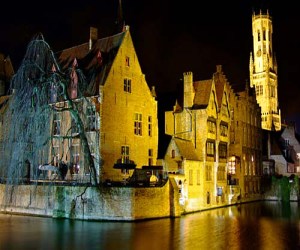
Belgium is the heart of Europe, the compact, multilingual kingdom that hosts Europe’s principal institutions in Brussels and punches far above its modest size in cuisine (it invented frites, produces some of the world’s finest chocolate and beer, and has more Michelin stars per capita than France), art history (Van Eyck, Bruegel, Rubens, Magritte, and the comic-strip tradition that gave the world Tintin and The Smurfs), and architectural beauty, its medieval belfries, beguinages, and city centres are among the best-preserved in Europe. Belgium divides neatly into Flanders (Dutch-speaking, flat, and mercantile, with the magnificent cities of Bruges, Ghent, Antwerp, and Leuven) and Wallonia (French-speaking, hilly, and industrial, with the Ardennes forests, the dramatic citadels of Namur and Dinant, and the battlefield of Waterloo). Brussels, officially bilingual, is the glue between them, and while the Belgian state is famously complex (six governments, three official languages, and a tendency to political gridlock that has left the country without a federal government for months at a stretch), the visitor experiences none of this complexity. What the visitor experiences is one of the most rewarding small countries in Europe: walkable medieval cities, world-class art, and a food-and-drink culture so serious that the UNESCO list of intangible cultural heritage includes the Belgian beer culture.
Quick Facts: Belgium Travel Guide
- Best time to visit Belgium: April–September for the most pleasant weather and the longest days; July–August for the best chance of sunshine and a packed calendar of festivals (Tomorrowland in Boom, the Ghent Festivities); December for the Christmas markets, especially Bruges, one of the most atmospheric winter settings in Europe; April for the tulip season and the Floralia Brussels flower show; avoid late autumn (October–November) when the weather can be persistently grey and wet, though the museums and cafés remain warm and welcoming
- Top attractions in Belgium: The medieval centre of Bruges, the entire city centre is a UNESCO World heritage site and one of the most romantic settings in northern Europe; Ghent’s Gravensteen Castle and the Adoration of the Mystic Lamb (the Van Eyck altarpiece in St. Bavo’s Cathedral, arguably the most important painting in the world); the Grand Place in Brussels (arguably the most beautiful square in Europe); Antwerp’s cathedral (Rubens’ Descent from the Cross) and fashion district; the Waterloo battlefield; the Ardennes (the forests, the caves of Han-sur-Lesse, and the Dinant citadel on the Meuse River); and the World War I battlefields and memorials around Ypres (the Last Post ceremony at the Menin Gate, held every evening since 1928, is profoundly moving)
- How to get to Belgium: Brussels Airport (BRU) and Brussels South Charleroi (CRL) for budget airlines; Eurostar from London to Brussels Midi (~2h); excellent rail connections from Paris (~1h20), Amsterdam (~1h50), and Cologne (~1h50); Belgium’s domestic rail network (SNCB) connects all major cities efficiently
- Currency: Euro (€)
- Language: Dutch (Flemish) in the north, French in the south, German in a small eastern region. Brussels is officially bilingual. English is widely spoken, especially in Flanders, Belgians are accustomed to navigating multiple languages and will almost always be able to communicate with you
- Best for: Beer and chocolate lovers, art and history enthusiasts, romantics (Bruges and Ghent are among the most beautiful small cities in Europe), and anyone who appreciates the surreal, the understated, and the excellent
Belgium is a developed European country, which boasts one of the highest GDP in the world. It has great historical and especially cultural heritage. In a country you can visit numerous monuments from various historical periods. The most popular Belgian cities are Brussels, Antwerp, Bruges, Ghent and Liège.
Belgium is interesting with the diversity of its population. The country is divided into 3 areas, Flanders, Wallonia and Brussels. In the northern part of Flanders, live Flemish, who speak Flemish (Belgian Flemish is a variant of Dutch). In the southern part, Wallonia, live Walloons, who speak French. In the region of Brussels there are Flemish and French speaking residents but also many foreigners. The third official language alongside French and Flemish in Belgium, is German.
Flemish are closer to the Dutch and Walloons to the French, both with the mentality and temperament, and way of life. Between Flemish and Walloons, there is a certain degree of jealousy and they are sometimes even talking about the possibility of division of land into two states.
Brussels – the capital of Europe
The capital of Belgium – Brussels is also sometimes called the capital of Europe. Brussels houses the Council of Ministers and the European Commission, but also the European Parliament.
Brussels is bilingual, but if you go through the streets, you can hear a lot more languages than just French or Flemish. A large number of foreigners live here, many of which are currently working in the institutions of Europe. Brussels is a truly cosmopolitan city that offers many tourist sights and attractions such as: the Grand Place with historic houses and town hall, the famous Atomium and Mini-Europe – an entertainment center with models of buildings from different cities of Europe.
Not least among the advantages of Belgium are their specialties and typical dishes and drinks. A very popular is fish in many ways, mussels, cheese or french fries with mayonnaise. From the candies you should try waffles and of course the world famous Belgian chocolates.
The most popular drink is beer. The best-known brands include Leffe, Chimey, Duvel, Jupiler, Maes, Hoegaarden and Stella Artois. They also have flavoured beers, such as cherry, strawberry or currant.
View Belgium – head of Europe in a larger map
Have you explored Bruges’ canals, Ghent’s Gravensteen, the Grand Place in Brussels, or the battlefields of Flanders? Share your Belgian discoveries in the comments! 🇧🇪
Explore all our Belgium travel guides, from the chocolate shops of Bruges to the Ardennes forests.
Explore More
If you enjoyed this article, you might also like:
- Estonia – Baltic pearl – All Countries
- Mini Europe park – the most popular tourist destination in Brussels, Belgium – Amusement and Theme Parks
- Brussels – capital city of Belgium and capital city of Europe at the same time – Belgium
