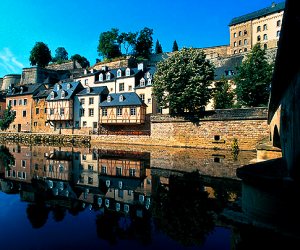
Luxembourg is the green heart of Europe, a tiny Grand Duchy wedged between Belgium, France, and Germany that packs more wealth (it has the highest GDP per capita in the world), more history (its capital’s old town is a UNESCO World heritage site, with fortifications that earned it the nickname “the Gibraltar of the North”), and more surprising natural beauty (the Mullerthal region, known as Luxembourg’s Little Switzerland, is a hiker’s dream of moss-covered rock formations, deep ravines, and beech forests) into an area smaller than Rhode Island. Luxembourg City is built on dramatic terrain, deep river gorges slice through the city, and the old fortifications, the casemates (17 kilometres of underground tunnels carved into the rock), and the modern European institutions (Luxembourg is a founding member of Europe and hosts several key institutions) create a fascinating juxtaposition of medieval and contemporary. The country’s trilingual culture (Luxembourgish, French, and German all serve specific roles), its world-class dining scene (it has one of the highest densities of Michelin-starred restaurants in Europe), and the rolling hills, vineyards of the Moselle Valley, and the castles of Vianden and Bourscheid make this one of Europe’s most surprising destinations, a country that few travellers seek out but that rewards those who do.
Quick Facts: Luxembourg Travel Guide
- Best time to visit Luxembourg: May–September for the best weather and the hiking season in the Mullerthal; June for the National Day celebrations (June 23) with fireworks over Luxembourg City; December for the Christmas markets in Place d’Armes; the Moselle wine region is at its most beautiful during the grape harvest in September–October
- Top attractions in Luxembourg: Luxembourg City, the Bock Casemates (the underground tunnel network, a UNESCO site), the Chemin de la Corniche (“Europe’s most beautiful balcony” with views over the Alzette valley), the Grand Ducal Palace, and the Grund district in the valley below; Vianden Castle, one of the most beautiful Romanesque-Gothic castles in Europe, dramatically perched above the Our River; the Mullerthal Trail, 112 kilometres of well-marked paths through the rock formations and forests of Little Switzerland; Echternach, Luxembourg’s oldest town, with a Benedictine abbey founded in 698 AD and the annual Dancing Procession (UNESCO intangible heritage); and the Moselle Valley wine route, the vineyards, wine cellars, and the village of Schengen (where the border-free Schengen Agreement was signed in 1985 on the riverboat Princesse Marie-Astrid)
- How to get to Luxembourg: Luxembourg Findel Airport (LUX) has European connections; ~2 hours from Brussels by train; ~2 hours from Frankfurt by train; public transport throughout the entire country is completely free (since 2020, the first country in the world with free nationwide public transport)
- Currency: Euro (€)
- Language: Luxembourgish (Lëtzebuergesch) is the national language; French and German are administrative languages, and English is widely spoken in business and tourist contexts, this is one of the most multilingual societies in Europe
- Best for: Hikers (the Mullerthal trails are world-class), castle enthusiasts, food and wine lovers, and anyone who enjoys discovering a tiny country that vastly exceeds expectations
Luxembourg is a landlocked country located in Western Europe, bordering Germany, Belgium and France. North part of the country is covered by barren land Oesling with hills reaching 400-500 meters. At the south is the fertile land Gutland and Lorraine Hills. The climate is influenced by the Atlantic, temperatures are mild in winter, rarely snows.
Population
Original Luxemburgers make up about one third of the population. There are more than 180 thousand foreigners living here, mainly Portuguese, Italians, Frenchmen, Belgians and Germans. Over 7,500 residents are officials of Europe. Most of the population is Catholic, however there are small Protestant and Jewish communities. The country has 100% literacy.
Economy
The country has well developed industry and service sector. An important source of funds is tourism. Industry is focused on the processing of metals and chemicals, which are major export items. Among the trading partners of Luxembourg are the surrounding states of Europe. The country is also doing well in the banking sector which is mainly due to political stability and liberal laws.
History and culture
History of Luxembourg started to count at the time when Lützelburg castle was built. It happened around the year 963. Then, around the castle, began to develop a medieval city that became the center of a small estate. Between 1659 to 1839 the territory of Luxembourg was several times reduced. Luxembourg gained independence in the 19th century. After World War II Luxembourg stood at the birth of NATO and the European Community (in 1993 renamed to Europe).
Cuisine
Luxembourg cuisine is similar to Belgian, but you’ll find also a German influences – e.g. dumplings with cabbage, etc. Luxembourg National dish is “Judd mat gaardebounen” – it’s smoked pork served with cabbage or beans.
Other specialties include:
Ferkelsrippchen-grilled ribs
Liewekniddelen mat sauerkratu – liver balls with cabbage
Traipen – black pudding
Kuddelfleck – boiled tripe (intestine)
Kachkeis – cooked cheese
The most popular coffee in Luxembourg is “café au lathes” – coffee with boiled milk, as well as cappuccino and espresso.
Tips for trips
- The city of Luxembourg (its beautiful historical center and the walls on the slopes of the River Alzette
- Ardennes
- Moselle valley
- Müllerthal
View Luxembourg – green heart of Europe in a larger map
Have you explored the casemates of Luxembourg City, hiked the Mullerthal trails, or discovered Vianden Castle? Share your Luxembourg discoveries in the comments! 🇱🇺
Explore all our Luxembourg travel guides, from Luxembourg City to the Ardennes.
Explore More
If you enjoyed this article, you might also like:
