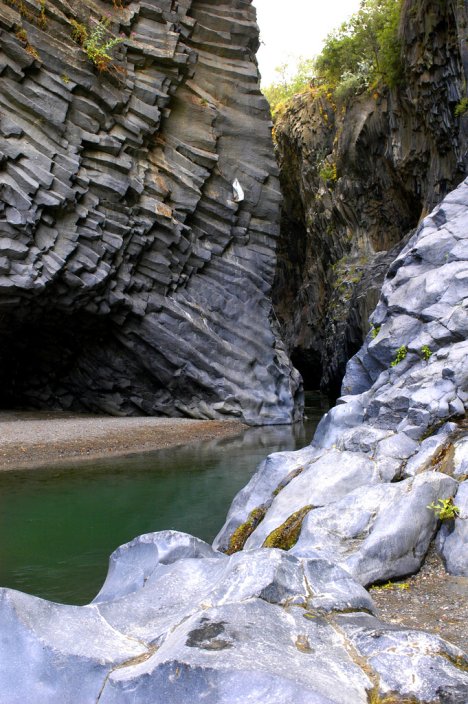
The Alcantara Gorge (Gole dell’Alcantara) is one of Sicily’s most dramatic natural sights, a deep, narrow canyon carved by the Alcantara River through spectacular hexagonal basalt columns formed by ancient lava flows from Mount Etna, creating a landscape of black volcanic rock walls that rise 50 metres above the rushing turquoise water. Located near Taormina on Sicily’s east coast, the gorge is a popular summer destination for Sicilians seeking a refreshing escape from the heat, the water is icy cold even in August (fed by snowmelt from the Nebrodi Mountains), and the smooth basalt columns, formed as the lava cooled and contracted into perfect geometric shapes, are a geological wonder on a par with the Giant’s Causeway in Northern Ireland.
In This Article
Quick Facts: Alcantara Gorge, Sicily
- Best time to visit: June–September for swimming and body-rafting in the gorge (wetsuits recommended, the water is very cold even in summer); the gorge is accessible year-round but water activities are seasonal
- How to get there: ~30 minutes from Taormina by car; ~1 hour from Catania Airport; the main entrance is at the Gole dell’Alcantara Botanical and Geological Park near Motta Camastra
- Entry fee: ~€10 (adult) for the lift down to the gorge floor; ~€1.50 for a public staircase (free parking); body-rafting excursions ~€30–40
- Combine with: Taormina (one of Sicily’s most beautiful hill towns, 30 min), Mount Etna (1 hour), and the beaches of Giardini Naxos
Alcantara is a river flowing through the mountains of Nebrodi in Sicily. In its lower part flows through an impressive gorge. River got its name from the Arabic word al-Qantarah, which means bridge. During the colonization of this area was the river also called Assinos, Onobalas or Asines).

Photo licensed under the Creative Commons, created by freeflight046
Today, visitors can admire the prismatic basalt columns forming the walls of the gorge, which are up to 55 metres high in some places. During hot summer days it certainly would not hurt to refresh yourself and walk through riverbed where the water is crystal clear, cool and refreshing even in the summer. And those who will find the water too cold, can borrow high boots on-site.
Huge amounts of basalt, which is found in the Alcantara Valley comes from an old Etna’s crater named Mojo Alcantara. Alcantara river is more than 50 kilometres long and its source is in the height of 1250 metres above sea level. However the Alcantara valley named also as Alcantara Gorges or known as Gole dell’Alcantara in Italian, has the length of only 500 metres. The distance between the cliffs is on average about 5 metres.
View The Gorges of Alcantara in Italy, Sicily in a larger map
The Formation of the Spectacular Basalt Columns
The hexagonal basalt columns of Alcantara Gorge are the result of volcanic activity from Mount Etna. Thousands of years ago, lava flows from the Mojo Alcantara crater poured into the valley. As the basalt cooled, it contracted and cracked in a regular pattern, forming the remarkable columns through a process known as columnar jointing, the same phenomenon that created the Giant’s Causeway. The columns vary from a few metres to over 50 metres in height, their polished surface giving an almost manufactured appearance. The black basalt contrasts dramatically with the turquoise river water, creating one of Sicily’s most photographed landscapes.
Body-Rafting and Swimming in the Gorge
Body-rafting through the Alcantara Gorge involves donning a wetsuit and letting the current carry you through the cool water between the basalt columns. The water stays at 10 to 12 degrees Celsius even in summer, fed by snowmelt from the Nebrodi Mountains. Guided excursions last one to two hours covering 500 metres of the scenic section. For a gentler option, walking through the riverbed in waterproof boots is a popular alternative. The public staircase entrance costs approximately 1.50 euros, while the lift costs around 10 euros.
Exploring the Alcantara Valley and Taormina
The Alcantara River flows for over 50 kilometres from the Nebrodi Mountains to the archaeological site of Naxos, lined with citrus groves, olive orchards, and vineyards producing some of Sicily’s finest wines. The hilltop town of Taormina, just 30 minutes by car, offers its ancient Greek Theatre and sweeping views of Mount Etna. For those with more time, Mount Etna itself is an hour away, offering volcanic craters and lava tubes. Combining the gorge, Taormina, and Etna creates a rewarding multi-day itinerary.
Have you body-rafted through the basalt columns of Alcantara or discovered Sicily’s volcanic wonders? Share your Sicilian gorge adventures in the comments! 🌋
Explore all our Italy travel guides, from the Dolomites to Sicily.
Explore More
If you enjoyed this article, you might also like:
