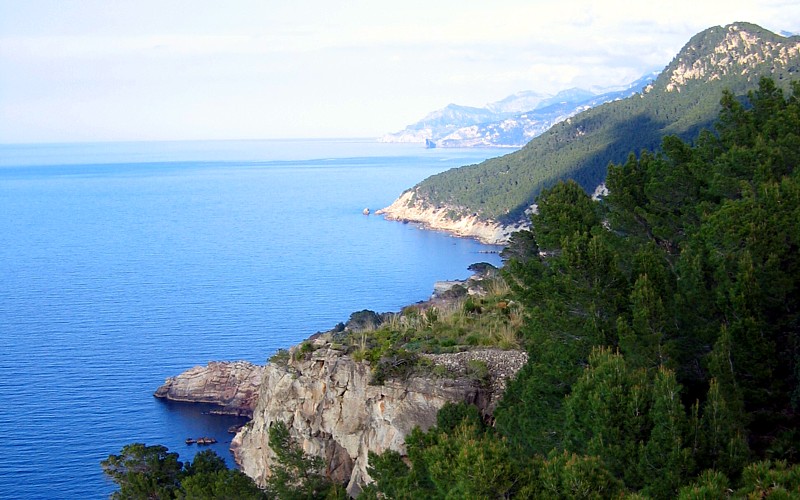
The Serra de Tramuntana, running for 90 kilometres along the north-west coast of Majorca, is a UNESCO World heritage cultural landscape where dry-stone terraces climb impossible slopes, ancient olive trees with trunks a metre thick grow from rock, and a network of stone pathways dating back to the Arab occupation connects mountain villages that have changed little since the 14th century. This is not the Majorca of package holiday beaches and all-inclusive resorts. The Tramuntana mountains, declared a World heritage site by UNESCO in 2011 in the cultural landscape category, represent the other face of the island, one carved by centuries of human effort to cultivate a harsh, steep terrain. The range reaches 1,445 metres at Puig Major, the highest peak on the Balearic Islands, and the views from the winding mountain road between Sóller and Deià have been described by everyone from Archduke Ludwig Salvator of Austria to the poet Robert Graves as among the most beautiful in the Mediterranean.
Quick Facts: Serra de Tramuntana
- Best time to visit: March to June and September to November for hiking, cycling, and driving the mountain roads. July and August are hot (30-38°C) and busy. December to February offers crisp, clear days with snow occasionally dusting Puig Major, but many restaurants and hotels close outside the main season
- Top villages: Deià (the most famous, home to Robert Graves for 40 years, with an artists’ community and the beautiful Cala Deià cove below); Valldemossa (the 14th-century Carthusian monastery where Chopin and George Sand spent a famously miserable winter); Sóller (an inland town with a historic tram connection to the port, surrounded by orange and lemon groves); and Fornalutx (often described as the prettiest village in Spain)
- Getting there: Palma de Mallorca Airport (PMI) receives flights from across Europe. The Serra de Tramuntana is a 20-30 minute drive from Palma. A car is essential for exploring the mountain villages, though the historic railway from Palma to Sóller (opened 1912) is a scenic alternative
- Outdoor activities: The GR 221 long-distance hiking trail, known as the Dry Stone Route, runs 135 kilometres through the Tramuntana from Port d’Andratx to Pollença, passing through the heart of the mountain range with refuges providing basic accommodation along the way
On the island of Majorca, which is situated between Spain and the coast of Africa, one will find the mountain range known as the Serra de Tramuntana. It is the main mountain range on the island and has also played a crucial role in the formation of not just Majorca, but also the remaining islands in the archipelago. Due to its cultural and physical importance to the island, the Serra de Tramuntana is an UNESCO site today.
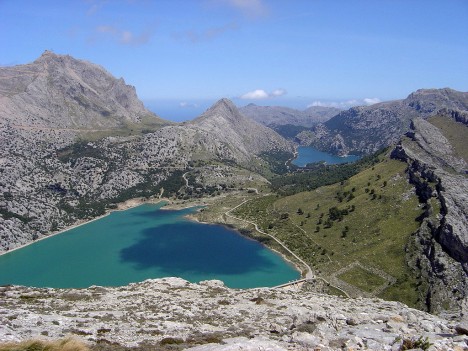
Serra de Tramuntana, Majorca, Spain by Antoni Sureda
The tallest point in the Serra de Tramuntana can be found at the Puig Major which is situated more than 1445 meters above sea level. Not only is it the tallest point in the mountain range, but is also the tallest point in the entire Balearic Islands archipelago. The second tallest point which stands at 1364 meters above sea level is that of Puig de Massanella.
It is interesting to point out that the climate upon the Serra de Tramuntana mountain range is significantly different than that of the rest of the island of Majorca. On an average, the vast majority of the island receives less than 400 millimeters of rain per year. However, as much as 1500 millimetres of rain are received a year within the Serra de Tramuntana Mountains. As a result, the mounds also play an important role in ensuring that the island has sufficient drinking water. It is also the only point on the island which receives snow during wintertime.
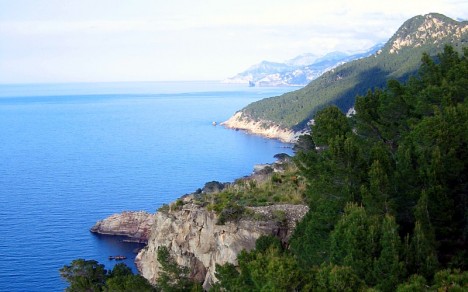
Coastline of Serra de Tramuntana, Majorca, Spain by waterborough / Public domain license
Due to the fact that the entire mountain range is a UNESCO designated site, it is also protected and is utilized as a nature reserve in order to prevent the further deforestation of the island and ensure that many of the rare and endangered species that call the island home, continue to do so for many more centuries to come.
The picturesque beauty of the Serra de Tramuntana is one of the main reasons why countless people make their way up into the mountains. From many of the viewing positions along the sides of mountain, anyone is afforded some of the finest views of the entire Balearic Islands archipelago. Needless to say, the awe-inspiring views have inspired countless people over the centuries.

First visited Serra de Tramuntana back in 2013 and returned twice since. Each time it feels different — different season, different discoveries, different perspectives. This article makes me want to book another trip right now.