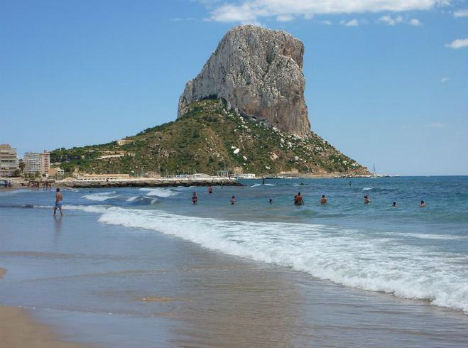
The Peñón de Ifach rises straight out of the Mediterranean like a giant limestone fist. Calpe sits at its base, a resort town where the prices match the dramatic views. Sun loungers line the beaches in neat rows, and the smell of grilled sardines drifts from waterfront restaurants charging premium rates. The old town offers some relief with its narrow streets and whitewashed buildings, but the real draw is the rock. Visitors hike the trail up the Peñón, gripping cables and catching their breath as the Costa Blanca unfolds below. The water is impossibly blue and the apartments are impossibly expensive.
The town of Calpe is a symbol of the entire Costa Blanca. It is built around a 332 metre high limestone cliff called Peñón de Ifach, which is located on a small hook. In 1987, the rock was declared a nature reserve and the smallest protected area in Europe, because it covers an area of 4.7 square kilometres. The rock is visible from miles away along the coast and has become the defining image of this stretch of the Spanish Mediterranean. Its distinctive outline, resembling a giant whale breaching the surface, appears on countless postcards and travel brochures.
In This Article
The Peñón de Ifach Nature Reserve
You can find there a number of endemic species of plant. The rock is also a home to sea gulls and falcons. If you manage to get onto the top, you will be rewarded with spectacular views of the countryside. Peñón de Ifach is widely popular among climbers who test their strength and abilities here. The number of tourists is regulated due to the protection of the site. The hiking trail to the summit takes approximately one hour and passes through a tunnel carved directly through the rock. From the top, the panoramic views stretch along the Costa Blanca coastline and far out across the turquoise Mediterranean Sea. The nature reserve is home to over 300 plant species, many of which are endemic to the region. The trail is steep in places and requires good footwear, but the reward at the summit is well worth the effort. On clear days, you can see as far as the island of Ibiza on the horizon.
Calpe’s historic Old Town and Architecture
Otherwise, the resort of Calpe looks like any other local sandy beach resort with crystal clear Mediterranean Sea. You can try a wide range of water sports here. You can also visit The Old Church (Iglesia Antigua) here which was built in the 14th century and is located just in the town centre. It is the oldest monument in the town and the only example of Gothic-Mudéjar architecture in this region. Another interesting sight is the fortress Torre de la Peca, which was built in the 14th century as part of a defensive fortress. A tourist attraction can also be the district Arabal formed by narrow streets and white houses. Do not miss Paternina street, which is adorned with dozens of flowering pots and houses with colorful mosaics. On the hill above the town is the Shrine of St. Salvatore, from where you can enjoy a beautiful view of the surrounding countryside. The old town’s winding alleys and whitewashed houses with blue trim evoke the traditional fishing village that Calpe once was, before tourism transformed the coastline.
Beaches, Dining, and Cultural Events
Calpe is one of the liveliest resorts on the Costa Blanca. It holds a lot of interesting cultural events. History lovers should not miss the Archaeological Museum or the Museum of the Festivities. However Calpe is considered one of the most expensive resorts in Spain, you still can find cheap restaurants here and the access to the beach is free. The main beach, Playa del Arenal-Bol, stretches for two kilometres and features fine golden sand and calm waters ideal for families. The fishing port area offers some of the freshest seafood on the coast, with restaurants serving grilled fish, paella, and local specialities. Calpe also hosts an annual music festival and a popular Moors and Christians celebration that fills the streets with parades and pageantry. The port itself is a working fishing harbour where you can watch the daily catch being brought in and auctioned, and several waterfront restaurants will grill your choice of fish right in front of you.
Would you pay a premium to swim beneath a giant limestone rock rising from the sea? 🏖️
Explore all our Spain travel guides, from Barcelona Gaudí to Andalusia plazas.
Explore More
If you enjoyed this article, you might also like:
