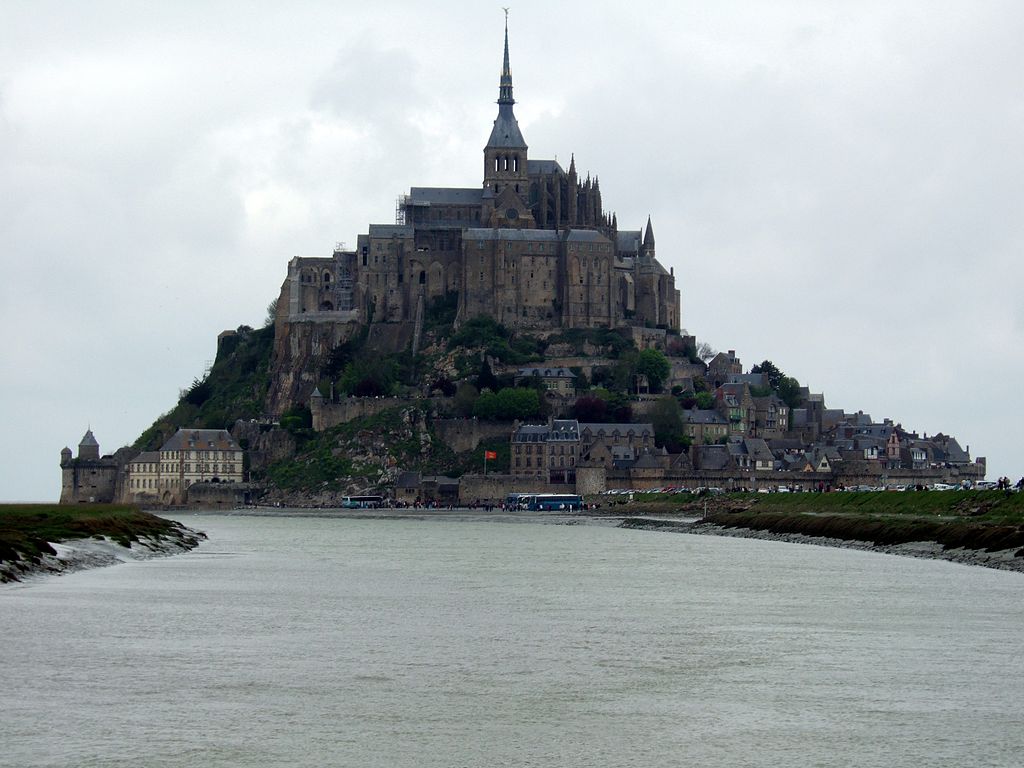
Mont Saint-Michel – the most visited tourist site in France after Paris

Updated June 10, 2026 by europeexplored No Comments

The island of Mont Saint-Michel rises from the bay like a vision from another century. Its pointed spire and granite walls stand against the sky while the tide races in across the sand at the speed of a galloping horse. For over a thousand years pilgrims have crossed this bay to reach the abbey that crowns the summit. Today you cross by a bridge instead of wading through quicksand, but the sense of approaching something sacred remains unchanged. Narrow medieval streets climb the rock in spirals, lined with cafes and souvenir shops that have replaced the monk workshops of old.

\\n\\n

The island of Mont Saint-Michel rises from the bay like a vision from another century. Its pointed spire and granite walls stand against the sky while the tide races in across the sand at the speed of a galloping horse. For over a thousand years pilgrims have crossed this bay to reach the abbey that crowns the summit. Today you cross by a bridge instead of wading through quicksand, but the sense of approaching something sacred remains unchanged. Narrow medieval streets climb the rock in spirals, lined with cafes and souvenir shops that have replaced the monk workshops of old.

\\n\\n

You will find the rocky island of Mont Saint-Michel situated only one kilometer off the coast of France, in the middle of the Couesnon River Delta. It is here where a Benedictine abbey was constructed during the medieval period; and still stands today as a testament of time.

\\n

Long before the construction of the abbey on Mont Saint-Michel, the rocky outcropping within the English channel were an important strategic stronghold during the sixth and seventh centuries it would not be until the Franks laid siege to the stronghold that it would eventually fall can be torn down completely.

\\n


\\nMont Saint-Michel, France by Stevage

\\n

Soon after, during the eighth century construction began on the first religious establishment on the island. The choice of constructing a church on the rocks was as a result of the Archangel Michael’s appearance before the Bishop of Avranches back in 708. According to the legend, Michael instructed the Bishop to construct a church on the island and rename it Mont Tombe.

\\n

For hundreds of years, the mount was under control of France. However, in 1076 when the Normans conquered England, the island was annexed and made part of Britain. Soon after, the Normans financed the construction of an all new abbey on the island.

\\n


\\nAerial picture of Mont Saint-Michel, France by Playing Futures: Applied…

\\n

During the 12th century, Robert de Thorigny reinforced many of the buildings within the abbey in order to protect it from the oncoming battles with Normandy. Soon after the Norman annexation, King Philip financed instruction of an all new rectory and cloister in 1204.

\\n

Of course many things changed during the French Revolution as most of the monks had moved out of the abbey. As a result, the abbey was officially closed and turned into a prison responsible for holding the highest profile political prisoners. But unfortunately its use as a present would not last long because in 1836, the prison was finally closed down and declared a monument of historical importance. By 1979, Mont Saint-Michel was established as a UNESCO world heritage site.

\\n


\\nInside of the Mont Saint-Michel abbey, France by mat’s eye

\\n

Access to Mont Saint-Michel is currently made possible by a causeway that extends from the shoreline to the island. However, many pilgrims choose to ignore the causeway altogether an attempt to cross on foot to the island. As result of the quickly changing tides and the quicksand, this can be a very dangerous and sometimes deadly decision. Even today, it is not uncommon to hear about somebody being injured after trying to cross to the island via the tidal flats.

\\n

Of course once you arrive to the island, getting up to the abbey is no easy task. There are more than 900 steps that make their way from the shores of the mountain up to the entrance of Mont Saint-Michel Abbey. But do not worry, you will find that halfway up the stairway is a small church which has been carved into the side of the mountain; you will find that this is a perfect place to stop and take a rest.

\\n


\\nMont Saint-Michel in dark, France by Destination Europe

\\n

Visiting Mont Saint-Michel is definitely a unique day trip. Countless people every single year make their way to the island to see the centuries old abbey and experience the awe-inspiring beauty of the surrounding region.\\n

\\n

Would you rather visit Mont Saint-Michel at high tide when it becomes an island or at low tide when you can walk the bay?

\\n


Looking for more French travel inspiration?

\\n\\n

The Abbey Architecture and History

\\n

The Benedictine abbey of Mont Saint-Michel is a masterpiece of medieval architecture, built in stages over 500 years. The earliest structure, the Notre-Dame-sous-Terre chapel, dates from the 10th century and was constructed by the original community of canons. The Romanesque nave and transept, built between the 11th and 12th centuries, suffered a partial collapse in the 15th century and was replaced by the Flamboyant Gothic choir visible today. The cloister, built in the 13th century, features a double row of slender columns that create a sense of lightness and elevation. The refectory, where monks once ate their meals in silence while scripture was read aloud from a pulpit, stretches 32 metres in length with windows that flood the space with northern light. The abbey church, perched at the very summit of the rock, reaches 80 metres above sea level. The spire, crowned by a golden statue of the Archangel Michael, was added in the 19th century and stands 170 metres above the bay. The abbey was used as a prison during the French Revolution and throughout the 19th century, housing political prisoners in grim conditions. The campaign to restore the monument was led by Victor Hugo and other intellectuals, resulting in its classification as a historic monument in 1874 and its eventual UNESCO World heritage listing in 1979. The abbey receives over 2.5 million visitors annually, making it the most visited tourist attraction in France outside Paris.

\\n

Practical Tips for Visiting

\\n

Arriving early in the morning or after 5pm is the best strategy for avoiding the worst crowds, which peak between 11am and 3pm from June through September. The shuttle bus from the mainland car parks runs every 10 minutes and drops visitors at the island entrance. Walking across the causeway takes approximately 45 minutes and offers the most dramatic approach, especially during the rising tide when the water sweeps across the sand. Entry to the abbey costs 13 euros for adults as of 2026, with free admission on the first Sunday of each month from November through March. Audio guides are included in the ticket price and available in 14 languages. The bay is famous for its extreme tides, which can recede up to 15 kilometres and return at the speed of a walking person. Tide tables are posted at the information centre, and it is dangerous to walk on the sand without a guide due to quicksand and the rapidly advancing water. Several companies offer guided walks across the bay led by certified guides who carry emergency equipment and know the safe routes. The nearby town of Pontorson, 9 kilometres away, offers budget accommodation and regular bus connections to the mount.

\\n

The Bay and Its Natural environment

\\n

The bay of Mont Saint-Michel covers approximately 500 square kilometres and is one of the most dynamic natural environments in Europe. The sediment carried by the Couesnon, See, and Selune rivers has gradually filled the bay over centuries, threatening to connect the island permanently to the mainland. A major engineering project completed in 2015 removed the old causeway and replaced it with a light bridge, allowing the tidal flow to resume its natural scouring action. The project succeeded in preventing further silting, and the island regains its insular character during high tides. The bay is a Ramsar wetland of international importance, hosting over 200 bird species including migratory waders, ducks, and the rare Avocet. Grey seals occasionally haul out on the sandbanks at low tide. The salt meadows known as herbus produce samphire and sea lavender that turn the landscape purple in late summer. Local farmers raise salt-marsh lamb, known as pre-sale, which grazes on the saline pastures and develops a distinctive flavour prized by French chefs.

\\n\\n

Would you rather visit Mont Saint-Michel at high tide when it becomes an island or at low tide when you can walk the bay?

\\n


Explore all our France travel guides, from Parisian boulevards to Provence lavender.

Explore More

If you enjoyed this article, you might also like:

Tags: , , , , , , ,

Categories: Cities, France, Mountains, Nature, Sights, Sights

Leave a Reply

Your email address will not be published. Required fields are marked *