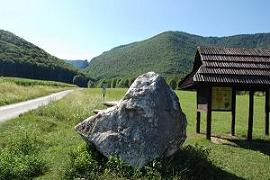
Muránska planina National Park is one of Slovakia’s most beautiful and least-visited protected areas, a vast limestone plateau in central Slovakia where the magnificent Muráň Castle ruins perch on a 935-metre-high ridge, wild horses (the Noriker breed, reintroduced to maintain the grassland) roam the high pastures, and the biodiversity is so exceptional that the park has been proposed for UNESCO World heritage status.<\/strong> The park is centred on the Muráň Plateau, a karst landscape of deep gorges, sinkholes, and pristine beech and fir forests that is one of the most important refuges for large carnivores (brown bear, wolf, lynx) in Central Europe.<\/p>
Quick Facts: Muránska Planina National Park<\/h2>
- Best time to visit:<\/strong> May-October for hiking; June for the best wildflower displays on the meadows; the wild horses are visible year-round but are most active in spring and summer<\/li>
- How to get there:<\/strong> ~3 hours from Bratislava by car; ~2 hours from Košice; the gateway towns are Muráň and Tisovec<\/li>
- Top attraction:<\/strong> Muráň Castle ruins, one of Slovakia’s highest castles (935m), accessible by a steep but rewarding 1.5-hour hike<\/li>
<\/ul>
Geology and Karst Formations of the Muráň Plateau<\/h2>
The Muráň Plateau is a geologically remarkable area formed primarily from limestone and dolomite, creating a classic karst landscape that stretches approximately 25 kilometres from the settlement of Červená Skala to the town of Tisovec. The plateau is characterised by extensive sinkholes, grikes, rock towers, and natural rock windows that have been sculpted over millions of years by the dissolving action of rainwater on the carbonate bedrock. More than 300 caves have been documented within the park, though none are open to the general public, preserving their delicate formations and unique microclimates. The highest point on the plateau is Fabova hoľa at 1,439 metres above sea level, while the neighbouring peak of Stolica, at 1,476 metres, lies within the park’s buffer zone. The terrain is dramatically varied, with deep canyons cutting into the plateau’s edges and creating natural barriers that have helped preserve the area’s wilderness character. Forests cover approximately 90 percent of the park’s surface, with beech and fir dominating the higher elevations while oak forests thrive on the lower slopes. The combination of karst geology and extensive forest cover makes the Muráň Plateau one of the most intact natural landscapes in Central Europe, a place where geological processes continue to shape the terrain largely undisturbed by human activity.<\/p>
Wildlife and the Reintroduction of Wild Horses<\/h2>
The exceptional biodiversity of Muránska planina National Park is one of its most significant features, with the area serving as a crucial refuge for large carnivores including the brown bear, Eurasian wolf, and Eurasian lynx. These apex predators thrive in the park’s extensive forests, which provide ample cover and prey species. The park’s most celebrated wildlife programme, however, involves the reintroduction of the Noriker horse breed to the plateau’s high pastures. These strong, hardy horses were brought back to maintain the open grassland habitats that would otherwise be lost to forest succession, preserving the traditional cultural landscape while creating a spectacle that delights visitors. Beyond the horses, the park is home to populations of red deer, wild boar, chamois, and numerous smaller mammals. Birdlife is equally rich, with species such as the golden eagle, peregrine falcon, and black stork nesting on the cliffs and in the forests. The plateau’s network of sinkholes and caves provides important hibernation sites for bats, with several species using these underground spaces during the winter months. The park’s remote location and limited development have allowed this diverse ecosystem to flourish, making it one of the most important biodiversity hotspots in the Carpathian mountain range.<\/p>
Hiking Trails and Visitor Information<\/h2>
With over 300 kilometres of marked hiking trails and two educational trails, Muránska planina offers ample opportunities for exploration on foot. The most popular route leads to the ruins of Muráň Castle, perched dramatically on a 935-metre-high ridge that offers panoramic views across the surrounding countryside. The hike takes approximately 1.5 hours from the village of Muráň and climbs steadily through forest before emerging at the castle ruins, where visitors can explore the remains of this once-impregnable fortress. The best access to the park is through the surrounding villages and settlements, including Tisovec, Muráň, and Červená Skala. The saddleback of Zbojská provides another excellent starting point for hikes into the plateau’s interior. During the summer months, the meadows are covered in wildflowers, with June offering the most spectacular displays. The educational trails provide information about the park’s geology, ecology, and cultural history, making them ideal for families and casual visitors. Despite its exceptional natural value, the park remains relatively undiscovered by international tourism, offering a genuine wilderness experience that is increasingly rare in Central Europe. The park authorities maintain several rest areas and information points, ensuring that visitors have the resources they need to explore this remarkable landscape safely and responsibly.<\/p>
Have you spotted wild horses on the Muráň plateau or hiked to the castle ruins?<\/strong> Share your Slovak wilderness discoveries in the comments! 🐴<\/p>
Explore more Slovakia travel guides<\/a> and European mountain adventures<\/a>.<\/em><\/p>
Explore all our Slovakia travel guides, from the High Tatras to Bratislava charm.
Explore More
If you enjoyed this article, you might also like:
<\/ul>
Geology and Karst Formations of the Muráň Plateau<\/h2>
The Muráň Plateau is a geologically remarkable area formed primarily from limestone and dolomite, creating a classic karst landscape that stretches approximately 25 kilometres from the settlement of Červená Skala to the town of Tisovec. The plateau is characterised by extensive sinkholes, grikes, rock towers, and natural rock windows that have been sculpted over millions of years by the dissolving action of rainwater on the carbonate bedrock. More than 300 caves have been documented within the park, though none are open to the general public, preserving their delicate formations and unique microclimates. The highest point on the plateau is Fabova hoľa at 1,439 metres above sea level, while the neighbouring peak of Stolica, at 1,476 metres, lies within the park’s buffer zone. The terrain is dramatically varied, with deep canyons cutting into the plateau’s edges and creating natural barriers that have helped preserve the area’s wilderness character. Forests cover approximately 90 percent of the park’s surface, with beech and fir dominating the higher elevations while oak forests thrive on the lower slopes. The combination of karst geology and extensive forest cover makes the Muráň Plateau one of the most intact natural landscapes in Central Europe, a place where geological processes continue to shape the terrain largely undisturbed by human activity.<\/p>
Wildlife and the Reintroduction of Wild Horses<\/h2>
The exceptional biodiversity of Muránska planina National Park is one of its most significant features, with the area serving as a crucial refuge for large carnivores including the brown bear, Eurasian wolf, and Eurasian lynx. These apex predators thrive in the park’s extensive forests, which provide ample cover and prey species. The park’s most celebrated wildlife programme, however, involves the reintroduction of the Noriker horse breed to the plateau’s high pastures. These strong, hardy horses were brought back to maintain the open grassland habitats that would otherwise be lost to forest succession, preserving the traditional cultural landscape while creating a spectacle that delights visitors. Beyond the horses, the park is home to populations of red deer, wild boar, chamois, and numerous smaller mammals. Birdlife is equally rich, with species such as the golden eagle, peregrine falcon, and black stork nesting on the cliffs and in the forests. The plateau’s network of sinkholes and caves provides important hibernation sites for bats, with several species using these underground spaces during the winter months. The park’s remote location and limited development have allowed this diverse ecosystem to flourish, making it one of the most important biodiversity hotspots in the Carpathian mountain range.<\/p>
Hiking Trails and Visitor Information<\/h2>
With over 300 kilometres of marked hiking trails and two educational trails, Muránska planina offers ample opportunities for exploration on foot. The most popular route leads to the ruins of Muráň Castle, perched dramatically on a 935-metre-high ridge that offers panoramic views across the surrounding countryside. The hike takes approximately 1.5 hours from the village of Muráň and climbs steadily through forest before emerging at the castle ruins, where visitors can explore the remains of this once-impregnable fortress. The best access to the park is through the surrounding villages and settlements, including Tisovec, Muráň, and Červená Skala. The saddleback of Zbojská provides another excellent starting point for hikes into the plateau’s interior. During the summer months, the meadows are covered in wildflowers, with June offering the most spectacular displays. The educational trails provide information about the park’s geology, ecology, and cultural history, making them ideal for families and casual visitors. Despite its exceptional natural value, the park remains relatively undiscovered by international tourism, offering a genuine wilderness experience that is increasingly rare in Central Europe. The park authorities maintain several rest areas and information points, ensuring that visitors have the resources they need to explore this remarkable landscape safely and responsibly.<\/p>
Have you spotted wild horses on the Muráň plateau or hiked to the castle ruins?<\/strong> Share your Slovak wilderness discoveries in the comments! 🐴<\/p>
Explore more Slovakia travel guides<\/a> and European mountain adventures<\/a>.<\/em><\/p>
Explore all our Slovakia travel guides, from the High Tatras to Bratislava charm.
Explore More
If you enjoyed this article, you might also like:
