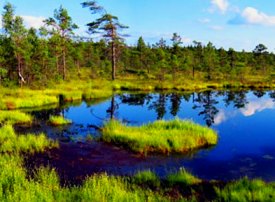
Dumme Mosse is one of southern Sweden’s largest and most important wetlands, a vast nature reserve of peat bogs, marshes, and shallow lakes in Småland that is a critical habitat for migratory birds, including cranes that gather here in their thousands during the spring migration, creating one of Sweden’s most spectacular wildlife spectacles. The reserve, managed for both conservation and visitor access, includes boardwalks that allow visitors to explore the bog without damaging its fragile ecosystem, and bird-watching towers offering panoramic views over the mosaic of water and wetland.
In This Article
An Ancient Wetland Ecosystem Under Threat
Dumme Mosse Nature Reserve covers approximately 3,500 hectares of unspoilt wetlands located a few miles west of Jönköping. Established in 1960 and expanded in 1998 to 2,865 hectares, the reserve protects one of Sweden’s most significant mosaic landscapes, where infertile swamps of various types, sparsely wooded swamps, open meadows, and woodlands coexist. The large, intact swamps provide exceptionally high value for birds, animals, insects, and plants, including some of the rarest species typical of these northern peatland environments. The name “Dumme Mosse” itself derives from local dialect, reflecting the deep cultural connection between the people of Småland and their surrounding wetlands.
However, the wetland faces serious ecological challenges. Nitrogen deposition from agricultural and industrial sources threatens native vegetation, while historic drainage and peat extraction have reduced the extent of intact bog habitat. This is particularly concerning because wetlands like Dumme Mosse play a critical ecological role, mitigating high water flows during floods and acting as natural treatment systems for contaminated water. Conservation efforts focus on restoring hydrological conditions and reducing external nutrient inputs. The county administrative board of Jönköping works closely with environmental researchers to monitor water quality and plant diversity, implementing management plans that balance public access with habitat protection. Visitors can contribute to these efforts by staying on designated trails and respecting the fragile bog ecosystem.
Birdwatching and the Crane Migration Spectacle
The star attraction at Dumme Mosse is the spring crane migration. Between April and May, thousands of common cranes (Grus) pause at the reserve during their northward journey to breeding grounds in Scandinavia and Russia. Their trumpet-like calls echo across the marshes at dawn and dusk, and the sight of hundreds of cranes rising simultaneously from the mist-covered wetlands is unforgettable. The reserve’s bird-watching towers provide excellent vantage points without disturbing the birds. Serious birdwatchers bring spotting scopes and arrive before sunrise to catch the cranes leaving their overnight roosting sites. The peak of the migration typically occurs in mid-April, but timing varies with weather conditions, so checking local birding reports before visiting is recommended.
Beyond cranes, the reserve hosts golden plovers, whose plaintive cries fill the warm-season air, as well as black-throated loons, great crested grebes, and various species of ducks and waders. The Dumme Mosse Trail, a six-kilometre loop built in 1968 through the southwestern part of the bog, offers the best access for birdwatchers. Boardwalks keep visitors dry-footed while protecting the sensitive peat surface. During winter, the frozen bog transforms into a cross-country skiing destination, offering a completely different perspective on this unique landscape. Ski tracks are groomed when conditions permit, and the silent glide across the snow-covered bog provides an intimacy with the landscape that summer visitors rarely experience.
Visitor Information and Practical Tips
Dumme Mosse is accessible year-round, with the best experience depending on the season. Spring (April to May) offers peak crane migration and the most dramatic bird activity. Summer (June to July) brings the longest daylight hours, warm weather, and lush green vegetation. Autumn paints the bog in rich shades of red, orange, and gold as the sphagnum mosses and heather change colour, creating a photographer’s paradise. The reserve is about 20 minutes from Jönköping by car, with several well-marked parking areas and trailheads. Entry is free under Allemansrätten, Sweden’s Right of Public Access, which grants everyone the freedom to roam in nature, though visitors are expected to show consideration for wildlife and other people.
Bring binoculars, sturdy walking shoes, and weather-appropriate clothing, as conditions can change quickly on the open bog. The boardwalks and trails are generally flat and suitable for visitors of moderate fitness levels. Picnic spots are available, but there are no facilities within the reserve itself, so bring supplies from Jönköping. For photographers, early morning and late evening light over the bog pools creates stunning reflections and atmospheric conditions ideal for landscape shots. A polarising filter helps cut through the glare on the water surfaces, and a telephoto lens is essential for capturing birds without disturbing them. The reserve’s location near Jönköping also makes it easy to combine with a visit to the city’s museums, restaurants, and the scenic Lake Vättern shoreline.
View Dumme Mosse – nature reserve and one of the largest wetlands in Sweden in a larger map
Have you watched the cranes at Dumme Mosse or discovered Sweden’s wetland wilderness? Share your Swedish nature experiences in the comments! 🦅
Explore all our Sweden travel guides, from Stockholm archipelago to northern Lapland.
Explore More
If you enjoyed this article, you might also like:
